- Home
- Seasonal Decor
- Seasonal Home Decor
Seasonal Home Decor: How to Refresh Your Home Through the Year Without Starting Over
BASE • SHIFT • LAYER • TRANSITION • STORE

Affiliate Disclosure: Houselyn may earn a commission from qualifying purchases made through links on this page, at no extra cost to you. We only recommend products we genuinely believe add value to our readers.
Seasonal home decor works best when your rooms do not need to be redesigned every few months. A calm, well-planned home can move from spring to summer, autumn and winter through a series of smaller changes while the furniture, main colours and core materials continue to provide a recognisable foundation.
The most effective seasonal decorating therefore begins with deciding what should stay. Sofas, rugs, larger lighting, key furniture and the room's underlying colour story can remain stable while textiles, natural materials, flowers, branches, tabletop arrangements and selected accessories provide the seasonal shift.
This approach makes seasonal home decor easier to maintain, easier to store and less dependent on constantly buying new pieces. Houselyn's system is simple: build the base, shift selected elements, layer seasonal character, transition gradually and store only what deserves to return next year.
HOUSELYN INSIGHT
The best seasonal homes change in layers while the foundation stays recognisable.
THE HOUSELYN SEASONAL SYSTEM
Base → Shift → Layer → Transition → Store
Keep a stable year-round foundation that already makes the room feel complete.
Change a small number of high-impact elements instead of redecorating everything.
Use texture, colour and natural materials to introduce seasonal character.
Move gradually between seasons so the room never feels abruptly reset.
Organise and edit seasonal pieces so the decorating system remains manageable.
PART OF THE HOUSELYN SEASONAL DECOR COLLECTION
See How This Year-Round System Fits Into the Full Seasonal Decor Guide
Seasonal home decor is the practical system behind changing selected layers of a room through the year. But it is only one part of the wider seasonal decorating picture.
Houselyn's Seasonal Decor guide brings together the broader approach to seasonal styling, planning, room refreshes and the individual spring, summer, autumn and winter decorating pathways that support this year-round system.
CHAPTER 1
Build a Home That Can Change With the Seasons
Seasonal home decor becomes much easier when the room already has a strong year-round foundation. Instead of asking what should be replaced every few months, begin with the parts of the room that deserve to stay steady through spring, summer, autumn and winter.
The sofa or bed, main rug, larger lighting, key furniture, wall colour and core materials usually do not need to follow the calendar. These are the pieces that give a room its identity. If they work well together on an ordinary day, seasonal layers can come and go without making the room feel unfinished in between.

Let the Permanent Layers Carry the Room
The largest elements should do most of the visual work. A well-chosen rug, a dependable furniture palette and finishes that sit comfortably together give smaller seasonal changes something stable to work against.
This does not mean every permanent piece needs to be beige or deliberately neutral. A deep green chair, warm timber or patterned rug can still belong to the year-round base if it works with the wider palette and leaves enough room for lighter or richer seasonal accents.
FURNITURE
Keep the Main Pieces Dependable
Beds, sofas, tables, storage and larger chairs should feel appropriate in the room before any seasonal styling is introduced.
FLOOR
Give the Room a Reliable Grounding Layer
A versatile rug or floor treatment can support pale spring additions, relaxed summer textures and richer cold-weather layers equally well.
COLOUR
Establish the Colour Story First
The room needs a recognisable palette before seasonal colours are added. That keeps new accents connected rather than temporary-looking.
MATERIAL
Choose Materials With More Than One Season in Them
Natural wood, ceramic, linen, woven fibre and aged metal can move comfortably through the year without becoming tied to one seasonal look.
HOUSELYN EXAMPLE
Start With a Bedroom That Already Feels Finished
Imagine a warm cream bedroom with an upholstered oatmeal bed, oak bedside tables, a softly patterned rug and simple aged-brass lamps. Spring may bring a lighter coverlet and a fresh branch. Autumn may introduce a deeper throw and warmer cushion. The bed, rug, furniture and lighting do not need replacing because the room already has a clear visual foundation.
HOUSELYN INSIGHT
Seasonal flexibility begins with a room that does not depend on seasonal pieces to feel complete.
CONTINUE LEARNING
Give Your Year-Round Base a Colour Story That Can Flex
A seasonal layer is easier to change when the colours underneath it already work together. Use Houselyn's colour-palette guide to establish the main tones, supporting colours and repeated accents that can carry the room through the year.
Learn How to Build a Color PaletteCHAPTER 2
Decide What Should Change and What Should Stay
Once the permanent foundation is doing its job, seasonal home decor becomes a question of editing rather than replacing. Some pieces should give the room continuity. Others can move, rotate or disappear for a while without changing the room's underlying identity.
A useful way to make that distinction is to think in three layers: what stays, what shifts and what is genuinely seasonal. When those roles are clear, you avoid pulling apart a room that already works simply because a new season has arrived.

Give Every Layer a Clear Job
Furniture, larger lighting, the main rug and important artwork usually belong to the room itself rather than to a season. Moving those pieces in and out creates unnecessary work and can make decorating feel more complicated than it needs to be.
The easier layers are where seasonal change earns its place. A cushion cover, throw, bowl, vase, branch or small arrangement can alter colour, texture or atmosphere without asking the rest of the room to start again.
STAY
Protect the Anchors
Keep the pieces that establish the room's proportions and identity: larger furniture, rugs, lighting and the main visual anchors.
SHIFT
Rotate the Flexible Layers
Cushions, throws, ceramics, books, flowers and branches can carry seasonal colour and texture without disrupting the room.
SEASONAL
Concentrate the Short-Term Details
Strongly seasonal motifs and festive pieces usually feel more considered when they appear in a few chosen places rather than everywhere.
HOUSELYN EXAMPLE
Let an Entry Console Change Without Rebuilding the Entry
Keep the console, mirror, lamp and basket throughout the year. In spring, place a fresh branch in a pale vessel. In late summer, simplify the surface and introduce woven texture. In autumn, use a warmer ceramic and deeper foliage. In winter, a darker vessel or softer lamp glow may be enough. The setting changes, but its structure remains familiar.
HOUSELYN INSIGHT
A seasonal room feels intentional when the permanent layers still carry most of the design.
CONTINUE LEARNING
Check the Permanent Room Before Adding More Seasonal Layers
If the furniture, colour, material or scale already feels disconnected, another layer of accessories will rarely fix it. Diagnose the underlying relationship first so each seasonal change has a stronger room to work with.
Find Out Why the Room Feels MismatchedCHAPTER 3
Use Colour and Texture to Signal the Season
A home can feel noticeably different as the year changes without relying on obvious seasonal symbols. Often the quieter shift is the more convincing one: lighter cloth, warmer colour, deeper texture or a change in material weight can alter the atmosphere without turning the room into a seasonal display.
This is one of the most useful principles in seasonal home decor. The room remains recognisably yours, but a few carefully chosen surfaces begin to reflect the light, temperature and character of the season outside.

Change the Feeling Before You Change the Theme
Spring may call for less visual weight: a lighter cloth, fresher green or a little more open space around decorative pieces. Summer can continue that sense of ease with linen, woven fibre, glass and fewer dense layers.
Autumn and winter can move in the other direction. Richer neutrals, brushed wool, velvet, deeper timber tones and warmer light make a room feel more grounded. The shift is felt through the surfaces before it is read as decoration.
SPRING
Lighten the Visual Weight
Use fresher greens, softer cloth and enough breathing room for the room to feel newly opened rather than newly decorated.
SUMMER
Let Natural Materials Feel Lighter
Linen, glass, woven fibre and a restrained palette can make familiar rooms feel relaxed without filling them with seasonal motifs.
AUTUMN
Introduce Warmth Before Decoration
Earthier colour, tactile fabric and deeper natural materials can create autumnal depth before a single obvious seasonal object appears.
WINTER
Increase Softness and Contrast
Heavier texture, deeper tones and warmer lighting can make the room feel more enveloping while keeping the underlying design intact.
HOUSELYN EXAMPLE
Let One Dining Area Carry the Seasonal Mood
Keep an oak dining table, woven chairs and simple sideboard in place. A pale linen runner and fresh green branch may be enough for spring. In summer, remove the runner and introduce clear glass or a lighter woven element. Autumn can bring a deeper ceramic vessel and warmer cloth, while winter can add richer texture and a low lamp glow. The room has changed atmosphere without changing identity.
HOUSELYN INSIGHT
Seasonal character can come from texture and atmosphere before it comes from themed objects.
CONTINUE LEARNING
Understand the Temperature Behind the Colour Shift
Seasonal colours work more naturally when you know whether the room already leans warm or cool. Understanding paint undertones makes it easier to choose textiles, woods and accent colours that feel connected rather than added on.
Understand Warm Versus Cool PaintCHAPTER 4
Refresh Rooms Without Decorating Every Surface
Seasonal home decor usually feels more polished when it is concentrated rather than scattered. A room does not need a seasonal object on every table, shelf and windowsill to register that the atmosphere has changed. In fact, giving every surface the same treatment can make even attractive pieces lose their impact.
A quieter approach is to choose a few places that naturally attract attention and let those areas carry the seasonal shift. The rest of the room can stay calmer. This gives the eye somewhere to settle and allows the permanent furniture, artwork and materials to remain part of the design rather than disappearing behind decoration.
Choose the Places the Eye Already Notices
The strongest seasonal zones are usually the places that already have a visual role: an entry console, coffee table, dining table, mantel, open shelf or bedside surface. These areas do not need many objects. They simply need enough seasonal character to shift the mood of the room.
What matters is contrast. If one area receives a richer texture, fresh branch or warmer colour, nearby surfaces can remain quieter. That breathing room is what makes the decorated area feel deliberate rather than busy.
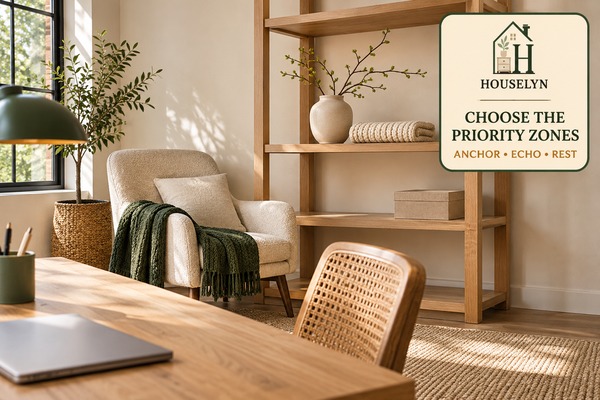
CHOOSE YOUR PRIORITY ZONES
Style One Strong Focal Point
Choose the surface or area that already draws attention when you enter the room.
Repeat One Detail Elsewhere
Carry a small colour, texture or material into one secondary spot so the seasonal idea feels connected.
Leave Other Surfaces Quiet
Empty space is part of the composition. Not every available surface needs another seasonal object.
HOUSELYN EXAMPLE
Let One Corner Do More of the Work
In a home office, keep the desk practical and the shelves mostly unchanged. Choose one open shelf beside a reading chair for the seasonal moment: perhaps a warmer ceramic vessel, a small branch and one textile with more texture. Echo the colour once in a book spine or cushion, then stop. The room registers the change without losing the calm that makes it useful every day.
THE RESULT
The room feels seasonally refreshed, but there is still enough visual quiet for its permanent design to be seen. You also have fewer objects to buy, arrange, store and eventually edit.
HOUSELYN INSIGHT
A few concentrated seasonal moments create more presence than a room filled with small decorations competing for attention.
CONTINUE LEARNING
Edit Before You Add Another Decorative Layer
More decoration does not always create a better room. If seasonal styling is beginning to feel crowded or expensive, use this Houselyn guide to identify the decorating decisions that add cost without improving the finished space.
See the Decorating Mistakes That Waste MoneyCHAPTER 5
Transition Between Seasons Gradually
Seasonal home decor usually feels more natural when the room changes in stages. The first sign of a new season does not need to trigger a complete decorative reset. Often, removing one heavier layer, changing one texture or adjusting the colour balance is enough to begin moving the room in a new direction.
This slower approach gives the room time to breathe between seasons. It also makes the transition easier to manage because you can respond to light, temperature and how the room is actually being used, rather than decorating according to a fixed date on the calendar.

Remove Weight Before You Add a New Mood
Many seasonal transitions work better when subtraction comes first. As winter gives way to spring, remove the densest throws, darker decorative layers or excess visual weight before introducing fresher colour. When summer begins to soften into autumn, the reverse can happen: add one warmer texture before bringing in richer tones.
This keeps the room from carrying two full seasonal stories at once. Instead, there is a short period where familiar pieces overlap and the balance gradually shifts.
MAKE THE CHANGE IN STAGES
Take Away What Feels Too Heavy
Edit the layers that clearly belong to the season you are leaving before adding more.
Keep One Connecting Element
A familiar colour, material or textile can help the old and new seasonal moods sit together briefly.
Introduce the New Season Slowly
Add one stronger seasonal cue only after the room has enough space to receive it.
HOUSELYN EXAMPLE
Move From Summer Into Autumn Without Resetting the Room
In a small breakfast nook, keep the oak table, woven seating and pale walls unchanged. First, remove the lightest summer cloth and introduce a slightly heavier natural linen. A week or two later, add a warmer ceramic or deeper-toned cushion. The room begins to feel more grounded before any strongly autumnal detail appears, which makes the transition feel quieter and more believable.
THE RESULT
The room evolves without looking as though one seasonal display has been removed and another installed in its place. The change feels connected to the home rather than imposed on it.
HOUSELYN INSIGHT
The most convincing seasonal transitions often begin with removing visual weight before adding a new seasonal cue.
CONTINUE LEARNING
Add Depth Without Losing the Calm
If a quieter seasonal transition leaves the room feeling too flat, the answer is not always more decoration. Houselyn's beige-room guide shows how tonal variation, texture and selective contrast can add depth while preserving a calm foundation.
See the Beige Room Looks Flat FixesCHAPTER 6
Keep Seasonal Decorating Practical
Seasonal home decor should make a room feel refreshed, not create another layer of work. If every change requires new purchases, several storage boxes and a complete restyle, the system quickly becomes harder to maintain than the result is worth.
A more useful approach is to work with the home you already have. Keep the pieces that still earn their place, move familiar objects when a different arrangement would give them new energy, and buy only when there is a genuine gap. Seasonal decorating feels much more sustainable when each new addition has a clear reason for being there.

Make the Existing Room Work Harder First
Before bringing anything new into the room, look at what can be moved, removed or used differently. A ceramic bowl that usually sits on a dining table may work on a kitchen shelf. A neutral throw can move from the living room to a reading chair. A vase can feel entirely different with branches instead of flowers.
These small shifts matter because they reveal whether the room actually needs another object. Often, what feels like a shortage of seasonal decor is really a need for stronger editing, better placement or a clearer focal point.
BEFORE YOU BUY
Remove What Is No Longer Helping
Clear visual competition before deciding that the room needs another seasonal piece.
Reposition What You Already Own
A familiar object can feel new when it is used in a different room or given a different role.
Buy Only for a Real Gap
Add something new when it solves a clear visual or practical need rather than simply marking the season.
HOUSELYN EXAMPLE
Refresh a Kitchen Shelf Without Starting a Shopping List
Keep the everyday stoneware, oak board and glass jar that already belong in the kitchen. Remove one or two pieces that make the shelf feel crowded, move a ceramic bowl from another room and add a simple branch from the garden or market. The shelf feels seasonally changed because the balance and texture have shifted, not because everything on it is new.
THE RESULT
Seasonal decorating becomes lighter to manage. Fewer pieces need to be bought, fewer need to be stored later, and the objects that remain have enough space to contribute to the room.
HOUSELYN INSIGHT
A seasonal refresh should earn its place through a better room, not through the number of new things brought into it.
CONTINUE LEARNING
Make Affordable Pieces Look More Considered
When you do decide to add something new, price alone does not determine how polished it will look in the room. Houselyn's guide shows how scale, repetition, contrast and editing can make affordable decor feel far more intentional.
Learn How to Make Affordable Decor Look BetterCHAPTER 7
Create a Storage System That Protects the Decorating System
Seasonal home decor is only as manageable as the system behind it. If decorations are difficult to find, awkward to store or spread across several cupboards, the next seasonal refresh begins with unnecessary work before any styling has even started.
Storage therefore belongs to the decorating process rather than sitting outside it. The aim is not to keep everything. It is to keep the pieces you still value in a way that makes them easy to see, retrieve and return when their season comes around again.

Edit Before You Pack Anything Away
The end of a season is a useful moment to decide what has actually earned the right to return. A damaged ornament, a textile you repeatedly avoid or a decorative piece that never found the right place should not automatically go back into storage simply because there is space for it.
Keeping fewer, better-used pieces also makes the next decorating cycle easier. You can see what you own, avoid unnecessary duplicates and begin with a collection that already reflects the way you want the home to look.
BEFORE IT GOES BACK INTO STORAGE
Store What You Would Choose Again
Give space to the pieces that still work with your home and are likely to return next season.
Keep Related Pieces Together
Organize decor in clear seasonal or functional groups so the next refresh begins with less searching.
Let Go of What Has Stopped Working
Do not use storage space to postpone decisions about pieces you already know you no longer want to use.
HOUSELYN EXAMPLE
Make the Cupboard Part of the Seasonal Routine
Instead of filling several unmarked boxes, give one cupboard shelf to textiles, another to smaller decorative objects and a protected section to fragile pieces. When winter decor is packed away, remove anything damaged or repeatedly unused before it goes back. By the time the next season arrives, the cupboard contains a smaller collection that is easier to work with and easier to enjoy.
THE RESULT
Seasonal decorating starts with a clear collection rather than a search through forgotten boxes. The system takes less space, reduces duplicate buying and makes each seasonal change easier to begin.
HOUSELYN INSIGHT
If a seasonal piece is difficult to store, difficult to find and rarely used, it may no longer deserve a place in the system.
CONTINUE LEARNING
Protect the Budget Behind Every Seasonal Refresh
Better storage makes it easier to see what you already own before buying again. Use Houselyn's Decorating Budget Planner to decide where your decorating money should go, what deserves priority and which purchases can wait.
Plan Your Decorating BudgetCHAPTER 8
Build Your Own Seasonal Rhythm
The aim of seasonal home decor is not to create four completely different versions of the same house. A stronger rhythm keeps the home's identity intact and changes only the layers that help it respond to the time of year. Once you know what belongs to the permanent base, each seasonal refresh becomes an edit rather than a reinvention.
That rhythm will not look identical in every home. Some rooms may need only a textile change and a different branch on the table. Others may benefit from deeper colour, softer lighting or a quieter arrangement as the days become shorter. The useful question is not, “What should I buy for this season?” It is, “What does this room need now?”
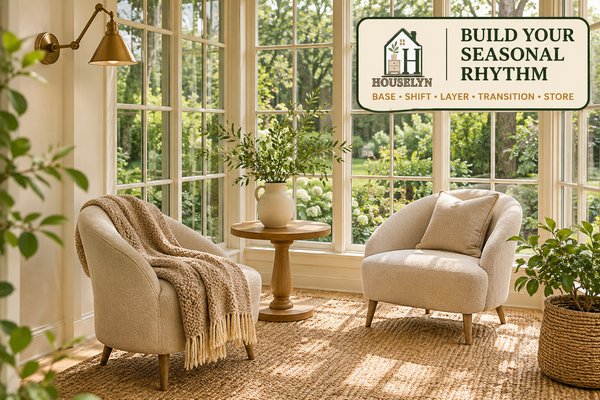
Let the Room Tell You What Needs to Move Next
Begin each change by looking at the room as it is. Keep the pieces that still feel right, remove what belongs clearly to the previous season and notice where the atmosphere now feels too light, too heavy, too bare or too crowded. That observation should guide the next layer.
When the process is working well, the changes become smaller. You stop decorating according to a list of seasonal objects and begin adjusting the balance of the room instead.
THE HOUSELYN SEASONAL RHYTHM
Keep the permanent room strong enough to work without seasonal decoration.
Change only the flexible layers that can alter the mood without rebuilding the room.
Use colour, texture and natural material to give the season presence.
Let one season give way to the next gradually rather than changing everything at once.
Keep only what deserves to return and make it easy to find again.
HOUSELYN WORKED EXAMPLE
One Room, Four Seasons, One Recognisable Home
Start with a sitting room built around warm cream walls, an oatmeal sofa, an oak coffee table, a neutral rug and aged-brass lighting. Those pieces form the base and remain throughout the year.
Remove the heaviest throw, introduce a lighter linen cushion and bring in one fresh green branch. The room feels clearer without becoming floral or themed.
Reduce the number of textile layers, keep the palette light and introduce one woven or glass element. More open surface space becomes part of the seasonal change.
Return a heavier textile, deepen one accent toward camel or muted rust and replace the fresh greenery with a darker natural branch or foliage.
Increase softness with wool or brushed texture, deepen one accent toward forest green and rely more heavily on warm pools of lamplight.
At no point does the sofa, rug, table or core palette need to change. What moves is the weight, texture and atmosphere around them. That is what keeps seasonal decorating connected to the home rather than making the room feel temporarily replaced.
THE RESULT
You end up with a home that responds to the year without losing itself in the process. Seasonal change becomes easier to repeat because the permanent design remains the reference point.
HOUSELYN INSIGHT
The room should still look like your home in every season. The season changes the atmosphere; it does not replace the identity.
CONTINUE LEARNING
Decide What Your Room Actually Needs Before You Change It
If you are ready to put this thinking into practice, use the Houselyn Living Room Refresh Planner to assess the room you already have, identify what deserves to stay and focus your next changes where they will make the greatest difference.
Use the Living Room Refresh PlannerFREQUENTLY ASKED QUESTIONS
Seasonal Home Decor Questions
Seasonal decorating becomes easier when the system stays simple. These answers cover the practical decisions that often come up once the main room has a stable year-round foundation.
How often should I change seasonal home decor?
There is no need to reset a room on a fixed date. Change the layers when the light, temperature or way you use the room begins to shift. Small adjustments made gradually usually feel more natural than one large seasonal change.
How much seasonal decor should I use in one room?
Start with one or two priority areas rather than decorating every surface. A well-chosen table, shelf, console or seating area can carry enough seasonal character for the rest of the room to remain calm.
Can I decorate seasonally without buying new things?
Yes. Move familiar objects, reduce or add textile weight, change branches or flowers, and edit the surfaces that already exist. A different arrangement can alter the mood of a room without adding another purchase.
What seasonal decor can stay out all year?
Pieces with flexible materials and simple forms usually adapt most easily. Ceramics, neutral textiles, baskets, trays, natural wood and understated vessels can remain useful while the colour, contents or surrounding layers change.
How do I stop seasonal decorating from looking cluttered?
Give the strongest seasonal detail enough space around it. Remove competing objects before adding more, repeat only one or two cues elsewhere, and allow some surfaces to stay almost untouched.
How do I transition decor between seasons?
Begin by removing the pieces that feel too heavy, too light or too strongly connected to the season you are leaving. Keep one connecting colour or material, then introduce the next seasonal layer gradually.
Which rooms should I decorate seasonally first?
Start with the rooms you use most and the places guests naturally notice. A living room, entry, dining area or kitchen often gives enough seasonal presence without requiring every room in the house to change.
How can seasonal home decor feel sophisticated rather than themed?
Let atmosphere do more of the work. Use changes in texture, tonal depth, natural material and lighting before relying on obvious motifs. The room should still feel like your home when the seasonal pieces are removed.
FINAL THOUGHT
Let the Seasons Change the Mood, Not the Identity of Your Home
Good seasonal home decor does not ask you to rebuild the same rooms four times a year. It gives the home enough flexibility to respond to changing light, temperature, texture and atmosphere while the pieces that define the space remain familiar.
When the permanent base is strong, the seasonal work becomes lighter. You can change a textile, deepen a colour, introduce a natural element or remove visual weight without losing the room underneath. The result is a home that feels refreshed through the year without becoming dependent on constant buying or complete decorative resets.
Keep the foundation. Change what genuinely improves the season you are in. Edit before you add, allow transitions to happen gradually, and store only the pieces you would be pleased to use again. That is what makes seasonal decorating easier to repeat and easier to live with.
THE HOUSELYN PRINCIPLE
Your home should remain recognisable in every season. The layers may change, but the design underneath should still feel like you.
HOUSELYN KNOWLEDGE LIBRARY
Explore More Practical Home Styling Guidance
Continue through the Houselyn library for practical guidance on room planning, decorating decisions, layout and home refreshes designed to make everyday interiors easier to improve.
WALL SCALE
Wall Art Size Calculator
Find a more balanced artwork size for the wall, furniture and visual space around it.
Calculate Wall Art SizeFLOOR PLANNING
Rug Size Calculator
Choose a rug size that supports the furniture arrangement and grounds the room properly.
Find the Right Rug SizeWINDOW SCALE
Curtain Size Calculator
Work out curtain width and length so the window treatment feels deliberate rather than undersized.
Calculate Curtain SizeROOM LAYOUT
Living Room Layout Planner
Work through furniture placement, circulation and visual balance before changing the room.
Plan the Living Room LayoutWALL COMPOSITION
Gallery Wall Planner
Organize artwork into a more intentional arrangement before committing anything to the wall.
Plan a Gallery WallREFRESH COST
Room Refresh Cost Planner
Estimate the likely cost of a room refresh before deciding which changes deserve priority.
Estimate the Refresh Cost