- Home
- Home Decor
Home Decor Made Simple: A Complete Guide to Creating a Home You'll Love
Create a Home You'll Love with Timeless Home Decor Principles
 Elegant modern open-plan home hero image for Houselyn’s Home Decor Made Simple guide, featuring fresh styling, newly painted walls, and warm decor.
Introduction
A beautifully decorated home isn't about following every trend or filling rooms with expensive furniture. It's about creating spaces that feel welcoming, comfortable, and uniquely yours.
Whether you're decorating your first apartment, refreshing a single room, or transforming your entire home, understanding the principles behind great home decor can help you make confident decisions that stand the test of time.
This comprehensive Houselyn Signature Guide introduces you to the Houselyn Decorating Framework™, a practical five-stage approach that simplifies home decorating into clear, manageable steps. Rather than telling you what to buy, we'll help you understand how to think about decorating so you can create rooms that reflect your lifestyle, personality, and everyday needs.
Throughout this guide, you'll discover timeless decorating principles, room-by-room inspiration, practical styling advice, colour confidence, furniture placement strategies, lighting techniques, and finishing touches that work together to create beautiful, functional spaces.
Whether your style is modern, traditional, minimalist, rustic, or somewhere in between, this guide will help you build a home that feels comfortable, cohesive, and genuinely enjoyable to live in.
Let's begin creating a home you'll love—one thoughtful decision at a time.
Reader Promise
By the end of this guide, you'll understand the timeless principles of home decorating, confidently apply the Houselyn Decorating Framework™, and know how to decorate every room with purpose, comfort, and style.
Primary Call-to-Action
Start with the Houselyn Decorating Framework™ below, then explore each room and decorating principle at your own pace.
What You'll Learn in This Guide
Home decorating doesn't have to feel overwhelming. This guide is designed to help you build confidence, understand timeless decorating principles, and make decisions that create a home you'll enjoy for years to come.
As you work through this Houselyn Signature Guide, you'll learn how to:
- Understand what home decor really is and why it goes beyond simply choosing furniture or accessories.
- Discover your personal decorating style and create spaces that reflect your lifestyle and personality.
- Apply the Houselyn Decorating Framework™ to decorate any room with confidence.
- Build strong decorating foundations using colour, layout, lighting, and balance.
- Layer texture, comfort, and personality to create warm, inviting spaces.
- Decorate every major room in your home using timeless principles rather than short-lived trends.
- Avoid common decorating mistakes that can make rooms feel cluttered, unbalanced, or incomplete.
- Choose home accessories thoughtfully so every decorative element has a purpose.
- Refresh and update your home over time without starting from scratch.
- Continue learning through Houselyn's connected guides, room-by-room resources, and decorating libraries.
Whether you're decorating your first home or refining a space you've lived in for years, this guide will give you practical knowledge, proven methods, and the confidence to create a home you'll truly love.
PART I — Understanding Home Decor
Part Introduction
Purpose
Part I lays the foundation for the entire guide.
Before readers choose colours, furniture, lighting, or accessories, they first need to understand what home decor really is and why it matters.
This section replaces confusion with confidence by introducing the principles that underpin every decorating decision. Readers will discover that great home decor is not about following trends or buying expensive items—it's about creating spaces that support the way people live while expressing their personality and making everyday life more enjoyable.
By the end of Part I, readers will have the mindset and confidence to begin decorating with purpose, making the rest of the guide easier to understand and apply.
Chapter 1
What Is Home Decor? Understanding the Foundations of a Beautiful Home
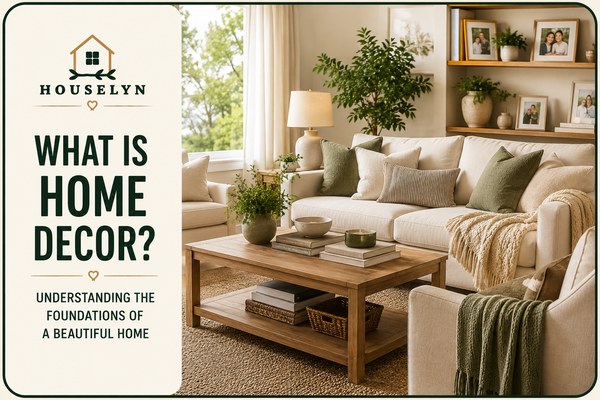 Beautiful family living room with warm neutrals, natural textures, greenery, and timeless everyday home decor styling.
🌿 Houselyn Insight
Beautiful homes are not defined by expensive furniture or perfect styling. They are created through thoughtful decisions that make everyday living more comfortable, functional, and personal.
Chapter Snapshot
Reading Time: 8–10 minutes
Difficulty: ⭐☆☆☆☆ (Beginner)
Framework Stage: Imagine
You'll Learn
- What home decor really means.
- Why decorating is about more than appearance.
- The difference between decorating and simply buying furniture or accessories.
- How home decor shapes comfort, functionality, and everyday living.
- Why understanding these principles will make every decorating decision easier.
What Is Home Decor?
When people hear the phrase home decor, they often think about cushions, wall art, paint colours, or the latest interior trends. While those elements certainly play a role, they represent only a small part of what home decor truly is.
At its heart, home decor is the thoughtful process of creating living spaces that are comfortable, functional, welcoming, and reflective of the people who live in them. Every decorating decision—from choosing a colour palette to arranging furniture or displaying family photographs—contributes to the way a home looks, feels, and functions.
Good home decor is not about copying magazine photographs or buying the most expensive furniture. It is about making intentional choices that support your lifestyle, solve everyday challenges, and create an environment where you genuinely enjoy spending time.
A beautifully decorated home should never exist only to impress visitors. It should first and foremost improve everyday life for the people who call it home.
That is the philosophy behind everything you'll learn throughout this guide.
Home Decor Is More Than Decoration
One of the biggest misconceptions about home decor is that it is purely decorative.
In reality, successful home decor combines beauty with purpose.
Every well-designed room balances several important elements:
- Functionality that supports everyday routines.
- Comfort that encourages relaxation and wellbeing.
- Visual harmony through colour, proportion, and balance.
- Personality that reflects the people who live there.
- Flexibility that allows the space to evolve over time.
For example, a living room filled with beautiful furniture but lacking comfortable seating may look impressive, yet it fails to serve the family who uses it every day. Likewise, a bedroom with expensive accessories but poor lighting or inadequate storage will struggle to provide the restful atmosphere it was intended to create.
The best home decor always begins by asking one simple question:
How do I want this room to improve everyday life?
When you answer that question first, every later decorating decision becomes clearer.
Home Decor Is Personal
No two homes should look exactly alike.
Your home tells the story of your lifestyle, your routines, your interests, and your memories.
Some people love clean, minimalist interiors with calm neutral colours.
Others feel happiest surrounded by rich colours, collected artwork, books, plants, and treasured keepsakes.
Neither approach is inherently better.
The goal of home decor is not to recreate someone else's home but to create a space that feels authentic to you.
Throughout this guide, you'll learn timeless decorating principles that can be adapted to almost any decorating style, whether you prefer modern, traditional, Scandinavian, farmhouse, coastal, industrial, or something entirely your own.
By understanding principles instead of chasing trends, you'll gain the confidence to make decorating decisions that continue to feel right long after the latest fashions have changed.
Home Decor Shapes How a Room Feels
Home decor has a powerful influence on the way a room feels. Colour, lighting, texture, layout, furniture, and accessories all work together to create an atmosphere. A room can feel calm, cheerful, elegant, cosy, spacious, formal, relaxed, or cluttered depending on the decorating choices made within it.
This is why decorating should begin with feeling, not shopping.
Before choosing furniture or accessories, ask yourself how you want the room to feel. Do you want your bedroom to feel restful and peaceful? Do you want your living room to feel warm and welcoming? Do you want your kitchen to feel bright, practical, and energising? Do you want your home office to feel calm, focused, and productive?
Once you understand the feeling you want to create, your decorating decisions become much easier. A calm room may benefit from soft colours, natural materials, simple accessories, and gentle lighting. A lively family room may need durable fabrics, flexible seating, cheerful accents, and practical storage. A stylish entryway may use a mirror, console table, warm lighting, and a few carefully chosen decorative pieces to create a strong first impression.
This is where many people go wrong. They begin by buying individual items they like without considering whether those items work together to create the desired atmosphere. One cushion, one lamp, or one wall colour may look attractive on its own, but good home decor depends on how everything works together.
A beautiful room is not created by one perfect item. It is created by a series of thoughtful choices that support the same overall feeling.
Home Decor Supports Everyday Function
A well-decorated room should not only look good; it should also work well.
Function is one of the most important foundations of home decor because every room has a job to do. A living room may need to support relaxation, conversation, entertainment, reading, and family time. A bedroom should support rest, dressing, storage, and personal routines. A kitchen should support cooking, storage, cleaning, and social connection. An entryway should make it easy to leave and return home without clutter building up.
When decor ignores function, rooms often become frustrating to use. A beautiful coffee table may look stylish but feel impractical if it leaves no space for everyday items. A dining room may look elegant but remain unused if the chairs are uncomfortable. A bedroom may look attractive but feel stressful if storage is poor and surfaces become cluttered.
Good home decor solves these problems by combining beauty with usability.
This does not mean every item must be purely practical. Decorative pieces matter because they bring warmth, character, and personality into the home. But the strongest rooms balance decorative beauty with everyday usefulness.
Before decorating any room, ask:
- What happens in this space every day?
- What needs to be easy to reach?
- Where does clutter usually appear?
- What furniture does the room truly need?
- What feeling should the room create?
- What would make this space easier to enjoy?
These questions help you decorate with purpose rather than guesswork.
Home Decor Reflects the People Who Live There
One of the most meaningful parts of home decor is that it gives your home personality.
A room becomes more memorable when it includes signs of real life: favourite books, family photographs, collected ceramics, meaningful artwork, travel memories, handmade items, plants, heirlooms, or colours that make you feel at home. These details turn a decorated space into a personal space.
This does not mean every surface should be filled. In fact, too many decorative items can make a room feel busy and difficult to maintain. The goal is to choose pieces that add meaning, warmth, or beauty without overwhelming the space.
Personal decor works best when it is intentional. A few carefully chosen items often create more impact than many unrelated accessories. A framed print above a console table, a favourite throw on an armchair, a plant beside a window, or a collection of books on a shelf can say a lot about the people who live in a home.
This is why copying another person's room rarely creates lasting satisfaction. You might admire someone else's style, but your home should still reflect your routines, preferences, and memories. Inspiration is helpful, but imitation can leave a room feeling disconnected from real life.
The most beautiful homes feel lived in, not staged.
They tell a story.
They give people room to relax, gather, work, cook, rest, and enjoy ordinary moments. That is what thoughtful home decor should achieve.
Home Decor Is a Skill You Can Learn
Many people believe they are not naturally good at decorating. They may feel unsure about colours, furniture placement, accessories, or how to make a room feel complete. But home decor is not a talent reserved for a few creative people. It is a skill that can be learned through simple principles and repeated practice.
You do not need to understand every design term before you begin. You do not need a large budget. You do not need a perfect house. You only need a clear approach.
That is why this guide uses the Houselyn Decorating Framework™:
Imagine → Build → Express → Comfort → Evolve
This framework gives you a simple way to approach home decor without feeling overwhelmed.
First, you imagine how you want the room to feel and function. Then you build the foundation with layout, colour, furniture, and lighting. Next, you express personality through meaningful decor. After that, you add comfort through texture, softness, and warmth. Finally, you allow the room to evolve over time as your needs and tastes change.
This approach removes pressure because it reminds you that decorating does not have to happen all at once. You can improve your home gradually, one layer at a time.
📖 Continue Learning
Now that you understand what home decor really means, it's time to discover why thoughtful decorating has a much greater impact than simply making a room look attractive.
In the next chapter, you'll learn how home decor can improve comfort, wellbeing, productivity, family life, and everyday living while helping you create spaces that truly support the way you live.
Next Chapter → Why Home Decor Matters More Than You Think
Chapter 2
Why Home Decor Matters More Than You Think
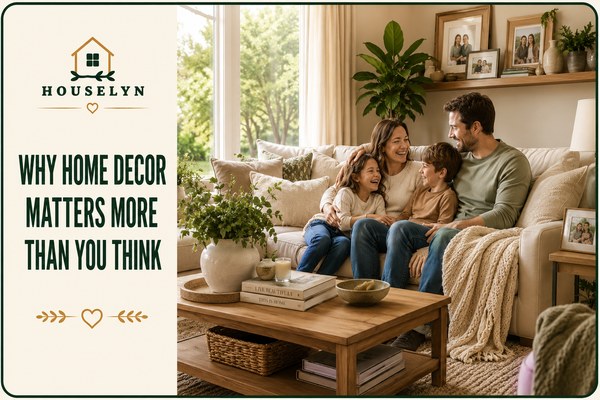 Warm, welcoming family living room showing how thoughtful home decor creates comfort, wellbeing, and a beautiful everyday living space.
🌿 Houselyn Insight
Beautiful homes do not simply impress visitors. They support the people who live in them every day by creating comfort, calm, personality, and practical ease.
Chapter Snapshot
Reading Time: 8–10 minutes
Difficulty: ⭐☆☆☆☆ Beginner
Framework Stage: Imagine
You’ll Learn
- Why home decor affects more than appearance.
- How decorating can influence mood, comfort, and wellbeing.
- Why thoughtful decor improves everyday routines.
- How home decor helps a house feel more personal.
- Why small decorating choices can make a big difference.
Why Home Decor Matters More Than You Think
Home decor matters because the spaces around you influence how you feel, how you move through your day, and how comfortable your home feels to live in. A room does not need to be expensive or perfectly styled to make a positive difference. Even simple decorating choices can affect mood, comfort, confidence, and the way a home supports everyday life.
When a home feels cold, cluttered, unfinished, or disconnected, it can quietly affect the way people experience daily routines. A poorly lit bedroom may feel less restful. A crowded living room may make relaxation difficult. A kitchen with no warmth or personality may feel purely functional rather than inviting. These details may seem small on their own, but together they shape the atmosphere of a home.
Thoughtful home decor helps turn ordinary rooms into spaces that feel intentional. It gives each room a sense of purpose, comfort, and identity. A well-decorated home does not have to follow one particular style. What matters is that the choices work together to support the people who live there.
Good decorating also makes a home easier to enjoy. When colours feel calming, furniture supports conversation, lighting creates warmth, and personal details tell a story, a room begins to feel more complete. These choices help transform a house from a place where people simply live into a place where they feel settled, comfortable, and connected.
Home Decor Can Improve Mood and Wellbeing
The way a room looks and feels can have a direct effect on mood. Natural light, soft textures, balanced colours, comfortable furniture, and meaningful personal touches can make a space feel calmer and more inviting. On the other hand, harsh lighting, visual clutter, awkward layouts, and disconnected decor can make a room feel stressful or unfinished.
This does not mean every home must look serene or neutral. Some people feel happiest in bright, colourful spaces filled with pattern and personality. Others prefer quiet rooms with soft tones and minimal accessories. The important point is that the room should support the mood you want to create.
A bedroom designed with calming colours, gentle lighting, soft bedding, and reduced clutter can feel more restful. A living room with comfortable seating, warm lighting, and personal details can encourage relaxation and conversation. A home office with thoughtful layout, good lighting, and fewer distractions can support focus and productivity.
Home decor works best when it considers both visual beauty and emotional experience. Ask yourself how you want each room to feel before deciding how it should look. That one question can guide many of your decorating choices.
Home Decor Supports Everyday Comfort
Comfort is one of the most important reasons home decor matters. A beautiful room that feels uncomfortable will rarely be enjoyed. True home decor balances appearance with how people actually use the space.
Comfort can come from many details: a rug that softens a living room, curtains that make a bedroom feel warmer, cushions that make seating more inviting, lighting that creates a gentle evening atmosphere, or a layout that makes it easy to move around the room. These decisions may seem simple, but they affect how often a space is used and how enjoyable it feels.
A comfortable home does not need to be filled with luxury items. It needs thoughtful choices. A soft throw on a sofa, a reading lamp near a chair, a plant beside a window, or a small table within reach can all make a room feel more useful and welcoming.
This is why home decor should never be treated as something separate from daily life. The best decorating decisions make everyday living easier, warmer, and more enjoyable.
Home Decor Helps Your Home Feel Personal
One of the most powerful roles of home decor is helping a home reflect the people who live there. Without personal details, even a beautifully furnished room can feel empty or staged.
Personal decor might include photographs, artwork, favourite books, collected objects, family heirlooms, handmade pieces, travel memories, or colours that feel meaningful to you. These details make a home feel lived in and loved.
However, personal does not mean overcrowded. The strongest personal touches are chosen with care. A few meaningful pieces can create more warmth than shelves filled with unrelated items. The goal is not to display everything you own, but to let your home quietly tell your story.
When your home reflects your lifestyle and personality, it becomes more than a collection of rooms. It becomes a place that feels familiar, comforting, and uniquely yours.
Home Decor Can Make Daily Routines Easier
Decorating also affects function. The way furniture is arranged, where lighting is placed, how surfaces are styled, and how each room is organized can all support or disrupt everyday routines.
For example, an entryway with a mirror, a small table, hooks, and a basket for essentials can make leaving the house easier. A dining area with comfortable chairs and warm lighting can encourage more enjoyable meals. A bedroom with simple bedside styling and soft lighting can make evening routines feel calmer.
These are decorating decisions, but they also improve how the home works.
This is where home decor and home organization often overlap. Organization gives items a clear place. Decor makes the space feel welcoming and complete. When the two work together, rooms become both beautiful and practical.
A well-decorated home should not make life harder. It should support the routines that already happen there.
Small Decorating Changes Can Have a Big Impact
Many people delay decorating because they believe they need a large budget, a full makeover, or professional help before they can improve their home. In reality, small changes often create noticeable results.
Changing a lamp shade, adding a rug, rearranging furniture, introducing plants, replacing tired cushions, styling a shelf, hanging artwork, or simplifying a cluttered surface can completely change how a room feels. These updates may be small, but they can make a space feel more intentional and cared for.
This is one of the reasons Houselyn encourages gradual decorating. You do not need to finish your entire home at once. You can improve one room, one corner, or one surface at a time. Each thoughtful decision builds confidence and helps you better understand your own style.
Home decor matters because it gives you the ability to shape your environment in ways that support your life. Every small improvement is a step toward a home that feels more comfortable, personal, and enjoyable.
📖 Continue Learning
Understanding why home decor matters is only the beginning. The next step is learning where home decor ends and interior design begins. While the two are closely connected, they are not the same, and knowing the difference will help you make more confident decorating decisions.
In the next chapter, you'll discover how home decor and interior design work together, what each one focuses on, and why you don't need to be an interior designer to create a beautiful, functional home.
Next Chapter → Home Decor vs Interior Design: Understanding the Differences
Chapter 3
Home Decor vs Interior Design: Understanding the Differences
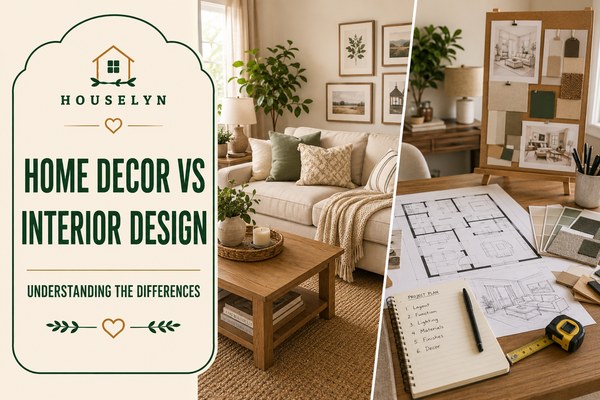 Side-by-side comparison showing how home decor and interior design differ while working together to create beautiful, functional homes.
🌿 Houselyn Insight
You don't need to become an interior designer to create a beautiful home. Understanding timeless home decor principles and applying them thoughtfully can transform the way your home looks, feels, and supports everyday life.
Chapter Snapshot
Reading Time: 8–10 minutes
Difficulty: ⭐☆☆☆☆ Beginner
Framework Stage: Imagine
You'll Learn
- The difference between home decor and interior design.
- Where the two disciplines overlap.
- Why home decor is accessible to everyone.
- When interior design expertise may be beneficial.
- How the Houselyn Decorating Framework™ focuses on practical decorating for everyday homes.
Home Decor vs Interior Design: Understanding the Differences
Many people use the terms home decor and interior design interchangeably, believing they describe the same thing. While they are closely connected and often work together, they focus on different aspects of creating a beautiful home.
Understanding this distinction is important because it helps you approach decorating with confidence. You do not need professional design training to improve your home. In most cases, thoughtful home decor is all that is needed to create spaces that are comfortable, welcoming, and personal.
Throughout this guide, we'll focus primarily on home decor—the practical art of improving the appearance, comfort, and atmosphere of the home you already have.
Home decor focuses on the visual and emotional experience of a home. It involves selecting, arranging, and styling the elements that make a room feel complete and inviting.
What Is Home Decor?
These elements include:
- Colour palettes
- Furniture arrangement
- Rugs
- Curtains
- Lighting
- Wall art
- Decorative accessories
- Plants
- Cushions and throws
- Mirrors
- Decorative storage
- Personal collections
Home decor works with the existing structure of a home. It enhances rooms without changing their fundamental construction or layout.
Its purpose is to create spaces that feel beautiful, functional, and reflective of the people who live there.
This is why home decor is something anyone can learn. It relies on thoughtful choices, timeless principles, and understanding how different elements work together rather than on technical building knowledge.
Where Home Decor and Interior Design Overlap
Although they are different, home decor and interior design complement each other.
A thoughtfully designed room still needs decorating to feel warm and welcoming. Likewise, a beautifully decorated room benefits from a layout that supports everyday living.
For example, an interior designer may determine the best location for windows, lighting, built-in storage, and furniture placement during a renovation. Once that work is complete, home decor brings the room to life through colour, textiles, artwork, accessories, and personal touches.
Together, these disciplines create homes that are both practical and beautiful.
Do You Need an Interior Designer?
For most decorating projects, the answer is no.
Many homeowners can transform their spaces by learning timeless decorating principles and applying them thoughtfully over time.
Projects such as refreshing a living room, updating a bedroom, styling shelves, choosing colours, improving lighting, or adding decorative accessories usually fall within the world of home decor.
However, professional interior design expertise can be valuable when:
- Renovating an entire home.
- Changing room layouts.
- Building an extension.
- Planning a new kitchen or bathroom.
- Making structural alterations.
- Improving accessibility.
- Managing complex construction projects.
Knowing when each discipline is appropriate helps you make informed decisions and avoid unnecessary expense.
Why Houselyn Focuses on Home Decor
At Houselyn, we believe beautiful homes should be achievable for everyone.
Most people are not planning major renovations. They simply want to make their homes more comfortable, organised, and enjoyable to live in.
That is why this guide focuses on practical home decor rather than technical interior design.
The Houselyn Decorating Framework™ helps you improve your home step by step by understanding purpose, building strong foundations, expressing your personality, creating comfort, and allowing your home to evolve naturally over time.
This approach removes much of the pressure associated with decorating. Instead of chasing trends or believing every room must be perfect, you learn timeless principles that work in homes of every size, style, and budget.
Whether you live in a small apartment, a family house, or your first home, thoughtful home decor can help you create spaces that feel welcoming, functional, and uniquely yours.
📖 Continue Learning
You've now built a strong understanding of what home decor is, why it matters, and how it differs from interior design. It's time to move from understanding to action.
In Part II, you'll begin building the foundations of great decorating by discovering your personal style and learning how to make confident decorating decisions before buying furniture or accessories.
Next Part → Part II: Building Strong Home Decor Foundations
PART II
Building Strong Home Decor Foundations
Part Introduction
Every beautifully decorated home begins with a strong foundation. Before choosing furniture, artwork, lighting, or decorative accessories, it is important to understand the decisions that shape the overall look and feel of a space.
Many decorating mistakes happen because people start shopping too early. They buy furniture they love, paint colours that looked good in another home, or decorative pieces that catch their eye without considering how everything will work together.
Thoughtful home decor works differently.
It begins with planning.
In this part of the guide, you'll learn how to build that foundation by discovering your personal decorating style, planning your rooms with confidence, and understanding the timeless principles that make every space feel balanced, comfortable, and cohesive.
These lessons will help you make decorating decisions that work together naturally, saving time, money, and frustration while creating a home that reflects your personality and supports the way you live.
By the end of Part II, you'll have the knowledge and confidence to begin decorating every room with purpose rather than guesswork.
Chapter 4
Finding Your Personal Decorating Style
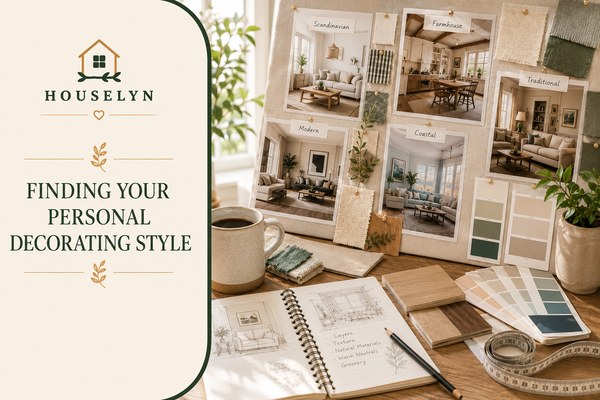 Beautiful mood board featuring modern, Scandinavian, farmhouse, coastal, and traditional decorating inspiration to help identify your personal style.
🌿 Houselyn Insight
Your decorating style isn't something you discover overnight—it's something you develop through experience, inspiration, and thoughtful choices that reflect how you live. The most memorable homes are those that feel authentic rather than perfectly matched.
Chapter Snapshot
Reading Time: 10–12 minutes
Difficulty: ⭐⭐☆☆☆ Beginner
Framework Stage: Build
You'll Learn
- Why personal style matters more than following trends.
- How to recognise the decorating styles you naturally enjoy.
- The characteristics of popular decorating styles.
- Why combining styles often creates the most authentic homes.
- How to build a decorating style that reflects your lifestyle.
Finding Your Personal Decorating Style
One of the biggest mistakes people make when decorating their homes is trying to copy someone else's style without first understanding their own. A beautifully styled room on Pinterest, Instagram, or in a magazine may look inspiring, but that does not automatically mean it will suit your home, your lifestyle, or your personal taste.
Your decorating style should feel like a natural extension of the way you live. It should make your home comfortable, practical, and enjoyable—not like a showroom that feels difficult to maintain or impossible to relax in.
This is why discovering your personal decorating style is one of the most important foundations of successful home decor. It helps you make confident decisions, avoid expensive mistakes, and create rooms that feel cohesive rather than disconnected.
The goal is not to fit into a particular decorating category. The goal is to understand what genuinely makes you feel at home.
Why Your Decorating Style Matters
A clear decorating style acts as a guide for every decision you make.
When you know the atmosphere you want to create, choosing colours, furniture, lighting, artwork, and accessories becomes much easier because every decision supports the same vision.
Without that direction, it is easy to buy attractive items that do not work together. A modern coffee table, a traditional rug, industrial lighting, and farmhouse accessories may each look beautiful individually, but if they do not share a common purpose, the room can begin to feel confused rather than balanced.
Having a decorating style does not mean every room must look identical. Instead, it creates consistency. Different rooms can have their own personality while still feeling connected as part of the same home.
This consistency makes a home feel calm, intentional, and well considered.
Start with the Feeling, Not the Furniture
Many people begin decorating by choosing furniture first.
A better approach is to start by thinking about how you want each room to feel.
Ask yourself questions such as:
- Do I want this room to feel calm or energetic?
- Should the space feel cosy or open?
- Do I prefer simple, uncluttered rooms or spaces with rich personality?
- What colours make me feel comfortable?
- What materials do I naturally enjoy?
- How do I want people to feel when they enter this room?
These answers become the foundation of your decorating style.
For example, if you value peace and simplicity, you may naturally be drawn to soft neutral colours, clean lines, natural wood, and uncluttered spaces. If you enjoy warmth and character, you may prefer layered textures, rich colours, vintage furniture, books, artwork, and collected accessories.
Neither approach is right or wrong.
The best decorating style is the one that supports your life.
Explore Popular Decorating Styles
Learning about different decorating styles can help you identify the elements you naturally enjoy.
Some of the most popular styles include:
Modern
Modern homes often feature clean lines, simple shapes, uncluttered layouts, and a restrained colour palette. The focus is on functionality, balance, and carefully chosen statement pieces.
Scandinavian
Scandinavian interiors combine simplicity with warmth. Light colours, natural wood, soft textiles, and practical furniture create bright, welcoming spaces that feel comfortable without unnecessary decoration.
Traditional
Traditional decorating embraces timeless furniture, elegant details, rich wood tones, layered fabrics, and symmetrical layouts. These homes often feel classic, refined, and welcoming.Farmhouse
Farmhouse style combines natural materials, vintage-inspired furniture, warm neutral colours, and comfortable textures to create relaxed family-friendly spaces.
Coastal
Coastal interiors use light colours, natural textures, airy layouts, and subtle seaside influences to create calm and refreshing environments.
Remember, these styles are starting points—not strict rules. Most beautifully decorated homes borrow ideas from several styles rather than following only one.
Build a Style That Reflects Your Life
Your decorating style should support your lifestyle just as much as your personal taste.
A family with young children may prioritise durable fabrics, flexible seating, washable rugs, and practical storage. Someone working from home may value calm colours, organised workspaces, and lighting that supports productivity. A couple living in a small apartment may focus on multifunctional furniture and space-saving solutions.
Your home should work for your daily routines before it tries to impress visitors.
This is why Houselyn encourages decorating with purpose. Every room should reflect the people who use it, not simply the latest trend.
As your lifestyle changes, your decorating style can evolve too. A home is never truly finished. It grows alongside the people who live there.
Inspiration Is Helpful—Copying Isn't
Looking at beautifully decorated homes is an excellent way to gather ideas. It helps you discover colours, layouts, furniture combinations, and styling techniques you may not have considered before.
However, inspiration should always be adapted rather than copied.
Every home has different architecture, natural light, room sizes, budgets, and family needs. What works perfectly in one home may not feel right in another.
Instead of asking:
"How can I copy this room?"
Ask:
"What do I like about this room, and how can I adapt that idea to suit my own home?"
This simple shift encourages creativity rather than comparison.
Over time, your decorating style will become more personal, more consistent, and far more satisfying than trying to recreate someone else's home.
📖 Continue Learning
Finding your personal decorating style gives you direction, but successful home decor also requires a plan. Before choosing paint colours, buying furniture, or adding accessories, it's important to understand how to create a decorating plan that keeps every decision working together.
In the next chapter, you'll learn how to plan your home decor with confidence, avoid costly decorating mistakes, and build rooms that feel balanced, practical, and beautifully connected.
Next Chapter → Planning Your Home Decor with Confidence
Chapter 5
Planning Your Home Decor with Confidence
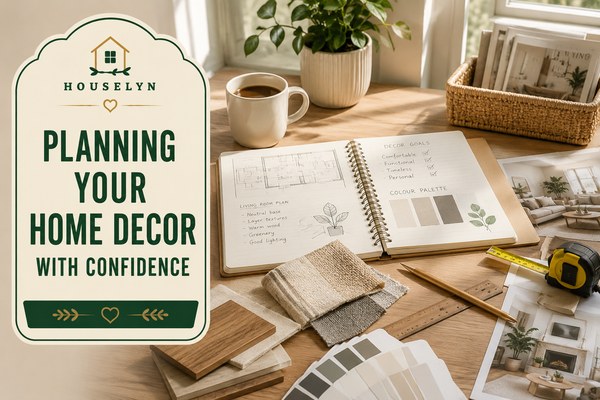 Home decor planning workspace with mood board, room layout sketches, colour palette, notebook, and fabric samples for confident decorating.
🌿 Houselyn Insight
The most expensive decorating mistake is buying before planning. A clear vision, realistic measurements, and a simple budget will almost always produce better results than impulse purchases.
Chapter Snapshot
Reading Time: 10–12 minutes
Difficulty: ⭐⭐☆☆☆ Beginner
Framework Stage: Build
You'll Learn
- Why planning is the foundation of successful home decor.
- How to define the purpose of each room before decorating.
- How to create a decorating plan that saves time and money.
- Why budgeting and prioritising help prevent costly mistakes.
- How to confidently make decorating decisions before shopping.
Planning Your Home Decor with Confidence
One of the biggest reasons decorating projects become expensive, frustrating, or unfinished is a lack of planning. Many people begin by buying furniture, paint, or accessories simply because they like them, only to discover later that the pieces don't work together, don't fit the room, or don't support the way they actually live.
Thoughtful home decor begins long before the first purchase is made.
Planning allows you to understand your space, define your goals, establish priorities, and make confident decorating decisions that work together. Instead of reacting to individual products or following short-term trends, you build a clear vision that guides every choice from colours and furniture to lighting and accessories.
A decorating plan does not have to be complicated. In fact, the most effective plans are often simple. They focus on purpose, practicality, and creating rooms that feel comfortable and cohesive rather than perfect.
By taking time to plan first, you reduce costly mistakes, avoid unnecessary purchases, and create a home that develops naturally over time.
Start with the Purpose of the Room
Before choosing colours, furniture, or decorative accessories, ask one important question:
What is this room designed to do?
Every room has a primary purpose. A living room may need to support conversation, relaxation, reading, family movie nights, or entertaining guests. A bedroom should encourage rest, comfort, and calm. A kitchen should make cooking, dining, and gathering easier. A home office should support focus and productivity.
Understanding how a room will be used helps you make decorating decisions that improve daily life instead of simply filling the space with attractive objects.
For example, a family living room may prioritise comfortable seating, durable fabrics, and flexible layouts. A guest bedroom may focus on simplicity, warmth, and practical storage. The decorating choices should always support the activities that happen in the room.
Purpose should always come before appearance.
Create a Clear Vision
Once you understand the room's purpose, create a clear picture of how you want it to feel.
Think beyond furniture and accessories.
Ask yourself:
- Should the room feel calm or energetic?
- Do I want a cosy atmosphere or an open, airy feeling?
- Will this be a formal space or somewhere people can relax?
- What colours help create that feeling?
- What materials and textures fit that atmosphere?
Collect inspiration from magazines, Pinterest, books, and beautifully decorated homes, but remember that inspiration should guide your ideas rather than dictate them.
The goal is not to recreate someone else's room. The goal is to identify the elements that consistently appeal to you and adapt them to your own home.
A simple mood board—whether digital or on paper—can help you see how colours, furniture, lighting, and accessories work together before you begin buying anything.
Measure Before You Buy
One of the most common decorating mistakes is purchasing furniture without measuring the room.
A sofa that looks perfect in a showroom may overwhelm a smaller living room. A rug that seems large enough online may appear too small once it is placed beneath your furniture. Artwork may feel lost on a large wall or dominate a smaller space.
Before making any purchase:
- Measure the room.
- Measure doors, windows, and walkways.
- Measure existing furniture.
- Measure the new item.
Sketching a simple floor plan can also help you experiment with furniture placement before moving heavy pieces around the room.
Planning in advance saves time, money, and unnecessary frustration.
Set a Realistic Decorating Budget
Decorating does not have to happen all at once.
In fact, trying to complete an entire room in a single weekend often leads to rushed decisions and unnecessary spending.
Instead, create a realistic budget based on your priorities.
Decide which items deserve the greatest investment. For many people, these include sofas, beds, dining tables, mattresses, or quality lighting—pieces that are used every day and expected to last for years.
Smaller accessories, artwork, cushions, decorative objects, and seasonal items can often be added gradually over time.
A phased approach allows you to spread costs while making more thoughtful decorating decisions.
Remember that a well-decorated home is built over time, not in a single shopping trip.
Avoid Decorating Mistakes Before They Happen
Good planning helps you avoid many of the decorating mistakes that frustrate homeowners.
Some of the most common include:
- Buying furniture before measuring the room.
- Choosing paint colours before testing samples.
- Purchasing matching furniture sets without considering balance.
- Following trends that do not suit your lifestyle.
- Ignoring lighting when planning a room.
- Over-accessorising every surface.
- Decorating without considering storage or function.
Planning encourages you to slow down and ask whether each decision supports your overall vision.
When every purchase has a purpose, your home naturally feels more balanced and cohesive.
The Houselyn Decorating Framework™ Starts with Planning
Everything you've learned so far fits naturally into the Build stage of the Houselyn Decorating Framework™.
Planning gives structure to your creativity.
Instead of decorating randomly, you begin with purpose, develop a vision, understand your space, set realistic priorities, and make informed decisions.
This foundation allows every later stage of the framework—adding personality, creating comfort, and evolving your home over time—to happen with much greater confidence.
Good home decor is not the result of luck.
It is the result of thoughtful planning followed by intentional action.
📖 Continue Learning
Now that you know how to plan your home decor with confidence, it's time to learn the timeless principles that professional decorators use to create rooms that feel balanced, comfortable, and visually connected.
In the next chapter, you'll discover the core home decor principles that never go out of style and learn how to apply them in every room of your home.
Next Chapter → Home Decor Principles That Never Go Out of Style
Chapter 6
Home Decor Principles That Never Go Out of Style
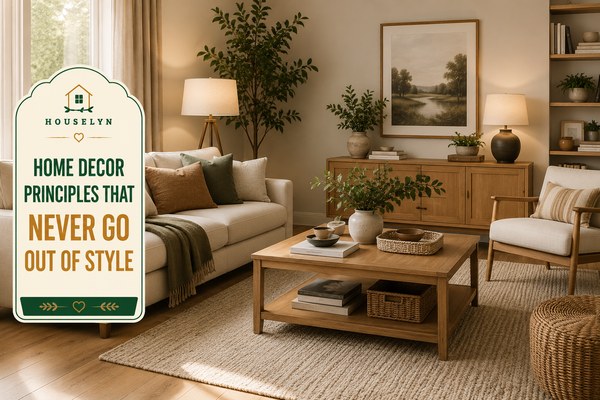 Beautiful living room illustrating timeless home decor principles through balanced furniture, layered textures, lighting, and harmonious styling.
🌿 Houselyn Insight
Timeless home decor is built on principles, not trends. When your rooms are balanced, comfortable, and designed around the way you live, they'll continue to feel beautiful long after decorating fashions have changed.
Chapter Snapshot
Reading Time: 12–15 minutes
Difficulty: ⭐⭐⭐☆☆ Intermediate
Framework Stage: Build
You'll Learn
- The timeless principles that create beautiful home decor.
- Why balance, proportion, and harmony matter.
- How colour, lighting, texture, and scale work together.
- How to create rooms that feel cohesive rather than cluttered.
- Why timeless decorating principles outlast changing trends.
Home Decor Principles That Never Go Out of Style
Home decorating trends change every year. New colours become popular, furniture styles evolve, and social media introduces fresh ideas almost daily. While trends can provide inspiration, they should never become the foundation of your decorating decisions.
The homes that continue to look beautiful year after year are rarely built around trends. Instead, they rely on timeless decorating principles that create balance, comfort, functionality, and visual harmony.
These principles work in every decorating style, whether your home is modern, Scandinavian, traditional, farmhouse, coastal, minimalist, or something entirely unique. They also work regardless of your budget because they focus on how the elements of a room relate to one another rather than how much individual pieces cost.
Understanding these principles gives you confidence. Instead of wondering whether a room "looks right," you'll understand why it feels balanced, welcoming, and complete.
Balance Creates Visual Stability
Balance is one of the most important principles of home decor because it helps a room feel comfortable and visually stable.
A balanced room does not necessarily mean everything must be perfectly symmetrical. Instead, it means the visual weight of furniture, colours, lighting, artwork, and accessories feels evenly distributed throughout the space.
For example, a large sofa on one side of a room may be balanced by two comfortable armchairs on the other. A substantial piece of artwork may be balanced by a tall plant and a floor lamp. Even colour contributes to balance by preventing one area from feeling visually heavier than another.
Rooms that lack balance often feel awkward without people immediately understanding why. By paying attention to visual weight rather than exact symmetry, you can create spaces that feel calm and inviting.
Proportion and Scale Help Everything Work Together
Proportion and scale ensure that every element in a room feels appropriate for both the space and the items around it.
A small rug beneath a large seating area can make a room feel disconnected. Oversized artwork on a narrow wall may dominate the space, while tiny decorative objects can disappear in a large room.
Choosing furniture, lighting, rugs, and accessories that suit the size of the room helps everything work together naturally.
When planning a room, always consider how one item relates to another rather than evaluating each piece on its own.
Good proportion makes a room feel intentional instead of accidental.
Harmony Creates a Cohesive Home
Harmony is the principle that connects every decorating decision into one unified story.
This does not mean every room should look identical. Instead, the colours, materials, finishes, and overall style should feel connected as you move throughout the home.
Repeating similar wood finishes, complementary colour palettes, or consistent materials helps different rooms relate to one another without becoming repetitive.
Harmony also comes from restraint. Not every beautiful item needs to be displayed in the same room. Carefully selecting pieces that work together creates a stronger overall impression than filling every available surface.
Texture Brings Warmth and Comfort
Without texture, even the most carefully decorated room can feel flat and uninviting.
Texture adds depth by combining different materials that appeal to both sight and touch.
Examples include:
- Linen curtains
- Woven baskets
- Natural wood furniture
- Soft wool throws
- Cotton cushions
- Ceramic accessories
- Stone surfaces
- Jute rugs
- Indoor plants
Layering these materials creates richness without relying on bold colours or excessive decoration.
Texture is often the difference between a room that looks attractive in photographs and one that genuinely feels warm and welcoming in everyday life.
Lighting Changes Everything
Lighting is one of the most powerful decorating tools available, yet it is often overlooked.
Natural daylight helps rooms feel larger, brighter, and more welcoming during the day. In the evening, layered lighting creates warmth and atmosphere.
Rather than relying on a single ceiling light, combine several light sources whenever possible.
For example:
- Ceiling lighting for overall illumination.
- Table lamps for comfort.
- Floor lamps for reading.
- Wall lights for atmosphere.
- Candles for soft ambient light.
The goal is to create flexibility so the room can adapt to different activities throughout the day.
Thoughtful lighting enhances every other decorating decision.
Less Can Often Achieve More
One of the easiest decorating mistakes is believing every empty surface must be filled.
In reality, well-designed rooms allow decorative elements room to breathe.
Leaving some space around furniture, artwork, and accessories helps each item stand out while preventing the room from feeling cluttered.
Instead of displaying everything at once, choose fewer pieces that have greater meaning or visual impact.
Thoughtful editing is just as important as thoughtful decorating.
Many of the world's most beautiful homes feel peaceful because they balance decoration with simplicity.
Timeless Principles Create Timeless Homes
Decorating trends will continue to evolve, but balance, harmony, proportion, texture, lighting, and thoughtful planning will never go out of style.
These principles provide a foundation that allows your home to grow naturally over time. You can update colours, accessories, artwork, or seasonal decorations without losing the overall character of your rooms because the underlying structure remains strong.
This is the approach Houselyn encourages.
Rather than chasing every new trend, build your home around timeless principles that support comfort, beauty, and everyday living. Once those foundations are in place, your personal style can evolve naturally while your home continues to feel welcoming, cohesive, and uniquely yours.
📖 Continue Learning
You've now built a strong decorating foundation by understanding what home decor is, why it matters, how it differs from interior design, how to discover your style, and the timeless principles that guide every successful room.
In the next part of this guide, you'll begin applying these principles room by room, starting with practical decorating strategies for the spaces you use every day.
Next Part → Part III: Home Decor for Every Room
PART III
Home Decor for Every Room
Understanding decorating principles is only the first step. The real transformation happens when you begin applying those ideas throughout your home.
Every room serves a different purpose, and successful home decor reflects those differences. A bedroom should encourage rest and relaxation, while a living room should invite conversation and comfort. Kitchens need to balance beauty with practicality, and entryways should create a welcoming first impression while supporting everyday routines.
Although each room has unique challenges, the timeless decorating principles you've already learned remain the same. Balance, proportion, harmony, lighting, texture, and thoughtful planning continue to guide every decorating decision.
In this part of the guide, you'll discover how to apply those principles room by room, creating spaces that feel connected while still serving their individual purpose. Rather than following trends, you'll learn practical decorating strategies that work in homes of every size, style, and budget.
By the end of this section, you'll have a complete understanding of how to decorate every major area of your home with confidence.
Chapter 7
Living Room Home Decor
Chapter Snapshot
Reading Time: 10–12 minutes
Difficulty: ⭐⭐☆☆☆ Beginner
Framework Stage: Express
You'll Learn
- How to decorate a welcoming living room.
- How to arrange furniture for comfort and conversation.
- How colour, lighting, and texture shape the atmosphere.
- How to avoid common living room decorating mistakes.
- When to explore dedicated living room decorating resources.
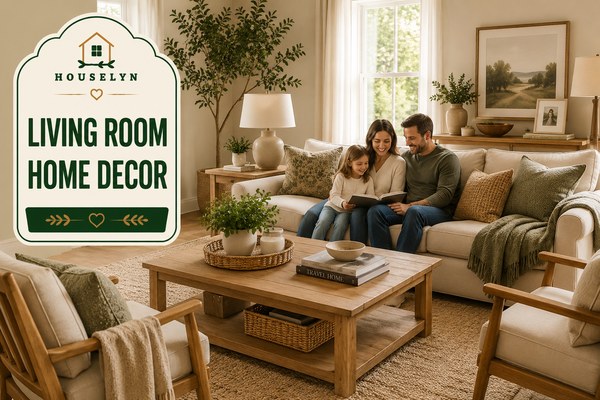 Beautiful living room featuring timeless home decor with balanced furniture, layered textures, natural light, and warm neutral styling.
🌿 Houselyn Insight
The best living rooms aren't defined by expensive furniture. They're the rooms where people naturally want to gather, relax, and spend time together because they feel comfortable, welcoming, and genuinely lived in.
Living Room Home Decor
The living room is often considered the heart of the home. It is where families relax after a busy day, friends gather for conversation, children play, and many everyday memories are made. Because this room serves so many purposes, successful living room home decor is about much more than choosing attractive furniture. It is about creating a space that feels welcoming, comfortable, functional, and reflective of the people who use it.
Whether your living room is large or small, modern or traditional, the same decorating principles apply. Begin by understanding how you want the room to function, then build your decorating decisions around that purpose. A thoughtfully decorated living room should encourage people to spend time there, not simply admire it from a distance.
The goal is to create a room that balances beauty with everyday living.
Begin with a Practical Layout
Every successful living room starts with a furniture layout that supports the way the space will be used.
Before adding decorative accessories, decide how people will move through the room, where conversations will naturally happen, and which features deserve attention. Many living rooms have a natural focal point such as a fireplace, large window, feature wall, or television. Positioning furniture around that focal point helps the room feel organised and balanced.
Avoid pushing every piece of furniture against the walls unless the room genuinely requires it. Leaving furniture slightly away from the walls can often make the space feel more welcoming while encouraging conversation.
A well-planned layout should allow people to move comfortably through the room without obstacles while keeping seating close enough for relaxed conversation.
Choose Comfort Before Decoration
A beautiful living room that is uncomfortable will rarely become the favourite room in the house.
When selecting furniture and decorative elements, prioritise comfort alongside appearance. Sofas should suit the way your household relaxes. Chairs should encourage conversation. Coffee tables should be practical as well as attractive.
Layer comfort throughout the room using:
- Soft cushions
- Cosy throws
- Comfortable seating
- Area rugs
- Warm lighting
- Natural materials
- Gentle textures
These details help transform a room from simply looking attractive to feeling inviting every day.
Create Balance with Colour and Texture
Colour helps establish the mood of a living room.
Soft neutrals often create a calm and timeless atmosphere, while deeper colours can add warmth, character, and sophistication. Whatever palette you choose, aim for consistency rather than too many competing colours.
Texture is equally important.
Natural wood, woven baskets, linen curtains, wool throws, ceramic accessories, and indoor plants add depth without making the room feel busy. Combining smooth, soft, natural, and woven materials creates a richer and more welcoming environment.
Instead of relying on many decorative objects, focus on layering a smaller number of quality textures throughout the room.
Use Lighting to Shape the Atmosphere
Lighting has a significant influence on how a living room feels.
Natural daylight makes rooms feel brighter and more spacious during the day, while layered lighting creates warmth in the evening.
Rather than relying on one ceiling light, combine different light sources such as:
- Floor lamps
- Table lamps
- Wall lighting
- Accent lighting
- Candles for special occasions
This allows the room to adapt to reading, entertaining, family evenings, or quiet relaxation.
Thoughtful lighting also highlights artwork, plants, and architectural features, making the room feel more complete.
Houselyn Recommended Living Room Decor Essentials
Once you understand your living room layout, lighting, and comfort needs, these essentials can help you create a space that feels warm, balanced, and welcoming.
Choose pieces that support the atmosphere, comfort, and layout of your room—not items that simply look attractive on their own.
Add Personality Thoughtfully
A living room should reflect the people who live there.
Personal photographs, artwork, books, collected objects, travel souvenirs, and favourite decorative pieces all help create a sense of identity. However, personality should be added with intention rather than filling every available shelf or surface.
Choose accessories that have meaning or contribute to the overall atmosphere. A carefully styled coffee table, a favourite piece of artwork, or a beautiful plant often creates more impact than many unrelated decorative items.
Remember that empty space is part of good decorating too. Allowing decorative elements room to breathe helps the entire space feel calmer and more refined.
For a deeper room-by-room approach with practical examples and inspiration, explore our dedicated Living Room Decor Ideas guide.
Avoid Common Living Room Decorating Mistakes
Many decorating problems can be avoided with a few simple habits.
Common mistakes include:
- Choosing a rug that is too small for the seating area.
- Purchasing oversized furniture for the room.
- Using only one source of lighting.
- Placing artwork too high on the wall.
- Filling every surface with decorative accessories.
- Ignoring storage for everyday items.
- Decorating before deciding how the room will actually be used.
Slowing down, planning carefully, and decorating with purpose almost always leads to better long-term results.
A living room should evolve naturally as your family's needs change rather than trying to be completed all at once.
Build on These Foundations
The ideas in this chapter provide a strong foundation for creating a welcoming living room, but every home is different. Room size, natural light, family routines, and personal style all influence the decorating decisions you make.
As your confidence grows, you can explore more detailed topics such as colour palettes, furniture layouts, seasonal styling, storage solutions, and decorating ideas tailored to your specific space.
For a deeper room-by-room approach with practical examples and inspiration, explore our dedicated Living Room Decor Ideas guide, where you'll find detailed decorating strategies, layouts, and timeless ideas for creating a living room you'll love.
📖 Continue Learning
A welcoming living room is the heart of the home, but the bedroom is where comfort, rest, and personal wellbeing take centre stage. Decorating this space requires a different approach, with greater emphasis on relaxation, softness, and creating a peaceful atmosphere.
In the next chapter, you'll learn how to decorate a bedroom using timeless home decor principles that encourage better rest, improve comfort, and create a space that truly feels like your own.
Next Chapter → Bedroom Home Decor
Chapter 8
Bedroom Home Decor
Chapter Snapshot
Reading Time: 10–12 minutes
Difficulty: ⭐⭐☆☆☆ Beginner
Framework Stage: Express
You'll Learn
- How to decorate a bedroom that encourages rest and relaxation.
- Why colour, lighting, and texture influence sleep quality.
- How to balance comfort with functionality.
- Common bedroom decorating mistakes to avoid.
- Where to find more detailed bedroom decorating inspiration.
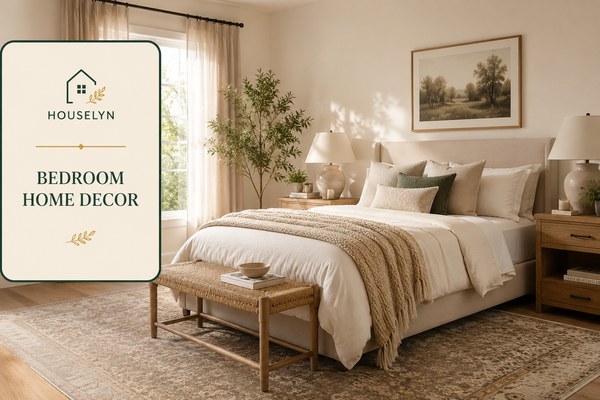 Warm and relaxing bedroom featuring layered bedding, soft lighting, natural textures, and timeless bedroom home decor.
🌿 Houselyn Insight
A beautiful bedroom isn't measured by how luxurious it looks. It's measured by how well it helps you relax, recharge, and wake up feeling ready for the day ahead.
Bedroom Home Decor
A bedroom should be more than just a place to sleep. It should be a personal retreat where you can unwind, recharge, and begin each new day feeling refreshed. Successful bedroom home decor focuses on creating an atmosphere that encourages relaxation while remaining practical for everyday living.
Unlike social spaces such as living rooms or dining rooms, bedrooms are deeply personal. They reflect your routines, your comfort preferences, and the environment you need to rest well. Because of this, decorating a bedroom is less about impressing visitors and more about creating a space that genuinely supports your wellbeing.
Whether your bedroom is spacious or compact, modern or traditional, the same timeless decorating principles apply. A balanced layout, calming colours, comfortable furnishings, thoughtful lighting, and carefully chosen accessories work together to create a room that feels peaceful and welcoming.
Create a Calm Foundation
The first step in decorating any bedroom is establishing a calm and uncluttered foundation.
Choose colours that promote relaxation rather than overstimulation. Soft neutrals, warm whites, gentle greys, muted greens, earthy taupes, and subtle blues are all popular choices because they create a peaceful atmosphere without feeling cold or clinical.
Furniture should be arranged to make movement around the room easy. Avoid overcrowding the space with unnecessary pieces, and allow enough room for everyday activities such as dressing, making the bed, and accessing storage.
A bedroom that feels open and organised is naturally more relaxing than one filled with visual clutter.
Invest in Comfort First
Comfort should always take priority over decoration.
Your mattress, bedding, and pillows influence how well you sleep every night, making them some of the most valuable investments in your home. Once these essentials are in place, decorative layers can enhance both comfort and style.
Create a welcoming bed by combining:
- Quality bedding
- Soft pillows
- Layered cushions
- A textured throw blanket
- Breathable natural fabrics
These elements add visual depth while making the room feel warm and inviting.
Comfort also extends beyond the bed. A soft area rug, comfortable reading chair, or upholstered bench can make the entire room feel more enjoyable to use.
Use Lighting to Support Relaxation
Lighting plays a significant role in creating a restful bedroom.
Natural daylight helps you wake up feeling refreshed, while softer lighting in the evening encourages relaxation before sleep.
Instead of relying solely on a ceiling light, combine multiple light sources such as:
- Bedside lamps
- Wall sconces
- Floor lamps
- Dimmable lighting
- Soft accent lighting
Layered lighting allows you to adjust the atmosphere depending on the time of day and the activities taking place in the room.
Warm lighting generally creates a more relaxing environment than harsh, bright illumination.
Add Texture Without Adding Clutter
Texture brings warmth and character to a bedroom without overwhelming the space.
Layer different materials such as:
- Linen bedding
- Cotton cushions
- Knitted throws
- Upholstered headboards
- Woven baskets
- Natural wood furniture
- Soft rugs
These materials create depth while maintaining a calm, cohesive appearance.
Rather than filling shelves and bedside tables with numerous decorative objects, choose a smaller number of meaningful accessories that contribute to the overall atmosphere.
A bedroom should feel restful, not visually busy.
Houselyn Recommended Bedroom Decor Essentials
After creating a strong decorating foundation, these carefully selected bedroom essentials can help improve comfort, warmth, and everyday relaxation.
Choose quality pieces that improve comfort and complement your overall decorating style rather than following short-term trends.
Keep the Bedroom Personal
A bedroom should reflect the person who uses it.
Personal photographs, meaningful artwork, favourite books, indoor plants, and carefully chosen decorative pieces help create a space that feels unique without becoming cluttered.
Avoid decorating simply to match current trends. Instead, focus on creating a room that supports your daily routines and makes you feel comfortable every time you walk through the door.
The most successful bedroom home decor feels authentic rather than perfectly staged.
Avoid Common Bedroom Decorating Mistakes
Many decorating mistakes can be avoided with a little planning.
Common issues include:
- Choosing furniture that is too large for the room.
- Using harsh overhead lighting without softer alternatives.
- Overfilling surfaces with decorative accessories.
- Ignoring practical storage.
- Choosing style over comfort.
- Using too many competing colours or patterns.
Keeping the room simple, balanced, and functional almost always produces better long-term results.
Continue Building Your Bedroom
The ideas in this chapter provide a solid foundation for decorating a comfortable and welcoming bedroom. As your confidence grows, you can explore more specialised topics such as colour palettes, furniture layouts, storage solutions, seasonal styling, and decorating for different room sizes.
To continue learning, explore our dedicated bedroom guides:
🏡 Explore More Bedroom Decorating Guides
- Bedroom Decor Ideas
- Cozy Bedroom Ideas
- Bedroom Color Ideas
- Small Bedroom Decor Ideas
- Bedroom Organization Ideas
📖 Continue Learning
Now that you've created a calm and comfortable bedroom, it's time to turn your attention to one of the busiest and most functional spaces in the home.
In the next chapter, you'll learn how thoughtful kitchen home decor combines beauty with practicality to create a space that supports cooking, dining, and everyday family life.
Next Chapter → Kitchen Home Decor
Chapter 9
Kitchen Home Decor
Chapter Snapshot
Reading Time: 10–12 minutes
Difficulty: ⭐⭐☆☆☆ Beginner
Framework Stage: Express
You'll Learn
- How to decorate a kitchen without sacrificing functionality.
- How colours, lighting, and materials create a welcoming atmosphere.
- Practical ways to add warmth and personality.
- Common kitchen decorating mistakes to avoid.
- Where to find more detailed kitchen decorating and organisation ideas.
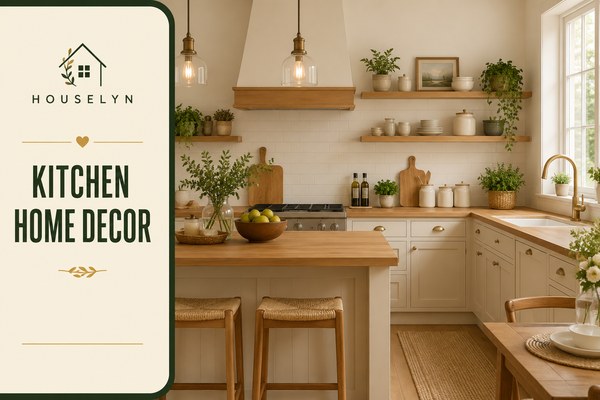 Beautiful kitchen featuring natural wood, warm lighting, open shelving, greenery, and timeless kitchen home decor ideas.
🌿 Houselyn Insight
The most successful kitchens are designed around everyday life. When beauty and practicality work together, cooking becomes easier, the space feels calmer, and the kitchen naturally becomes a place where people enjoy spending time.
Kitchen Home Decor
The kitchen is often described as the heart of the home, and for good reason. It is where meals are prepared, conversations happen, children gather after school, and family routines begin and end. Because it plays such an important role in everyday life, successful kitchen home decor should balance beauty with practicality.
Unlike some rooms that are used only occasionally, the kitchen works hard every day. Decorative choices must therefore support cooking, cleaning, dining, and organisation while creating a space that feels warm and welcoming.
Whether your kitchen is large or compact, modern or traditional, timeless decorating principles will help you create a room that is both functional and enjoyable to spend time in.
Start with Function
Before thinking about decorative accessories, consider how your kitchen is used.
Ask yourself:
- Is there enough workspace for food preparation?
- Can people move comfortably through the room?
- Are frequently used items easy to reach?
- Does the layout support everyday cooking?
- Are worktops free from unnecessary clutter?
A beautiful kitchen becomes even more enjoyable when it works efficiently.
Decorating should enhance the way the room functions rather than making everyday tasks more difficult.
Build a Warm Foundation
Colour and materials set the overall atmosphere of a kitchen.
Natural wood, warm whites, soft greys, cream tones, muted greens, and subtle earthy colours create a timeless backdrop that works with many decorating styles.
Open shelving, timber accents, ceramic accessories, and natural stone surfaces help introduce warmth without making the room feel busy.
If your kitchen already has bold cabinetry or statement worktops, use decorative elements to create balance rather than introducing competing colours.
A calm colour palette allows decorative details to stand out naturally.
Add Personality Without Creating Clutter
The kitchen should feel personal, but it should also remain practical.
Instead of filling every worktop with decorative objects, choose a smaller number of meaningful accessories that contribute to the atmosphere while leaving enough workspace for everyday cooking.
Popular decorative additions include:
- Wooden chopping boards
- Ceramic storage jars
- Fresh herbs
- Small indoor plants
- Framed artwork
- Decorative bowls
- Linen tea towels
- Woven baskets
These details make the room feel lived in while maintaining a clean and organised appearance.
Use Lighting to Create Atmosphere
Lighting influences both the appearance and functionality of a kitchen.
Natural daylight helps the room feel brighter during the day, while layered lighting creates warmth during the evening.
A combination of lighting often works best, including:
- Ceiling lighting for overall brightness.
- Pendant lights above islands or dining areas.
- Under-cabinet lighting for food preparation.
- Soft accent lighting for atmosphere.
Good lighting makes the kitchen feel more inviting while supporting everyday tasks safely and comfortably.
Houselyn Recommended Kitchen Decor Essentials
After creating a functional kitchen layout, these carefully selected essentials can help add warmth, organisation, and timeless style to your space.
Choose products that improve everyday usability while complementing your overall kitchen decorating style.
Avoid Common Kitchen Decorating Mistakes
Many kitchens become difficult to use because decorative choices take priority over function.
Common mistakes include:
- Filling every worktop with accessories.
- Choosing decorative items that reduce workspace.
- Ignoring task lighting.
- Using too many competing colours.
- Displaying items that are difficult to clean.
- Following trends that quickly date the room.
The most successful kitchens remain simple, organised, and easy to maintain while still reflecting the personality of the household.
Continue Building Your Kitchen
This chapter introduces the timeless principles of kitchen home decor, but there is much more to explore.
If you'd like practical organisation systems, storage solutions, pantry ideas, and detailed decorating inspiration, continue with these Houselyn guides:
🏡 Explore More Kitchen Guides
📖 Continue Learning
With your kitchen complete, it's time to focus on another important room that benefits from thoughtful decorating. Bathrooms should feel clean, relaxing, and functional while making the most of the available space.
In the next chapter, you'll discover how timeless bathroom home decor combines comfort, organisation, and simple styling to create a space that feels like a private retreat.
Next Chapter → Bathroom Home Decor
Chapter 10
Bathroom Home Decor
Chapter Snapshot
Reading Time: 8–10 minutes
Difficulty: ⭐⭐☆☆☆ Beginner
Framework Stage: Express
You'll Learn
- How to create a calm, spa-inspired bathroom.
- How colours, lighting, and materials influence the atmosphere.
- Ways to decorate without reducing functionality.
- How to maximise comfort in both small and large bathrooms.
- Common bathroom decorating mistakes to avoid.
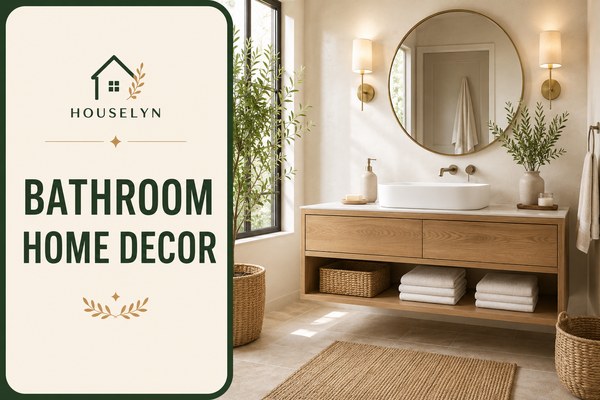 Calm bathroom featuring natural wood, soft towels, greenery, warm lighting, and timeless bathroom home decor ideas.
🌿 Houselyn Insight
A relaxing bathroom isn't about size—it's about simplicity. Soft textures, thoughtful lighting, organised storage, and a few carefully chosen decorative details can transform even the smallest bathroom into a peaceful retreat.
Bathroom Home Decor
A well-decorated bathroom should feel clean, calm, and comfortable. Although it is often one of the smallest rooms in the home, it plays an important role in your daily routine. It is where mornings begin, evenings wind down, and moments of relaxation often take place.
Successful bathroom home decor is about more than making the room look attractive. It should help create an environment that feels fresh, organised, and practical while encouraging comfort and wellbeing.
Whether you have a compact family bathroom, an en-suite, or a spacious master bathroom, timeless decorating principles will help you make the most of the available space without sacrificing functionality.
Start with Clean, Functional Design
The best bathrooms begin with practicality.
Before introducing decorative accessories, consider how the room functions every day.
Ask yourself:
- Is there enough storage for daily essentials?
- Can people move comfortably around the room?
- Are frequently used items easy to access?
- Does the room feel organised rather than crowded?
- Are worktops kept as clear as possible?
A clean, organised layout immediately makes a bathroom feel more spacious and relaxing.
Decorating should support this sense of order rather than compete with it.
Choose Colours That Create Calm
Colour has a significant influence on how a bathroom feels.
Soft whites, warm creams, gentle greys, muted greens, pale blues, and natural stone tones are all timeless choices because they create a fresh, relaxing atmosphere.
If you enjoy stronger colours, consider using them as accents through towels, artwork, or decorative accessories instead of permanent fixtures. This allows the room to evolve more easily over time.
Keeping the main colour palette calm helps the bathroom feel brighter, cleaner, and more spacious.
Add Warmth with Natural Materials
Bathrooms can sometimes feel cold because of the hard surfaces they contain.
Natural materials help soften the space and create a more welcoming atmosphere.
Consider adding warmth through:
- Wooden accessories
- Woven baskets
- Cotton towels
- Linen shower curtains
- Ceramic containers
- Indoor plants
- Natural stone details
- Soft bathroom rugs
These textures create balance without making the room feel cluttered.
Even a few carefully chosen natural elements can completely change the atmosphere.
Use Lighting to Enhance Comfort
Lighting is often overlooked in bathrooms, yet it has a major influence on both function and atmosphere.
Natural daylight makes the room feel bright and refreshing during the day. In the evening, softer layered lighting creates a more relaxing environment.
A combination of lighting usually works best, including:
- Ceiling lighting for general illumination.
- Vanity lighting around mirrors.
- Accent lighting for atmosphere.
- Natural daylight wherever possible.
Good lighting also improves everyday tasks such as shaving, applying makeup, and personal grooming.
Houselyn Recommended Bathroom Decor Essentials
Once your bathroom layout is functional, these carefully selected essentials can help create a cleaner, calmer, and more relaxing space.
Choose accessories that improve both comfort and organisation while maintaining a clean, timeless appearance.
Keep Decorative Accessories Simple
Bathrooms do not need many decorative items to feel complete.
A single plant, neatly folded towels, a ceramic soap dispenser, a framed print, or a scented candle can often create more impact than numerous small accessories.
Keep worktops as clear as possible and choose decorative items that are both attractive and practical.
The goal is to create a peaceful environment that feels easy to maintain.
Avoid Common Bathroom Decorating Mistakes
Many bathroom decorating mistakes happen when style takes priority over practicality.
Common examples include:
- Overcrowding small spaces with decorative items.
- Choosing poor lighting around mirrors.
- Ignoring storage needs.
- Using colours that make the room feel darker.
- Filling every surface with accessories.
- Forgetting to introduce warmth through texture.
Simple, thoughtful decorating almost always creates a more relaxing bathroom than excessive decoration.
Continue Building Your Bathroom
The ideas in this chapter introduce the timeless principles of bathroom home decor. As your confidence grows, you can continue improving the space with better storage, smarter organisation, and decorative details that suit your lifestyle.
For practical organisation strategies and inspiration throughout the home, explore these Houselyn resources:
🏡 Continue Your Home Journey
📖 Continue Learning
With your bathroom complete, it's time to focus on another space where thoughtful decorating encourages people to gather and connect.
In the next chapter, you'll learn how to decorate a dining room that feels warm, inviting, and perfectly suited to everyday meals and special occasions.
Next Chapter → Dining Room Home Decor
Chapter 11
Dining Room Home Decor
Chapter Snapshot
Reading Time: 8–10 minutes
Difficulty: ⭐⭐☆☆☆ Beginner
Framework Stage: Express
You'll Learn
- How to create a welcoming dining room.
- Why layout, lighting, and table styling matter.
- How to decorate for everyday meals and special occasions.
- Simple ways to add warmth and personality.
- Common dining room decorating mistakes to avoid.
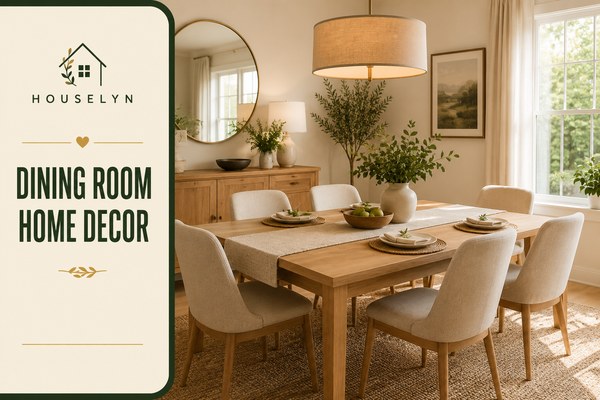 Warm dining room with wooden dining table, upholstered chairs, pendant light, greenery, neutral styling, and timeless dining room home decor.
🌿 Houselyn Insight
The most memorable dining rooms aren't the most formal—they're the ones where people feel comfortable enough to linger after the meal, enjoy conversation, and create lasting memories together.
Dining Room Home Decor
The dining room is much more than a place to eat. It is where families gather, conversations unfold, celebrations take place, and everyday moments become lasting memories. Whether your dining space is a dedicated room, part of an open-plan layout, or a small dining nook, thoughtful decorating can transform it into one of the most welcoming areas of your home.
Successful dining room home decor balances comfort, practicality, and visual appeal. The room should feel inviting enough for everyday meals while also adapting easily for holidays, celebrations, and entertaining guests.
Rather than focusing on formal decorating rules, begin by creating a space that encourages people to sit down, relax, and enjoy spending time together.
Start with the Right Layout
Every dining room begins with a layout that supports movement and conversation.
The dining table should be positioned so people can move comfortably around it, pull out chairs easily, and access nearby storage without difficulty. If space allows, leave generous walkways around the table to prevent the room from feeling crowded.
In open-plan homes, use rugs, lighting, or furniture placement to visually define the dining area while maintaining a natural connection with the surrounding living spaces.
A well-planned layout makes the room feel organised before any decorative accessories are added.
Choose Furniture That Fits the Room
The dining table is naturally the focal point of the room, but it should also suit the available space.
A table that is too large can make the room feel cramped, while one that is too small may not meet the needs of your household.
Choose dining chairs that are both comfortable and proportionate to the table. If possible, test seating comfort before purchasing, especially if your family enjoys long meals or regular entertaining.
Natural wood finishes, upholstered chairs, and timeless designs often remain attractive for many years without feeling dated.
Create a Warm Atmosphere with Lighting
Lighting has a major influence on the dining experience.
During the day, natural light creates an open and welcoming environment. In the evening, softer lighting encourages conversation and helps the room feel more intimate.
Pendant lights positioned above the dining table often work well because they define the space while providing practical illumination.
Additional lighting such as wall lights, table lamps, or dimmable fixtures allows you to adjust the atmosphere for different occasions.
Warm lighting generally creates a more inviting dining room than harsh, bright lighting.
Style the Table with Simplicity
A beautifully styled dining table should complement everyday living rather than become an obstacle.
Instead of filling the table with permanent decorations, choose a few carefully selected pieces that are easy to move when the table is in use.
Popular options include:
- Ceramic vases
- Fresh flowers
- Greenery
- Candles
- Linen table runners
- Wooden serving boards
- Decorative bowls
Keeping the centrepiece simple allows the table to remain practical while still adding warmth and personality to the room.
Houselyn Recommended Dining Room Decor Essentials
After creating a practical dining layout, these carefully selected essentials can help make your dining room feel warmer, more comfortable, and more inviting.
Choose timeless pieces that improve everyday dining while complementing the overall style of your home.
Add Personality Without Overcrowding
The dining room should reflect your personality while remaining comfortable for everyday use.
Artwork, mirrors, indoor plants, sideboards, and carefully chosen decorative objects can all contribute to the atmosphere without overwhelming the room.
Avoid filling every available surface with accessories. Leaving some open space allows individual decorative pieces to stand out and helps the room feel calm and balanced.
Remember that comfort should always take priority over decoration.
Avoid Common Dining Room Decorating Mistakes
Many decorating mistakes are easy to avoid with thoughtful planning.
Common examples include:
- Choosing oversized furniture.
- Hanging pendant lights too high or too low.
- Overcrowding the dining table with decorations.
- Ignoring comfortable seating.
- Using lighting that feels too harsh.
- Forgetting to create visual balance around the room.
A dining room should encourage people to stay, relax, and enjoy each other's company rather than simply serving as another functional space.
Continue Building Your Dining Space
This chapter introduces the timeless principles of dining room home decor, but there are many ways to personalise the space further as your confidence grows.
For additional inspiration and guidance, explore these Houselyn resources:
🏡 Continue Your Decorating Journey
📖 Continue Learning
With your dining room complete, it's time to focus on the first space people experience when entering your home.
In the next chapter, you'll learn how thoughtful entryway home decor creates an organised, welcoming first impression while supporting everyday routines for your household.
Next Chapter → Entryway Home Decor
Chapter 12
Entryway Home Decor
Chapter Snapshot
Reading Time: 8–10 minutes
Difficulty: ⭐⭐☆☆☆ Beginner
Framework Stage: Express
You'll Learn
- Why the entryway sets the tone for your home.
- How to balance style with everyday practicality.
- Essential decorating elements for large and small entryways.
- How to reduce clutter without sacrificing personality.
- Common entryway decorating mistakes to avoid.
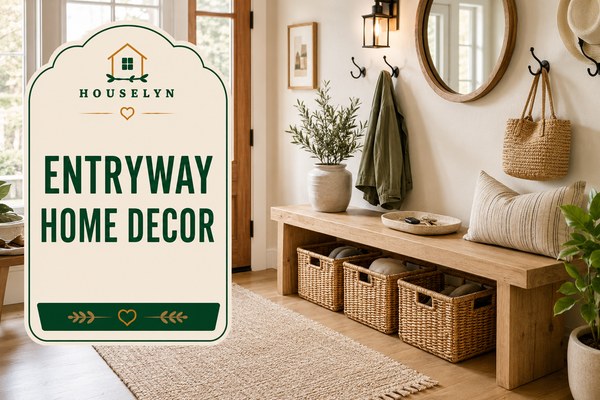 Bright entryway with wooden bench, wall hooks, woven baskets, round mirror, indoor plant, neutral styling, and timeless entryway home decor.
🌿 Houselyn Insight
Your entryway welcomes you home every day. Keeping it organised, comfortable, and thoughtfully decorated can reduce stress, simplify daily routines, and create a positive first impression for both your family and your guests.
Entryway Home Decor
The entryway is the first space people see when they enter your home and the last place they experience before they leave. Although it is often one of the smallest areas in the house, it has a significant influence on both first impressions and everyday routines.
Successful entryway home decor is about creating a space that feels welcoming while remaining practical enough to handle daily life. Shoes, coats, bags, keys, umbrellas, and post all tend to pass through this area, making thoughtful organisation just as important as attractive styling.
Whether you have a spacious hallway, a compact entrance, or simply a small section beside your front door, timeless decorating principles can help transform the space into an organised and inviting introduction to your home.
Start with Everyday Function
Before choosing decorative accessories, think about how your household uses the entryway every day.
Ask yourself:
- Where do shoes naturally collect?
- Is there a convenient place for coats and bags?
- Where are keys and everyday essentials stored?
- Can people enter and leave without obstacles?
- Does the space feel welcoming or cluttered?
Designing around these routines helps ensure the entryway supports your lifestyle rather than creating daily frustration.
Good decorating always begins with function.
Combine Storage with Style
An organised entryway immediately feels calmer.
Instead of hiding storage completely, choose furniture and accessories that combine practicality with attractive design.
Useful additions include:
- Entryway benches
- Woven baskets
- Wall hooks
- Shoe cabinets
- Console tables
- Decorative trays
- Coat stands
These pieces help organise everyday essentials while contributing to the overall appearance of the space.
The best storage solutions are the ones that are easy to use every day.
Create a Warm Welcome
The entryway should introduce visitors to the personality of your home.
A mirror helps reflect natural light while making smaller spaces feel larger. A simple runner rug adds warmth and defines the entrance. Indoor plants introduce freshness, while artwork or family photographs provide a personal touch.
Choose only a few carefully selected decorative elements rather than filling every available surface.
A welcoming entryway feels open, comfortable, and easy to maintain.
Use Lighting to Improve the Atmosphere
Lighting influences both safety and appearance.
Natural daylight is ideal where available, but layered lighting helps create a warm atmosphere during darker mornings and evenings.
Consider combining:
- Ceiling lighting
- Wall sconces
- Table lamps (where space allows)
- Accent lighting
Warm lighting creates a friendlier first impression while making the entryway feel connected to the rest of the home.
Houselyn Recommended Entryway Decor Essentials
Once you've planned a functional entryway, these essentials can help create an organised and welcoming entrance that supports everyday life.
Choose practical pieces that make everyday routines easier while creating a welcoming first impression.
Avoid Common Entryway Decorating Mistakes
Because entryways are often compact, small decorating mistakes can quickly make them feel crowded.
Common examples include:
- Adding furniture that blocks walkways.
- Providing too little storage for everyday essentials.
- Using poor lighting.
- Filling every surface with decorative accessories.
- Forgetting to include a mirror.
- Ignoring durability when choosing rugs or flooring.
A simple, organised entryway usually feels more welcoming than one filled with unnecessary decorative items.
Continue Building Your Entryway
This chapter introduces the timeless principles of entryway home decor, but there are many opportunities to improve organisation and maximise smaller spaces.
For additional ideas and practical inspiration, explore these Houselyn guides:
🏡 Explore More Entryway & Organisation Guides
📖 Continue Learning
A welcoming entryway helps you start and end each day well. Next, you'll discover how thoughtful home office home decor can improve productivity, comfort, and focus while creating a workspace that blends beautifully with the rest of your home.
Next Chapter → Home Office Home Decor
Chapter 13
Home Office Home Decor
Chapter Snapshot
Reading Time: 8–10 minutes
Difficulty: ⭐⭐☆☆☆ Beginner
Framework Stage: Express
You'll Learn
- How to create a productive and comfortable home office.
- Why layout, lighting, and organisation influence focus.
- How to decorate a workspace without creating distractions.
- Ways to personalise your office while maintaining functionality.
- Common home office decorating mistakes to avoid.
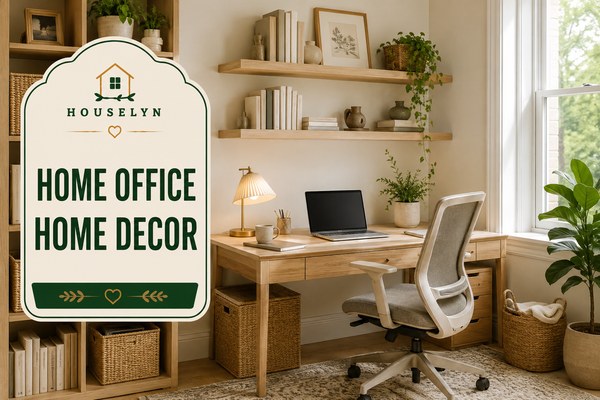 Stylish home office with natural wood desk, ergonomic chair, greenery, layered lighting, and timeless home office home decor.
🌿 Houselyn Insight
The best home offices are designed to support the way you work. A comfortable chair, thoughtful lighting, organised storage, and a calm environment will often improve productivity more than the latest gadgets.
Home Office Home Decor
A thoughtfully decorated home office should help you do your best work. Whether you work remotely, run a business, study, or simply manage household tasks, your workspace has a direct impact on your focus, comfort, and productivity.
Successful home office home decor is about much more than choosing an attractive desk or matching furniture. It involves creating an environment that supports concentration, reduces distractions, and makes spending time at your desk more enjoyable.
Whether your office occupies an entire room or a small corner of your home, the same timeless decorating principles apply. Good planning, comfortable furniture, thoughtful lighting, and organised storage will always have a greater impact than following the latest office trends.
Start with a Workspace That Works
Before introducing decorative accessories, make sure your workspace supports the way you work every day.
Ask yourself:
- Is your desk large enough for your daily tasks?
- Is your chair comfortable for extended periods?
- Do you have enough storage for frequently used items?
- Can you access everything without creating clutter?
- Does the room encourage focus?
A practical workspace forms the foundation of every productive home office.
Decorating should improve that experience rather than compete with it.
Prioritise Comfort and Ergonomics
Comfort is one of the most important investments you can make in your home office.
An ergonomic chair, a desk at the correct height, and a comfortable monitor position all contribute to better posture and reduced fatigue during long working sessions.
Whenever possible:
- Position your monitor at eye level.
- Keep frequently used items within easy reach.
- Support your lower back with an ergonomic chair.
- Maintain enough desk space for comfortable movement.
Small improvements in comfort often produce significant improvements in productivity.
Use Lighting to Improve Focus
Lighting affects both concentration and wellbeing.
Natural daylight is ideal because it helps reduce eye strain and creates a brighter working environment. Position your desk close to a window whenever practical, while avoiding glare on computer screens.
Layer your lighting using:
- Ceiling lighting
- Desk lamps
- Floor lamps (where appropriate)
- Accent lighting for shelving
Warm, balanced lighting creates a workspace that feels comfortable throughout the day while remaining professional.
🛍️ Houselyn Recommended Home Office Essentials
Once you've created a functional workspace, the right office essentials can improve comfort, organisation, productivity, and the overall look of your home office. Focus on investing in quality pieces that support the way you work every day.
- Home Office Desks – Build a comfortable and productive workspace with a desk that suits your available space and daily workflow.
- Ergonomic Office Chairs – Improve comfort and support better posture during long working hours.
- Desk Lamps – Add focused task lighting that reduces eye strain and creates a comfortable working environment.
- Desk Organisers – Keep stationery, notebooks, and everyday essentials tidy and within easy reach.
- Bookshelves – Store books, files, and decorative accessories while keeping your workspace organised.
- Monitor Stands – Raise your monitor to a more comfortable viewing height and free up valuable desk space.
- Cable Management Systems – Keep cables organised and reduce visual clutter for a cleaner, safer workspace.
- Indoor Plants – Introduce natural greenery to make your home office feel fresher, calmer, and more inspiring.
Choose timeless, high-quality essentials that improve productivity, comfort, and organisation while complementing the overall style of your home office.
Keep the Workspace Organised
An organised office is easier to use and often feels less stressful.
Use shelves, drawers, storage boxes, and cable management solutions to keep everyday items tidy without making them difficult to access.
Avoid allowing paperwork, cables, and office supplies to accumulate on your desk. Clear work surfaces make it easier to focus while giving the room a cleaner, more professional appearance.
Organisation and decorating should always work together.
Add Personality Without Distraction
A home office should feel motivating as well as practical.
Personal touches such as artwork, framed photographs, indoor plants, decorative books, or meaningful objects help make the room enjoyable to work in without overwhelming the space.
Choose decorative items that inspire rather than distract.
A few carefully selected pieces usually have more impact than numerous decorative accessories competing for attention.
Avoid Common Home Office Decorating Mistakes
Many home offices become uncomfortable because decorating decisions ignore everyday working habits.
Common mistakes include:
- Choosing style over ergonomics.
- Working with poor lighting.
- Allowing clutter to build up.
- Using distracting colours or decorations.
- Buying oversized furniture for small spaces.
- Ignoring storage requirements.
A productive home office should make work feel easier rather than more difficult.Continue Building Your Workspace
This chapter introduces the timeless principles of home office home decor, but there are many opportunities to refine your workspace further.
For more inspiration on creating organised, functional spaces throughout your home, explore these Houselyn guides:
🏡 Explore More Organisation Guides
📖 Continue Learning
Your indoor spaces are now beautifully covered. The final room chapter will help you extend your decorating style outdoors by creating welcoming patios, balconies, gardens, and other outdoor living areas.
In the next chapter, you'll learn how outdoor home decor can transform exterior spaces into comfortable extensions of your home.
Next Chapter → Outdoor Home Decor
Chapter 14
Outdoor Home Decor
Chapter Snapshot
Reading Time: 3–4 minutes
Difficulty: ⭐☆☆☆☆ Beginner
Framework Stage: Complete
You'll Learn
- How outdoor spaces complete your home.
- Why comfort and simplicity matter outdoors.
- How to extend your decorating style beyond your walls.
- The importance of creating spaces you'll actually use.
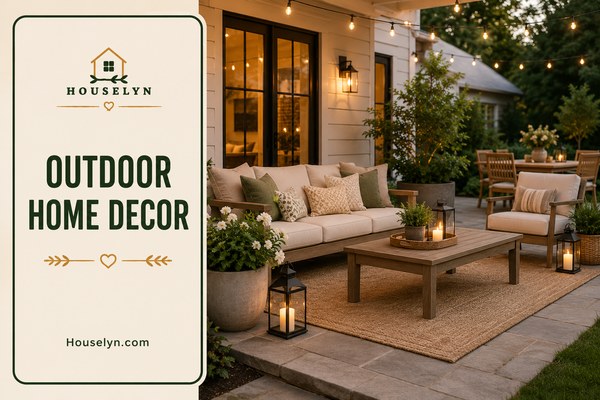 Welcoming outdoor living space with comfortable seating, greenery, warm lighting, and timeless outdoor home decor ideas.
🌿 Houselyn Insight
Outdoor home decor isn't about creating a picture-perfect garden. It's about designing a space that invites you to slow down, enjoy fresh air, and spend more meaningful time with family and friends.
Outdoor Home Decor
Your home's story doesn't end at the back door. Patios, balconies, gardens, porches, and outdoor seating areas have become valuable living spaces where families relax, entertain guests, enjoy meals, or simply unwind after a busy day.
Just like the rooms inside your home, outdoor spaces should reflect the way you live. Rather than filling them with decorative items, focus on creating comfortable areas that invite people to spend time outdoors. Durable furniture, soft cushions, warm lighting, healthy plants, and weather-resistant accessories work together to create spaces that feel welcoming throughout the year.
You don't need a large garden to enjoy beautiful outdoor home decor. Even a compact balcony or small patio can become a peaceful retreat with thoughtful planning and a few carefully chosen pieces. The goal is to create an outdoor area that feels like a natural extension of your home while remaining practical for your lifestyle and local climate.
Above all, remember that outdoor decorating is about creating experiences. Whether you're enjoying a quiet morning coffee, hosting a summer barbecue, or relaxing with family on a warm evening, the most successful outdoor spaces are the ones that encourage you to step outside and enjoy them.
🛍️ Houselyn Recommended Outdoor Home Decor Essentials
Complete your outdoor living space with durable, weather-resistant essentials that combine comfort, functionality, and timeless style.
- Outdoor Seating Sets – Create a comfortable place to relax and entertain.
- Outdoor Rugs – Define seating areas and add warmth underfoot.
- Outdoor Lanterns – Add soft lighting and evening ambience.
- String Lights – Create a welcoming atmosphere after sunset.
- Outdoor Planters – Bring colour and greenery to patios and balconies.
- Outdoor Cushions – Add comfort while introducing colour and texture.
- Fire Pits – Extend the use of your outdoor space into cooler evenings.
- Patio Umbrellas – Provide shade and improve comfort on sunny days.
Invest in quality outdoor essentials that encourage you to enjoy your outdoor space throughout the seasons.
Bringing Your Home Decor Journey Together
🌿 Final Houselyn Insight
A beautiful home isn't created by decorating every room perfectly. It's created by making thoughtful improvements over time, choosing quality over quantity, and designing spaces that genuinely support the way you live. That's the foundation of every Houselyn home.
Decorating a home is rarely about finding the perfect piece of furniture or following the latest trend. It's about creating spaces that support the way you live, make everyday routines easier, and reflect the people who call your house a home.
Throughout this guide, you've discovered that successful home decor begins with understanding the purpose of each room before choosing colours, furniture, lighting, or accessories. By building on timeless decorating principles instead of short-lived trends, you can create a home that continues to feel welcoming, comfortable, and functional for years to come.
From designing a living room that encourages conversation to creating a bedroom that promotes restful sleep, a kitchen that balances beauty with practicality, and an entryway that keeps daily life organised, every room contributes to the overall experience of your home. Even your home office and outdoor spaces become more enjoyable when they are designed with comfort, organisation, and everyday living in mind.
Remember that great decorating rarely happens all at once. The most beautiful homes evolve gradually through thoughtful decisions, meaningful purchases, and improvements that reflect changing needs over time. There is no pressure to complete every room immediately. Focus on one space at a time, make intentional choices, and allow your home to grow naturally alongside your lifestyle.
Most importantly, don't compare your home to perfectly styled photographs on social media. A well-decorated home isn't measured by how expensive it looks or how closely it follows current trends. It's measured by how it makes you feel every time you walk through the door. When your home is comfortable, organised, functional, and filled with things you genuinely love, you've achieved something far more valuable than a fashionable interior—you've created a home that truly works for you.
At Houselyn, we believe the best homes combine timeless design with practical living. Every decorating decision should make your home easier to enjoy, easier to maintain, and better suited to your everyday life. By applying the ideas throughout this guide and continuing to build your knowledge one room at a time, you'll have the confidence to create a home that remains beautiful, welcoming, and uniquely yours for many years to come.
🏡 Explore the Houselyn Knowledge Library
Your home decorating journey doesn't end here. Continue building your knowledge with Houselyn's growing collection of practical guides covering home decor, organisation, storage solutions, and room-by-room inspiration. Whether you're refreshing a single room or transforming your entire home, these resources will help you decorate with confidence while creating beautiful, functional spaces that support everyday living.
Home Decor Guides
Home Organisation Guides
- Home Organization Made Simple
- Kitchen Organization Ideas
- Pantry Organization Ideas
- Linen Closet Organization Ideas
- Bedroom Organization Ideas
- Nightstand Organization Ideas
- Shoe Storage Ideas
- Toy Storage Ideas
Keep Learning with Houselyn
New decorating and organisation guides are added regularly to help you create a home that's comfortable, organised, and beautifully designed. We recommend bookmarking Houselyn and checking back often for fresh inspiration, practical tutorials, and expert advice.
Start exploring more guides and continue creating a home you'll love—one room at a time.
© 2026 Houselyn. All Rights Reserved.
Helping you create a beautiful, organised home—one room at a time.
Have A Great Story About This Topic?
Do you have a great story about this? Share it!