- Home
- Decluttering Tips
31 Decluttering Tips for Every Room in Your Home
Simple, practical decluttering strategies to help you eliminate excess, reduce stress, and create a cleaner, more organized home room by room.
 Beautiful organized home featuring clutter-free living spaces, smart storage solutions, and minimalist organization systems.
Decluttering tips can help transform your home by reducing stress, improving organization, and creating spaces that are easier to clean and enjoy.
Clutter tends to build slowly. A few items left on the counter, an overfilled drawer, or a crowded closet may not seem like a problem at first. Over time, however, excess belongings can make rooms feel smaller, increase cleaning time, and create daily frustration.
The good news is that decluttering does not require becoming a minimalist or throwing everything away. The goal is simply to remove what no longer serves a purpose and create systems that make your home easier to manage.
Whether you're tackling a single room or your entire home, the strategies in this guide will help you simplify your space and create lasting organization.
Why We Need Decluttering Tips
Effective decluttering tips do more than create a cleaner home.
They can help:
- Reduce stress
- Improve productivity
- Make cleaning easier
- Create more storage space
- Improve home functionality
- Reduce decision fatigue
- Support a calmer lifestyle
Decluttering is often the first step before organizing because it reduces the number of items that need storage.
Affiliate Disclosure: This page may contain affiliate links. If you purchase through these links, Houselyn may earn a commission at no additional cost to you. As an Amazon Associate, Houselyn may earn from qualifying purchases.
1. Start with the Easiest Room First
One of the most effective decluttering tips is to begin with a room that feels manageable rather than tackling the most overwhelming area first.
Starting small helps build momentum and confidence.
Good places to begin include:
- Guest bedrooms
- Bathrooms
- Linen closets
- Entryway storage areas
Completing a smaller space first creates motivation and makes larger projects feel more achievable.
2. Use the One-Year Rule
When deciding whether to keep an item, ask yourself a simple question:
"Have I used this within the last year?"
If the answer is no, it may be time to donate, recycle, or discard it.
The one-year rule works particularly well for:
- Clothing
- Kitchen gadgets
- Home décor
- Hobby supplies
- Seasonal accessories
While some sentimental items deserve exceptions, this rule helps eliminate many unnecessary belongings.
3. Declutter One Drawer at a Time
Decluttering an entire room can feel overwhelming.
Instead, focus on one small area at a time.
For example:
- One kitchen drawer
- One bathroom cabinet
- One desk drawer
- One storage basket
This approach makes progress feel manageable and prevents burnout.
Small wins often lead to bigger successes.
4. Remove Duplicate Items
Most homes contain multiple versions of the same item.
Decluttering duplicates can quickly create additional storage space.
Common examples include:
- Extra coffee mugs
- Duplicate utensils
- Multiple water bottles
- Excess towels
- Unused storage containers
Keep your favorites and donate or discard the rest.
Reducing duplicates is one of the fastest ways to simplify your home.
5. Create a Donation Box
A permanent donation box makes ongoing decluttering much easier.
Place a box in a closet, garage, mudroom, or laundry room.
Whenever you find an item you no longer need, place it directly into the donation box.
Examples include:
- Clothing
- Books
- Toys
- Home décor
- Kitchen items
Once the box is full, schedule a donation drop-off.
This habit helps prevent clutter from accumulating again.
💡 Houselyn Tip
Set a timer for 15 minutes and focus on one small decluttering task. Short decluttering sessions are often more sustainable than marathon cleaning days.
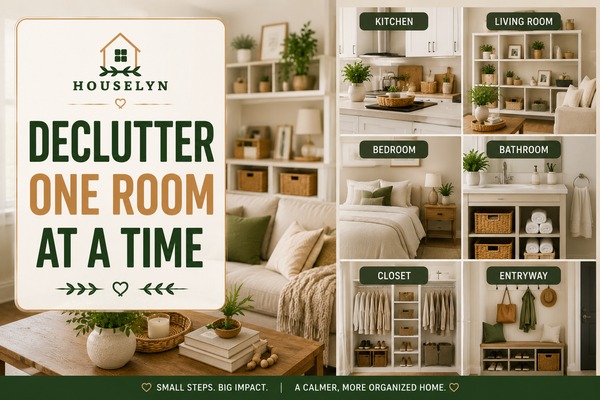 Beautiful organized home featuring room-by-room decluttering, clean surfaces, organized storage, and clutter-free living.
Related Houselyn Guides
Decluttering is the foundation of an organized home. Continue your organization journey with these Houselyn guides:
6. Clear Flat Surfaces First
One of the fastest ways to make a home feel cleaner and more organized is to clear visible flat surfaces.
Cluttered surfaces often create the impression that an entire room is messy, even when most of the space is organized.
Focus on:
- Kitchen countertops
- Coffee tables
- Dining tables
- Bathroom counters
- Nightstands
- Desks
Removing unnecessary items from these areas can create an immediate visual improvement.
A cleaner surface also makes daily cleaning easier.
7. Declutter by Category, Not Location
Many people declutter room by room, but an even more effective method is decluttering by category.
Instead of organizing one room at a time, gather all similar items together and evaluate them at once.
Examples include:
- Clothing
- Books
- Kitchen gadgets
- Decorations
- Office supplies
- Toys
When you see everything you own in one category, it becomes much easier to identify duplicates and unnecessary items.
8. Follow the One-In, One-Out Rule
The one-in, one-out rule is one of the simplest long-term decluttering systems.
The concept is straightforward:
Whenever a new item enters your home, another item leaves.
Examples:
- Buy a new sweater → Donate an old sweater.
- Purchase a new mug → Donate an old mug.
- Add a new decorative item → Remove one you no longer use.
This habit helps prevent clutter from gradually returning after a decluttering session.
9. Create a Maybe Box
Sometimes the hardest part of decluttering is deciding whether to keep an item.
A maybe box provides a simple solution.
Place uncertain items into a labeled box and store it out of sight.
Write the current date on the box.
If you do not need or think about those items within three to six months, it may be safe to donate them.
The maybe box reduces decision fatigue while helping you declutter more confidently.
10. Remove Broken or Unused Items
Many homes contain items that no longer work but continue taking up valuable space.
Examples include:
- Broken electronics
- Damaged kitchen tools
- Worn-out décor
- Incomplete sets
- Old cords and chargers
- Unused gadgets
If an item is broken and you have not repaired it in months, it may be time to let it go.
Removing unusable items often creates surprising amounts of space.
Recommended Amazon Finds: Decluttering Essentials
These simple tools can help make the decluttering process faster and more organized.
⚡ Quick Win
Choose one countertop today and remove everything that does not belong there. This simple task can make an entire room feel cleaner in less than ten minutes.
 Beautiful organized kitchen and living space featuring clutter-free countertops, clean surfaces, and simplified home organization
11. Declutter Your Closet Seasonally
Closets can quickly become overcrowded when they store clothing and accessories from every season.
One of the most effective decluttering tips is to review your closet at least four times a year.
During each seasonal review:
- Remove items that no longer fit.
- Donate clothing you no longer wear.
- Store off-season pieces elsewhere.
- Reorganize frequently used items.
Regular closet reviews prevent clutter from accumulating and make getting dressed easier.
12. Empty One Shelf Completely
Sometimes the easiest way to evaluate clutter is to start with a completely blank space.
Choose one shelf and remove everything from it.
Then ask yourself:
- Do I use this item?
- Does it belong here?
- Does it add value to my life?
Only return items that genuinely deserve the space.
This simple exercise often reveals unnecessary clutter that would otherwise go unnoticed.
13. Reduce Paper Clutter
Paper clutter is one of the most common organization challenges in modern homes.
Examples include:
- Bills
- Receipts
- School papers
- Magazines
- Manuals
- Junk mail
To reduce paper clutter:
- Recycle unnecessary documents immediately.
- Digitize important paperwork when possible.
- Create a filing system for documents you must keep.
- Sort mail daily rather than allowing it to accumulate.
Managing paper consistently helps prevent overwhelming piles from forming.
14. Let Go of Guilt Items
Many people keep belongings because they feel guilty getting rid of them.
Common examples include:
- Expensive purchases never used
- Gifts you do not enjoy
- Hobby supplies for abandoned hobbies
- Clothing purchased with good intentions
Remember that keeping an unused item does not recover the money spent on it.
If an item no longer serves a purpose, allowing it to leave your home can free both physical and mental space.
One of the most powerful decluttering tips is learning to release guilt and focus on what supports your current lifestyle.
15. Create Daily Reset Habits
Decluttering is not a one-time project.
It becomes easier when supported by small daily habits.
Examples include:
- Returning items to their proper place
- Clearing countertops each evening
- Sorting mail immediately
- Loading the dishwasher before bed
- Resetting living areas before leaving a room
These simple habits prevent clutter from accumulating and make long-term organization easier.
Even five minutes a day can have a significant impact over time.
💡 Houselyn Tip
If you feel overwhelmed, focus on removing just ten items. Small decluttering wins create momentum and often lead to larger organization breakthroughs.
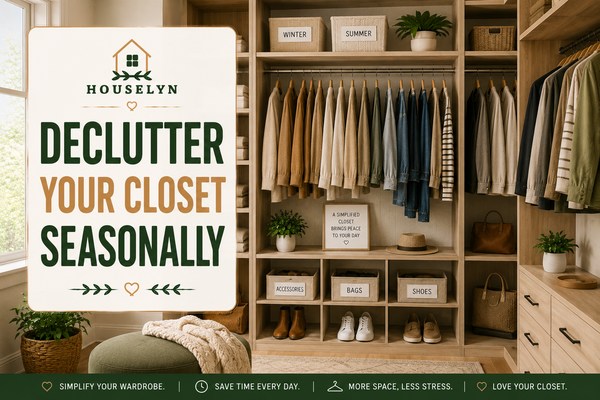 Beautiful organized closet featuring seasonal wardrobe organization, decluttered clothing storage, and simplified closet systems.
Room-by-Room Organization Guides
Once you've reduced clutter, these Houselyn guides can help you organize specific areas of your home.
16. Declutter the Kitchen by Frequency of Use
The kitchen is one of the busiest rooms in the home, which makes it one of the easiest places for clutter to accumulate.
One of the best decluttering tips for kitchens is organizing items based on how often they are used.
Keep frequently used items easily accessible, such as:
- Everyday dishes
- Cooking utensils
- Coffee supplies
- Food storage containers
Move less frequently used items to higher shelves or secondary storage areas.
Examples include:
- Holiday serving dishes
- Specialty appliances
- Seasonal baking tools
- Large entertaining platters
Prioritizing items by frequency of use helps create a more functional kitchen.
17. Simplify Bathroom Storage
Bathrooms often contain expired, duplicate, or unused products.
Take time to review:
- Makeup
- Toiletries
- Hair products
- Skincare products
- Medications
- Cleaning supplies
Discard expired items and donate unopened products where appropriate.
Limiting bathroom storage to items you actually use makes cabinets easier to organize and maintain.
18. Remove Items That Don't Belong in the Room
One common cause of clutter is allowing items to migrate into rooms where they do not belong.
Examples include:
- Mail on kitchen counters
- Clothing in the living room
- Toys in bedrooms
- Office supplies in dining areas
A simple decluttering habit is performing a daily sweep of each room and returning misplaced items to their proper location.
This helps prevent clutter from spreading throughout the home.
19. Use Containers to Define Limits
Containers can be powerful decluttering tools when used correctly.
Instead of buying larger containers, use them to establish limits.
For example:
- One basket for blankets
- One bin for pet toys
- One shelf for cookbooks
- One drawer for office supplies
When the container becomes full, it is time to edit the contents rather than expand the storage.
This approach encourages intentional ownership and helps prevent clutter from growing.
20. Declutter Digital Files and Photos
Decluttering is not limited to physical belongings.
Digital clutter can also create stress and make information difficult to find.
Areas to review include:
- Photos
- Email inboxes
- Computer files
- Downloads folders
- Cloud storage
Helpful actions include:
- Deleting duplicates
- Organizing folders
- Removing unnecessary screenshots
- Unsubscribing from unwanted emails
- Backing up important files
Digital decluttering improves efficiency and helps maintain better organization overall
Recommended Amazon Finds: Kitchen & Home Decluttering Tools
These organization tools can help simplify storage and reduce clutter throughout your home.
🚫 Common Mistake
Many people buy storage products before decluttering. Organizing clutter simply creates organized clutter. Always reduce the number of items first, then choose storage solutions that support what remains.
21. Declutter Before Organizing
One of the most important decluttering tips is understanding the difference between decluttering and organizing.
Decluttering means removing items you no longer need.
Organizing means creating systems for the items you decide to keep.
Many people try to organize first, which often results in spending time and money storing things they do not actually need.
A better approach is:
- Remove unnecessary items.
- Group similar items together.
- Create storage systems for what remains.
Decluttering first makes organizing easier, faster, and more effective.
22. Create a Home for Everything
Clutter often develops when belongings do not have designated storage locations.
Every item in your home should have a specific place where it belongs.
Examples include:
- Keys in a designated tray
- Mail in a sorting station
- Shoes in a shoe rack
- Chargers in a storage drawer
- Blankets in a basket
When items have a permanent home, cleanup becomes faster and maintaining organization becomes much easier.
23. Use a 10-Minute Decluttering Session
Many people avoid decluttering because they believe it requires an entire weekend.
In reality, short decluttering sessions can be extremely effective.
Set a timer for ten minutes and focus on one area such as:
- A drawer
- A shelf
- A cabinet
- A countertop
- A storage basket
These short sessions are easier to maintain consistently and often produce surprising results over time.
24. Involve the Entire Family
Decluttering becomes much easier when everyone participates.
Encourage family members to review their own belongings and make decisions about what to keep, donate, or discard.
Children can help by:
- Sorting toys
- Organizing books
- Donating outgrown items
- Maintaining their storage areas
Shared responsibility helps prevent clutter from returning and creates better long-term habits.
25. Stop Saving Things "Just in Case"
Many homes contain items that are being saved for a hypothetical future need.
Examples include:
- Extra cables
- Old electronics
- Duplicate kitchen gadgets
- Unused craft supplies
- Clothing that no longer fits
Ask yourself:
- Would I buy this again today?
- Could I easily replace it if needed?
- Have I used it recently?
If the answer is no, it may be time to let it go.
One of the most freeing decluttering tips is learning to prioritize current needs over unlikely future scenarios.
💡 Houselyn Tip
When deciding whether to keep an item, ask yourself if it supports the life you live today—not the life you might live someday. This mindset makes decluttering decisions much easier.
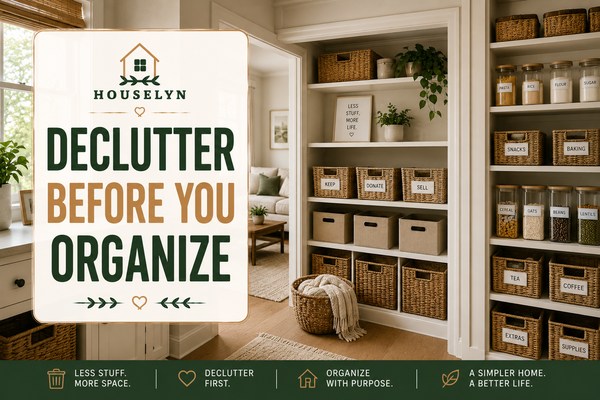 Beautiful organized home featuring simplified storage systems, decluttered spaces, and intentional organization solutions.
26. Use the Four-Box Method
One of the most effective decluttering systems is the Four-Box Method.
When decluttering an area, prepare four containers labeled:
- Keep
- Donate
- Trash
- Relocate
Every item must go into one of these categories.
This method prevents indecision and helps maintain momentum.
It also eliminates the temptation to create piles that remain unfinished for weeks.
The Four-Box Method works particularly well for:
27. Declutter Sentimental Items Last
- Closets
- Garages
- Bedrooms
- Home offices
- Storage rooms
Sentimental belongings are often the most difficult items to evaluate.
Examples include:
- Family heirlooms
- Childhood keepsakes
- Old photographs
- Letters
- Memorabilia
One of the best decluttering tips is saving these items until the end of the process.
By the time you reach sentimental belongings, you will have developed stronger decision-making skills and gained confidence through decluttering easier categories first.
This makes emotional decisions much less overwhelming.
28. Simplify Your Entryway
The entryway is often the first area guests see and one of the busiest spaces in the home.
A cluttered entryway can make the entire house feel disorganized.
Focus on keeping only daily essentials in this space.
Examples include:
- Keys
- Shoes
- Bags
- Coats
- Umbrellas
Everything else should be stored elsewhere.
A simplified entryway creates a cleaner first impression and improves daily routines.
29. Review Storage Areas Quarterly
Storage areas tend to become cluttered because they are used less frequently.
Examples include:
- Closets
- Garages
- Attics
- Basements
- Storage cabinets
Schedule a quarterly review to:
- Remove unnecessary items
- Reorganize storage systems
- Donate unused belongings
- Update storage categories
Regular reviews prevent clutter from quietly accumulating.
30. Focus on Progress, Not Perfection
Many people stop decluttering because they believe every room must be completed perfectly.
In reality, progress matters far more than perfection.
A partially decluttered room is still an improvement.
Celebrate small wins such as:
- One organized drawer
- One decluttered shelf
- One cleaned countertop
- One donation box completed
Small improvements build momentum and lead to long-term success.
31. Build Long-Term Decluttering Habits
The final and most important decluttering tip is creating habits that support a clutter-free home.
Examples include:
- Daily resets
- Weekly decluttering sessions
- Seasonal reviews
- Donation routines
- One-in, one-out habits
Decluttering is not a one-time project.
It is an ongoing process that becomes easier when supported by consistent habits.
The goal is creating a home that stays organized rather than repeatedly starting over.
✓ Pro Organizer Tip
Professional organizers often recommend focusing on removing items rather than organizing them. Most organization problems become significantly easier once unnecessary belongings have been eliminated.
Recommended Amazon Finds: Decluttering & Organization Essentials
These products can help simplify the decluttering process and create long-term organization systems.
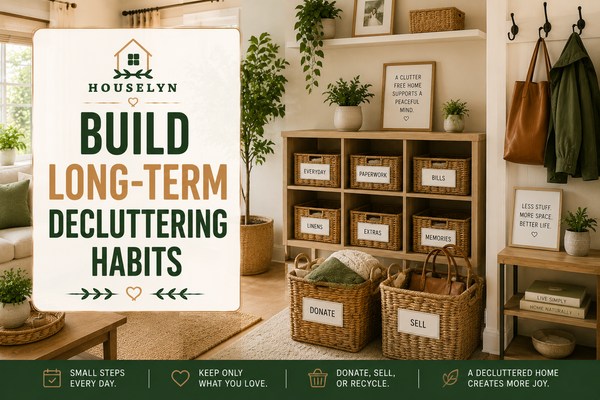 Beautiful organized home featuring sustainable decluttering systems, organized storage, and clutter-free living spaces.
Continue Your Organization Journey
Once clutter is under control, these Houselyn guides can help you create lasting organization systems throughout your home.
Decluttering Tips for Small Homes
Living in a small home can make clutter feel more noticeable because every item takes up valuable space.
The good news is that many of the most effective decluttering tips are especially beneficial for apartments, studios, townhouses, and smaller homes.
The goal is not owning less for the sake of it. The goal is creating a home that feels functional, comfortable, and easy to maintain.
Prioritize Multi-Purpose Items
When space is limited, every item should earn its place.
Examples include:
- Storage ottomans
- Sofa beds
- Nesting tables
- Storage benches
- Expandable dining tables
Multi-functional items reduce the need for additional furniture and storage.
Keep Surfaces Clear
Clear surfaces instantly make small spaces feel larger.
Focus on keeping these areas clutter-free:
- Kitchen counters
- Coffee tables
- Nightstands
- Bathroom counters
- Desks
Even small reductions in visible clutter can have a significant impact.
Maximize Vertical Space
Walls provide valuable storage opportunities.
Consider using:
- Floating shelves
- Wall hooks
- Pegboards
- Hanging organizers
- Over-door storage
Vertical storage helps free up floor space while keeping essentials accessible.Limit Storage Containers
A common mistake in small homes is purchasing too many containers.
Remember:
Containers should support organization, not become additional clutter.
Only use storage products that solve a specific problem.
Adopt Regular Decluttering Habits
Small homes benefit from consistent maintenance.
Simple habits include:
- Daily five-minute resets
- Weekly decluttering sessions
- Monthly donation reviews
- Seasonal storage edits
Small efforts performed consistently often produce better results than occasional large decluttering projects.
Budget-Friendly Decluttering Tips
You do not need expensive products to create an organized home.
Many of the best decluttering tips cost little or nothing.
Start with What You Already Own
Before purchasing organizers, look for items you already have.
Examples include:
- Baskets
- Storage bins
- Decorative boxes
- Drawer dividers
- Shelving
Repurposing existing items can save money and reduce waste.
Focus on Reducing Before Buying
Many people buy storage products before decluttering.
Instead:
- Remove unnecessary items.
- Create categories.
- Identify storage needs.
- Purchase only what is necessary.
This approach prevents overspending and results in better organization systems.
Use Simple Labels
Labels are inexpensive but highly effective.
Options include:
- Printable labels
- Handwritten labels
- Chalkboard labels
- Reusable tags
Labels make it easier for everyone in the household to maintain organization.
Create a Donation Routine
Regular donations prevent clutter from accumulating.
Consider:
- Monthly donation boxes
- Seasonal decluttering sessions
- Charity drop-off schedules
Creating a routine is often more effective than waiting for clutter to become overwhelming.Remember That Less Is Free
The most affordable decluttering solution is often simply owning fewer unnecessary items.
Removing excess creates space, improves organization, and reduces cleaning time without costing anything.
Conclusion
Decluttering tips can help transform every room in your home by creating more space, reducing stress, and making daily life easier.
The most successful decluttering projects are not built around perfection. They are built around consistency.
By starting small, removing unnecessary items, creating simple habits, and maintaining regular decluttering routines, you can create a home that feels calmer, cleaner, and more functional.
Remember:
- Start with easy wins.
- Focus on progress, not perfection.
- Create systems that support your lifestyle.
- Build habits that prevent clutter from returning.
Over time, these small actions can completely transform how your home looks, feels, and functions.
A clutter-free home is not about owning less for the sake of it.
It is about making room for what matters most.
Frequently Asked Questions
What are the best decluttering tips for beginners?
What are the best decluttering tips for beginners?
The best decluttering tips for beginners include:
- Starting with one small area
- Using the one-year rule
- Creating a donation box
- Removing duplicate items
- Setting a timer for short decluttering sessions
Small wins help build momentum and confidence.
How often should I declutter my home?
How often should I declutter my home?
Most homes benefit from:
- Daily reset habits
- Weekly maintenance sessions
- Seasonal decluttering reviews
Consistent maintenance prevents clutter from building up over time.
What is the fastest way to declutter a room?
What is the fastest way to declutter a room?
Start by:
- Removing trash.
- Collecting items that belong elsewhere.
- Clearing visible surfaces.
- Gathering donation items.
These actions usually create noticeable results quickly.
Should I organize or declutter first?
Should I organize or declutter first?
Always declutter first.
Removing unnecessary items reduces the number of belongings that need storage and makes organizing much easier.
What should I do with sentimental items?
What should I do with sentimental items?
Save sentimental belongings for the end of the decluttering process.
By then, you will have more experience making decisions and will feel less overwhelmed.
Keep only the items that hold genuine meaning and value.
Related Houselyn Guides
Continue creating a more organized and clutter-free home with these helpful Houselyn resources:
Have A Great Story About This Topic?
Do you have a great story about this? Share it!
You might like these
25 Laundry Room Organization Ideas for a Clean and Functional Space
Discover 25 laundry room organization ideas to maximize storage, reduce clutter, organize laundry supplies, and create a more efficient laundry space.
25 Closet Organization Ideas to Maximize Space and Reduce Clutter
Discover 25 closet organization ideas to maximize storage, organize clothing, reduce clutter, and create a functional, stress-free closet.