- Home
- Storage Ideas
Storage Ideas for Every Room in Your Home - A Complete Guide.
Learn how to create practical, long-lasting storage systems for bedrooms, closets, kitchens, bathrooms, entryways, living rooms, and family spaces using proven organization principles that work in real homes.
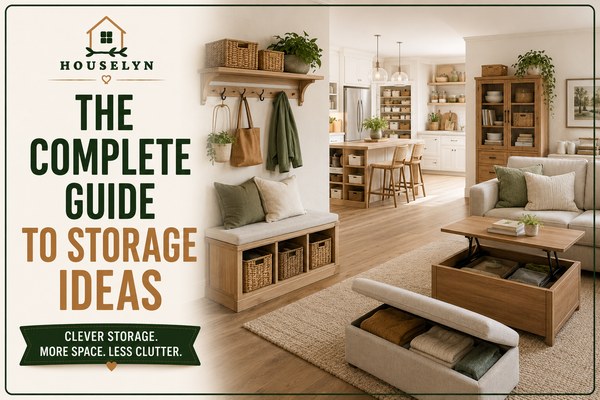 Beautiful storage ideas featuring organized shelving, baskets, cabinets, hidden storage solutions, and clutter-free home organization.
Storage ideas are one of the most searched home organization topics because almost every home eventually faces the same challenge: there never seems to be enough space.
The problem is rarely that homes are too small. In many cases, the real issue is that storage systems were never designed to support the way people actually live. Families grow, hobbies expand, seasonal items accumulate, and everyday essentials slowly begin occupying countertops, floors, closets, and spare corners.
Many homeowners respond by buying more containers, baskets, and organizers. Unfortunately, this often treats the symptom rather than the cause. More storage products do not automatically create more organization. In some cases, they simply create better-looking clutter.
The most effective storage systems are built around a simple principle: every item should have a logical home that matches how often it is used.
For example, everyday kitchen tools should be stored differently from holiday serving dishes. Children's daily toys require different storage solutions than seasonal sports equipment. Frequently used shoes should not compete for space with formal footwear worn only a few times each year.
This guide takes a different approach from typical storage articles. Instead of presenting a long list of disconnected ideas, we will build a complete framework for understanding how storage works across an entire home.
You will learn why homes run out of storage space, how to identify hidden storage opportunities, which systems work best in different rooms, and how to create a practical storage plan that remains effective long after the initial organization project is complete.
Why Most Homes Run Out of Storage Space
Many people believe their home has a storage problem when the real issue is a storage system problem.
This distinction matters because it changes the solution.
A family may purchase new baskets, containers, shelving units, and organizers yet still struggle with clutter six months later. Meanwhile, another family living in a smaller home may appear far more organized despite having less square footage.
The difference is usually not the amount of storage available. It is how that storage is planned and used.
Before adding a single shelf or buying another storage bin, it is important to understand why storage systems fail in the first place.
Treating Everything the Same
One of the most common storage mistakes is using the same storage method for every type of item.
Different belongings require different storage strategies.
For example:
- Daily-use shoes need quick access.
- Seasonal decorations need long-term storage.
- Children's toys need child-friendly access.
- Important documents need protection and organization.
When everything is treated the same, storage systems quickly become inefficient.
A good example is a hallway closet that contains winter coats, holiday decorations, sports equipment, and everyday jackets. The closet constantly feels overcrowded, not because it is too small, but because high-frequency items are competing for space with low-frequency items.
A better solution is to move seasonal items into secondary storage and reserve the closet for daily essentials.
Adding Storage Before Decluttering
Many homeowners purchase storage products before reducing the amount of stuff they own.
This often creates organized clutter rather than true organization.
Storage should never be the first step.
The first step should always be evaluating what actually deserves space in the home.
Ask yourself:
- Is it used regularly?
- Does it serve a purpose?
- Would it be missed if it disappeared?
If the answer is no, additional storage may not be the solution.
Decluttering first ensures storage systems are built around current needs rather than accumulated possessions.
Not Creating Storage Zones
Storage becomes much easier when every room has clearly defined zones.
Without zones, belongings migrate throughout the home.
Common examples include:
- Shoes moving from the entryway to bedrooms.
- Toys spreading from playrooms into living rooms.
- Mail piling up on kitchen counters.
- Cleaning supplies being stored in multiple locations.
The result is visual clutter and daily frustration.
A storage zone is simply a designated location where a category of items belongs.
For example, instead of storing batteries in four different places, a family can create one dedicated household supply drawer. Items become easier to find, duplicate purchases decrease, and organization becomes much easier to maintain.
Accessibility Does Not Match Usage
One of the most important storage principles is matching accessibility to frequency of use.
Items used daily should be easiest to reach.
Items used rarely can be stored in less convenient locations.
Daily-access storage is best for:
- Everyday shoes
- Frequently used cookware
- Daily toiletries
- School supplies
Secondary storage areas are better suited for:
- Seasonal clothing
- Holiday decorations
- Backup supplies
- Occasional-use equipment
A common mistake is storing holiday serving platters in the most accessible kitchen cabinet while everyday dishes are placed on a difficult-to-reach shelf. Reversing these locations immediately improves functionality.Creating Storage Systems That Are Too Complicated
Many organization systems fail because they are difficult to maintain.
Common problems include:
- Too many categories
- Excessive labels
- Overly detailed systems
- Storage containers that require multiple steps to access
Simple systems usually outperform complicated ones.
A storage system that is slightly imperfect but consistently used is more effective than a perfect system that nobody maintains.
Professional organizers often focus on reducing friction rather than creating perfection. The easier it is to put something away, the more likely the system will succeed.
Houselyn Expert Insight
Most storage problems are not caused by a lack of storage space. They are caused by a mismatch between how people use their belongings and how those belongings are stored.
The goal is not to own more containers.
The goal is to create storage systems that match real daily habits and make everyday life easier.
🏡 Houselyn Expert Insight
Most storage problems are not caused by a lack of storage space. They are caused by a mismatch between how people use their belongings and how those belongings are stored. The goal is not to own more containers. The goal is to create storage systems that match real daily habits.
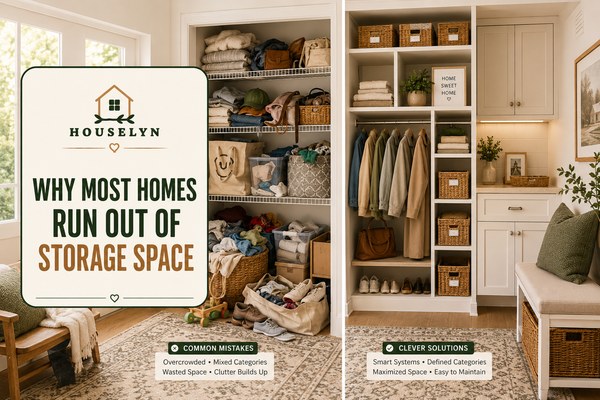 Learn the five most common reasons storage systems fail and how to create practical organization solutions that work long term.
The Houselyn Storage Framework
One of the biggest misconceptions about organization is that storage products create organization.
They do not.
Storage products simply support a storage system.
Without a system, even the most expensive shelves, baskets, and containers eventually become cluttered.
Over the years, professional organizers have discovered that successful homes tend to follow a small number of storage principles regardless of size, budget, or layout.
At Houselyn, we call these principles the Houselyn Storage Framework.
Rather than focusing on products first, the framework focuses on how people actually live, move, and use their belongings throughout the day.
Principle 1: Store Items Near Where They Are Used
The closer an item is stored to where it is used, the more likely it is to be returned to its proper location.
For example:
- Coffee supplies should be stored near the coffee station.
- Children's art supplies should be stored near the area where they create projects.
- Cleaning products should be stored near the rooms they are used in most often.
A common mistake is creating one large storage area for everything in the home. While this may seem organized initially, it often increases the amount of time required to retrieve and return items.
A family that stores all batteries, light bulbs, tape, and household tools in a dedicated utility cabinet is usually more organized than a family that stores these items in multiple random drawers throughout the house.
Principle 2: Match Storage to Frequency of Use
Not everything deserves prime storage space.
The most valuable storage locations should be reserved for items used most often.
Think of your home as having three storage levels:
- Daily-use storage
- Weekly-use storage
- Long-term storage
Daily-use storage should contain items you reach for constantly.
Examples include:
- Everyday shoes
- Kitchen utensils
- Frequently used toiletries
- School supplies
Weekly-use storage can hold items that are used occasionally.
Examples include:
- Board games
- Baking equipment
- Craft supplies
- Exercise equipment
Long-term storage is best for items used only a few times each year.
Examples include:
- Holiday decorations
- Seasonal clothing
- Special occasion serving pieces
- Travel accessories
This simple adjustment often creates dramatic improvements without purchasing additional storage products.
Principle 3: Create Clear Categories
Many storage problems occur because categories are unclear.
A storage bin labeled "Miscellaneous" is often a warning sign that a system is beginning to fail.
Strong categories create strong organization.
Examples include:
- Baking supplies
- School supplies
- Gift wrapping supplies
- Cleaning products
- Pet supplies
The clearer the category, the easier it becomes to find and return items.
A family that stores all toy vehicles together will usually maintain organization more easily than a family that spreads toy vehicles across multiple bins.
Principle 4: Reduce Friction
Every additional step required to put something away reduces the likelihood that it will happen.
For example:
- A basket without a lid is easier to use than a container with multiple latches.
- Open shelving is often easier to maintain than deeply stacked storage bins.
- Child-height toy storage is easier for children to use independently.
When storage becomes inconvenient, clutter begins to return.
The most successful storage systems are often surprisingly simple.
Principle 5: Review Storage Systems Regularly
No storage system remains perfect forever.
Families grow.
Children develop new interests.
New hobbies appear.
Seasonal needs change.
Storage systems should evolve alongside these changes.
A simple quarterly review can help identify:
- Overcrowded categories
- Unused items
- Missing storage zones
- New organization opportunities
Small adjustments are far easier than complete reorganizations.
A Real Houselyn Example
Imagine a family of four living in a three-bedroom home.
The family complains that they never seem to have enough storage space.
After evaluating the home, they discover several common problems:
- Seasonal decorations occupy prime closet space.
- Children's toys are stored in five different rooms.
- Cleaning supplies are spread throughout the house.
- Kitchen cabinets contain items used only once per year.
Instead of buying additional organizers, the family reorganizes using the Houselyn Storage Framework.
Seasonal items are moved into long-term storage.
Daily-use items receive the most accessible locations.
Categories are simplified.
Storage zones are clearly defined.
Within a few weeks, the home feels larger and easier to maintain despite no additional square footage being added.
This illustrates an important lesson.
Most homes do not need more storage.
Most homes need better storage systems.
Houselyn Takeaway
Before purchasing a single storage product, evaluate whether the current system follows the five principles:
- Store items near where they are used.
- Match storage to frequency of use.
- Create clear categories.
- Reduce friction.
- Review systems regularly.
These principles form the foundation of every successful storage solution discussed throughout the rest of this guide.
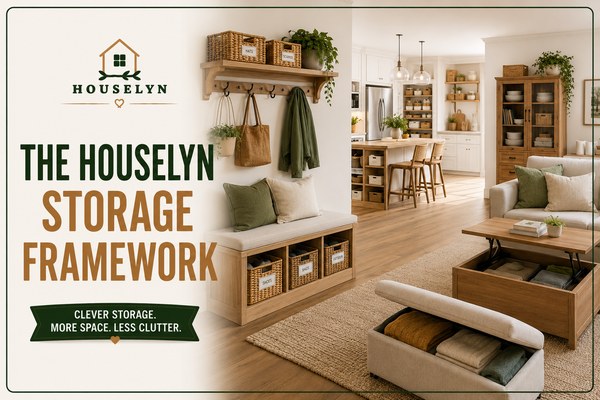 Learn the five storage principles that help create organized, functional, and easy-to-maintain storage systems throughout your home.
How to Assess Storage Needs in Your Home
One of the biggest mistakes homeowners make is purchasing storage products before understanding what problem they are trying to solve.
A storage assessment helps identify where clutter is coming from, what items need better homes, and which storage solutions will have the biggest impact.
Before buying a single basket, shelf, cabinet, or storage container, take time to evaluate how your home currently functions.
Start by Identifying Problem Areas
Walk through your home and look for places where clutter repeatedly appears.
These areas often reveal weaknesses in the storage system.
Common examples include:
- Entryway floors covered with shoes
- Kitchen counters filled with appliances and paperwork
- Bathroom counters crowded with toiletries
- Bedroom surfaces covered with clothing
- Living rooms overflowing with toys and electronics
These clutter hotspots usually indicate that items do not have practical storage locations nearby.
Rather than treating the clutter itself, focus on identifying the storage issue causing it.
Track What You Use Most Often
Many homes waste valuable storage space on items that are rarely used.
A useful exercise is identifying belongings based on frequency of use.
Consider three categories:
- Daily-use items
- Weekly-use items
- Occasional-use items
Daily-use items should receive the most accessible storage locations.
Weekly-use items can be stored slightly farther away.
Occasional-use items can be moved into secondary storage spaces.
This simple adjustment often frees up significant storage capacity.
Evaluate Existing Storage Spaces
Before adding new storage furniture, evaluate the storage already available.
Look at:
- Closets
- Cabinets
- Shelves
- Drawers
- Under-bed areas
- Garage storage
- Utility rooms
Many homes contain underused storage opportunities.
For example, a closet may contain large amounts of unused clothing while frequently used items compete for space elsewhere in the home.
A storage assessment often reveals that the issue is not a lack of storage but poor allocation of existing storage space.
Measure Before You Buy
One of the most common organization mistakes is purchasing storage products without measuring the available space.
This frequently leads to:
- Wasted money
- Inefficient layouts
- Oversized containers
- Storage products that do not fit
Before purchasing any organizer:
- Measure the available width
- Measure the depth
- Measure the height
- Consider door clearance
- Consider access requirements
Accurate measurements help ensure that storage products actually improve functionality.
Identify Hidden Storage Opportunities
Many homes contain storage opportunities that are rarely used.
Examples include:
- Vertical wall space
- Cabinet doors
- Under-bed areas
- Furniture with hidden storage
- High closet shelves
- Unused corners
The goal is not to fill every empty space.
The goal is to use space strategically while maintaining comfort and functionality.
A Real Houselyn Example
A homeowner believes their small apartment lacks storage.
After conducting a storage assessment, several opportunities become obvious:
- The bed has no under-bed storage.
- Closet shelves extend only halfway to the ceiling.
- The entryway lacks a shoe station.
- The living room contains furniture with no storage capability.
Instead of moving to a larger apartment or purchasing multiple storage cabinets, the homeowner makes a few targeted changes.
Under-bed containers are added.
Vertical shelving is extended.
A storage bench is installed near the entrance.
The result is significantly more storage capacity without increasing square footage.
Focus on Function Before Products
Many people begin with storage products.
Successful organization usually begins with understanding how the space is used.
Ask yourself:
- What items create the most clutter?
- Which items are used daily?
- Which items are difficult to find?
- Which areas feel overcrowded?
- Which spaces remain underused?
The answers will guide better storage decisions than any shopping trip.
Houselyn Takeaway
A storage assessment is one of the highest-return organization activities you can perform.
Before purchasing organizers, take time to understand:
- Where clutter forms
- What items require storage
- Which spaces are underused
- How frequently belongings are used
When storage solutions are built around real needs, organization becomes easier to maintain and significantly more effective over the long term.
✓ Houselyn Storage Assessment Checklist
Before buying any storage products, ask:
- Where does clutter appear most often?
- Which items are used daily?
- Which items are used seasonally?
- Which storage spaces are underused?
- Can existing storage be improved first?
- Have I measured the available space?
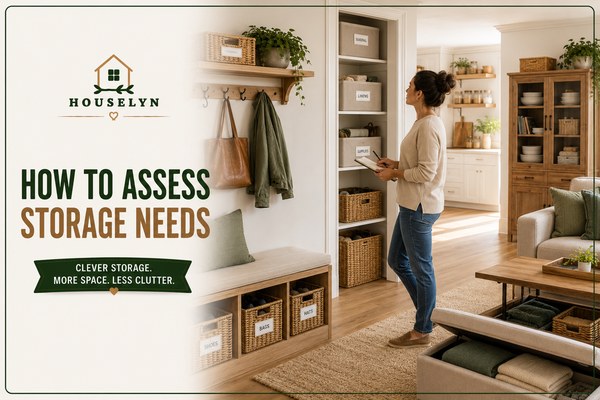 Learn how to evaluate your home's storage needs before buying organizers, shelves, bins, or storage furniture.
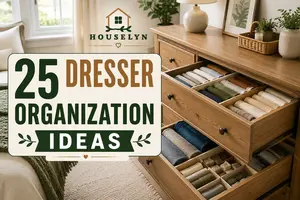
Bedrooms should feel calm, functional, and restorative.
Unfortunately, many bedrooms become storage overflow zones for the rest of the home. Clothing, shoes, accessories, paperwork, electronics, seasonal items, and miscellaneous belongings often accumulate in the bedroom because there is nowhere else for them to go.
The result is a room that feels crowded and difficult to maintain.
The good news is that most bedroom storage problems can be solved by creating dedicated storage zones and matching storage solutions to how the space is actually used.
Start With the Biggest Source of Clutter
Before adding storage products, identify what creates the most clutter in the room.
For some people, it is clothing.
For others, it may be shoes, accessories, paperwork, or laundry.
A storage system should be designed around the primary source of clutter rather than trying to organize everything at once.
For example, if clothing is constantly piled on chairs and floors, improving closet and dresser storage will usually have a bigger impact than purchasing decorative baskets.
Maximize Under-Bed Storage
The space beneath a bed is one of the most underused storage areas in many homes.
This area is ideal for storing:
- Seasonal clothing
- Extra bedding
- Out-of-season shoes
- Travel accessories
- Memory boxes
Under-bed storage works particularly well in smaller bedrooms where closet space is limited.
A common mistake is storing frequently used items under the bed. Access can become inconvenient, leading to frustration and clutter.
Under-bed storage is most effective when reserved for items used occasionally rather than daily.
Use Vertical Space More Effectively
Most bedrooms contain unused wall space.
Vertical storage can significantly increase storage capacity without occupying valuable floor space.
Examples include:
- Wall shelves
- Floating shelves
- Over-door organizers
- Tall storage cabinets
- Mounted storage systems
Vertical storage is especially useful in apartments and small bedrooms where floor space is limited.
Create Functional Nightstand Storage
Nightstands often become clutter magnets.
Items commonly found on nightstands include:
- Books
- Chargers
- Glasses
- Medications
- Notebooks
- Personal items
A nightstand with drawers or shelves provides significantly more functionality than a decorative table with no storage.
Keeping nightstand storage limited to frequently used items also helps maintain a calmer bedroom environment.
Organize Clothing by Frequency of Use
One of the simplest ways to improve bedroom storage is reorganizing clothing based on how often it is worn.
Daily-use clothing should be the easiest to access.
Occasional and seasonal clothing can be stored in secondary locations.
Examples include:
- High closet shelves
- Under-bed storage
- Storage bins
- Secondary closets
This approach reduces closet overcrowding and makes everyday routines easier.
Use Multi-Functional Furniture
Furniture that serves multiple purposes can dramatically improve bedroom storage.
Examples include:
- Storage beds
- Storage benches
- Ottomans with hidden compartments
- Bedside tables with drawers
- Window seats with storage
Multi-functional furniture is particularly valuable in smaller homes where every square foot matters.
A Real Houselyn Example
A couple living in a small apartment struggled with bedroom clutter despite having a full-size closet.
After assessing the room, they discovered several issues:
- Seasonal clothing occupied prime closet space.
- Extra bedding was stored on closet shelves.
- Shoes were scattered throughout the room.
- Under-bed space was completely unused.
They implemented several changes:
- Seasonal clothing moved into under-bed containers.
- Bedding was relocated to dedicated storage bins.
- A small shoe storage bench was added.
- Closet space was reorganized based on frequency of use.
Within a weekend, the bedroom felt larger, cleaner, and easier to maintain without adding any additional square footage.
Common Bedroom Storage Mistakes
Many bedroom storage problems are caused by a few recurring mistakes.
These include:
- Keeping too many clothes
- Storing seasonal items in prime locations
- Ignoring vertical space
- Using furniture without storage capability
- Allowing surfaces to become catch-all areas
Recognizing these habits can often improve organization faster than purchasing additional storage products.
Houselyn Takeaway
The most effective bedroom storage systems focus on accessibility, simplicity, and daily habits.
Rather than trying to store more items, focus on storing the right items in the right locations.
When storage matches how the bedroom is actually used, the space becomes easier to maintain, more functional, and significantly more relaxing.
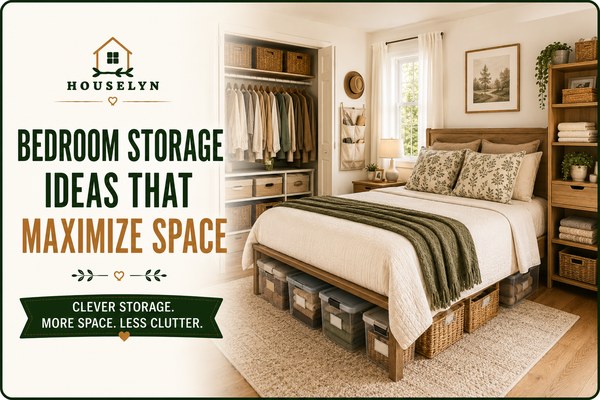 Practical bedroom storage ideas featuring under-bed storage, vertical shelving, storage furniture, and organized bedroom systems.
Storage Ideas for Closets
Closets are often the hardest-working storage spaces in a home.
They are expected to store clothing, shoes, accessories, luggage, seasonal items, household supplies, and sometimes even overflow belongings from other rooms.
When a closet becomes overcrowded, finding items becomes difficult and maintaining organization feels nearly impossible.
The goal of a well-designed closet is not simply to fit more items inside. The goal is to create a storage system that makes everyday life easier.
Start by Defining the Purpose of the Closet
One of the biggest mistakes homeowners make is allowing a closet to become a storage area for everything.
Before organizing, decide exactly what the closet is meant to store.
For example:
- A bedroom closet should primarily support clothing and personal accessories.
- A hallway closet should focus on coats, shoes, and daily-use household items.
- A linen closet should focus on towels, bedding, and bathroom supplies.
The clearer the purpose, the easier the organization process becomes.
Use the Full Height of the Closet
Many closets waste valuable vertical space.
Often, a single shelf sits near the top while a large empty area remains underneath.
Adding additional shelving can dramatically increase storage capacity.
This space can be used for:
- Folded clothing
- Storage bins
- Seasonal items
- Shoes
- Accessories
Vertical storage is one of the easiest ways to gain more usable storage without increasing the size of the closet.
Organize Clothing by Category
A closet becomes easier to maintain when similar items are grouped together.
Examples include:
- Shirts
- Jackets
- Dresses
- Trousers
- Work clothing
- Seasonal clothing
Categorization reduces decision fatigue and makes it easier to locate specific items.
Many people discover they own duplicate items simply because their closet lacks clear organization.
Use Storage Bins Strategically
Storage bins can be extremely useful when they are assigned a specific purpose.
Good uses include:
- Seasonal accessories
- Scarves
- Hats
- Handbags
- Travel items
A common mistake is creating bins labeled "Miscellaneous."
These bins often become dumping grounds that eventually recreate clutter.
Every bin should have a clearly defined category.
Make Better Use of Closet Doors
Closet doors represent valuable storage space.
Door-mounted organizers can store:
- Shoes
- Accessories
- Cleaning supplies
- Small personal items
This solution works particularly well in smaller closets where shelf space is limited.
Create Zones Based on Frequency of Use
Not everything in a closet deserves equal accessibility.
Consider creating three zones:
Daily-use zone:
- Frequently worn clothing
- Everyday shoes
- Common accessories
Occasional-use zone:
- Formal wear
- Specialty clothing
- Seasonal accessories
Long-term storage zone:
- Holiday items
- Travel gear
- Keepsakes
- Off-season clothing
This system ensures the most frequently used items are always easiest to access.
A Real Houselyn Example
A homeowner complained that her walk-in closet always felt crowded despite having a large amount of storage space.
After reviewing the closet, several problems became obvious.
Formal clothing occupied the most accessible area.
Travel bags were stored on the floor.
Seasonal items shared shelves with daily-use clothing.
The closet contained multiple partially used storage bins with unclear categories.
The solution was simple.
Daily-use clothing was moved to the most accessible areas.
Travel items were relocated to upper shelves.
Seasonal clothing was consolidated into labeled storage bins.
Duplicate categories were eliminated.
The closet immediately became easier to use without adding any new storage products.Common
Closet Storage Mistakes
Several mistakes appear repeatedly in overcrowded closets.
These include:
- Keeping clothing that no longer fits
- Storing too many categories together
- Ignoring vertical space
- Using unclear storage bins
- Allowing the floor to become a storage area
Addressing these issues often creates more usable space than purchasing additional organizers.
Small Closet Storage Strategies
Small closets require more intentional planning.
Focus on:
- Vertical storage
- Slim hangers
- Shelf dividers
- Door organizers
- Seasonal rotation
A smaller closet can often function better than a larger closet when every inch is used efficiently.
Houselyn Takeaway
The best closet storage systems are designed around accessibility and simplicity.
Rather than trying to fit more items into the closet, focus on creating clear categories, dedicated storage zones, and logical locations for the items you use most often.
A well-organized closet saves time every day and reduces the stress that often comes from overcrowded storage spaces.
Related Houselyn Guides
Looking for more ways to organize your storage spaces? Explore these helpful Houselyn resources:
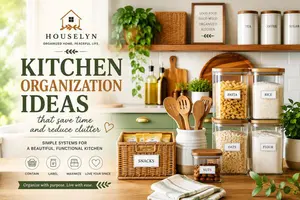
Storage Ideas for Kitchens
The kitchen is often one of the busiest rooms in the home.
It is used multiple times every day, which means even small storage problems quickly become noticeable. When kitchen storage systems fail, countertops become crowded, cabinets become difficult to navigate, and preparing meals becomes more stressful than it needs to be.
The goal of kitchen storage is not simply to fit more items into cabinets. The goal is to make everyday cooking, cleaning, and food preparation easier.Create Kitchen Storage Zones
One of the most effective ways to improve kitchen storage is by creating dedicated zones.
A storage zone groups items based on how they are used.
Examples include:
- Cooking zone
- Baking zone
- Food storage zone
- Coffee and beverage zone
- Cleaning zone
- Serving and entertaining zone
For example, keeping mixing bowls, measuring cups, baking trays, and baking ingredients together creates a more efficient baking station.
Without zones, kitchen items often become scattered throughout multiple cabinets and drawers.
Store Items Close to Their Point of Use
A common kitchen organization mistake is storing items wherever space is available rather than where they are actually used.
For example:
- Cooking utensils should be near the stove.
- Coffee supplies should be near the coffee machine.
- Food containers should be near food preparation areas.
- Cleaning products should be near the sink.
Reducing unnecessary movement around the kitchen improves efficiency and makes storage systems easier to maintain.
Make Better Use of Cabinet Space
Many kitchen cabinets contain large amounts of wasted space.
Common improvements include:
- Shelf risers
- Cabinet organizers
- Pull-out shelves
- Stackable storage containers
- Vertical tray organizers
These solutions help maximize storage capacity without requiring additional cabinets.
A cabinet should not simply hold items. It should allow items to be accessed easily.
Organize Drawers by Function
Kitchen drawers often become cluttered because they contain too many unrelated items.
Instead, assign each drawer a specific purpose.
Examples include:
- Cooking utensils
- Food preparation tools
- Kitchen linens
- Storage containers
- Specialty gadgets
The more clearly defined the purpose of a drawer, the easier it becomes to keep organized.
Reduce Countertop Clutter
Kitchen countertops are valuable work surfaces.
When they become overcrowded, the kitchen immediately feels smaller and less functional.
Items that deserve permanent countertop space typically include:
- Frequently used coffee equipment
- Everyday appliances
- Cooking essentials
Everything else should be evaluated carefully.
A useful question to ask is:
"Did I use this item during the past week?"
If not, it may not need permanent countertop space.
Use Vertical Storage in Small Kitchens
Small kitchens often have limited cabinet capacity.
Vertical storage can create additional storage opportunities without increasing the kitchen footprint.
Examples include:
- Wall-mounted shelves
- Hanging rails
- Magnetic knife strips
- Mounted spice racks
- Over-cabinet storage
Vertical solutions help keep work surfaces clear while increasing storage capacity.
A Real Houselyn Example
A homeowner complained that her kitchen constantly felt cluttered despite having a reasonable amount of cabinet space.
After evaluating the kitchen, several issues became obvious.
Baking supplies were spread across three cabinets.
Coffee supplies were stored on the opposite side of the room from the coffee machine.
Food storage containers occupied prime cabinet space while rarely used serving dishes were stored nearby.
The solution focused on creating storage zones.
Baking supplies were consolidated into one cabinet.
Coffee supplies were moved next to the coffee station.
Rarely used items were relocated to higher shelves.
The kitchen immediately became easier to use without adding any additional storage products.
Common Kitchen Storage Mistakes
Several storage mistakes repeatedly create problems in kitchens.
These include:
- Storing items far from where they are used
- Keeping too many appliances on countertops
- Failing to create storage zones
- Overcrowding cabinets
- Keeping duplicate kitchen tools
Addressing these issues often improves functionality more than purchasing new organizers.
Small Kitchen Storage Strategies
Small kitchens require more intentional planning.
Focus on:
- Vertical storage
- Multi-purpose tools
- Cabinet organizers
- Shelf risers
- Decluttering rarely used items
A well-planned small kitchen can often feel more functional than a poorly organized large kitchen.
Houselyn Takeaway
The best kitchen storage systems support the way you cook, clean, and live every day.
By creating clear storage zones, reducing countertop clutter, and placing items near where they are used, you can create a kitchen that feels larger, works better, and remains easier to maintain over time.
🏡 Houselyn Tip
If your kitchen feels crowded, try removing everything from one cabinet and rebuilding it around a single purpose. Dedicated storage zones are often more effective than buying additional organizers.
Recommended Kitchen Storage Essentials
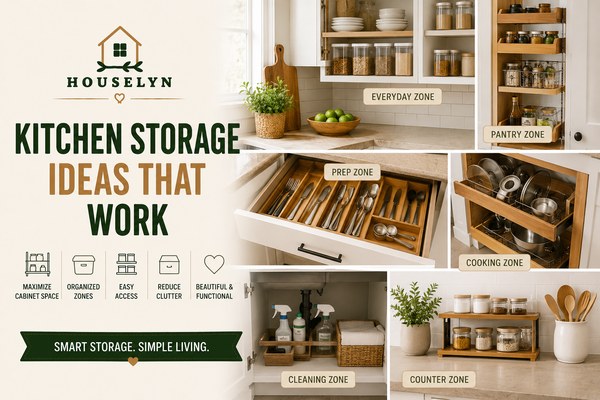 Discover practical kitchen storage ideas that improve organization, maximize cabinet space, and reduce countertop clutter.
Storage Ideas for Pantries
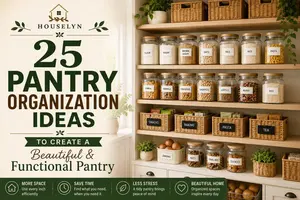
A pantry is one of the most valuable storage areas in any home.
When organized well, it can save time, reduce food waste, simplify meal preparation, and make grocery shopping more efficient.
When poorly organized, it quickly becomes one of the most frustrating spaces in the house.
Many pantry problems are not caused by a lack of shelving or containers. They are caused by poor visibility, unclear categories, and storage systems that do not match how food is actually used.
Create Pantry Zones
One of the most effective pantry storage strategies is creating dedicated food zones.
Rather than placing groceries wherever space is available, group similar items together.
Examples include:
- Breakfast foods
- Baking supplies
- Snacks
- Canned goods
- Pasta and grains
- Condiments
- Beverages
Zones reduce search time and make restocking easier.
For example, if all baking ingredients are stored together, preparing a recipe becomes much more efficient because everything needed can be found in one location.
Store Food by Frequency of Use
Not every food item deserves prime shelf space.
Frequently used products should be the easiest to access.
Examples include:
- Breakfast cereals
- Everyday snacks
- Coffee and tea
- Cooking oils
- Frequently used spices
Less frequently used items can be stored on higher shelves or in secondary pantry areas.
Matching accessibility to frequency of use helps the pantry function more efficiently.
Improve Visibility
One of the biggest causes of food waste is poor visibility.
Items that cannot be seen are often forgotten.
Common solutions include:
- Clear storage containers
- Tiered shelf organizers
- Open-front storage bins
- Lazy Susans for corners
The easier it is to see products, the more likely they are to be used before expiration.
Use Containers Strategically
Storage containers can improve both organization and visibility.
However, containers should be used intentionally rather than simply transferring products from one package to another.
Containers work best for:
- Flour
- Sugar
- Rice
- Pasta
- Cereals
- Baking ingredients
Products that are already easy to identify and store may not require additional containers.
The goal is functionality rather than uniformity.
Create a Pantry Inventory Mindset
A pantry functions best when it is treated as a working inventory system.
This means regularly reviewing:
- Expiration dates
- Duplicate purchases
- Low-stock items
- Overstocked categories
A simple monthly review can prevent unnecessary spending and reduce food waste.
A Real Houselyn Example
A family complained that groceries constantly overflowed from their pantry despite having a large storage area.
After reviewing the pantry, several issues became obvious.
Similar items were scattered throughout multiple shelves.
Duplicate products had been purchased because existing supplies could not be seen.
Expired food occupied valuable storage space.
The solution focused on visibility and categorization.
Breakfast foods were grouped together.
Baking supplies were consolidated.
Clear containers were introduced for frequently used staples.
A monthly pantry review was added to the family's routine.
Within a few weeks, the pantry felt larger and functioned more efficiently without any structural changes.
Common Pantry Storage Mistakes
Several mistakes appear repeatedly in pantry organization projects.
These include:
- Storing items without categories
- Ignoring expiration dates
- Overbuying products
- Hiding food behind other food
- Creating overly complicated labeling systems
Simple, visible systems usually outperform highly detailed organization methods.
Small Pantry Storage Strategies
A small pantry can still function extremely well when space is used intentionally.
Focus on:
- Vertical shelving
- Door-mounted storage
- Stackable containers
- Tiered shelf organizers
- Category-based zones
Small pantries often benefit more from smart organization than large pantries because every inch must serve a purpose.
Houselyn Takeaway
The best pantry storage systems focus on visibility, accessibility, and simplicity.
When food is easy to see, easy to reach, and stored in logical categories, meal preparation becomes easier, grocery shopping becomes more efficient, and food waste decreases significantly.
Continue Organizing Your Kitchen
Explore these related Houselyn guides:
🏡 Houselyn Expert Insight
The most organized pantries are not necessarily the ones with the most containers. They are the ones where every item can be seen quickly and returned easily after use.
Storage Ideas for Bathrooms
Bathrooms may be among the smallest rooms in a home, but they often store a surprising number of items.
Towels, toiletries, cleaning products, personal care items, medications, grooming tools, and backup supplies all compete for limited storage space.
Without a clear storage system, bathroom counters quickly become crowded and cabinets become difficult to navigate.
The most effective bathroom storage systems focus on accessibility, visibility, and efficient use of vertical space.
Prioritize Daily-Use Items
One of the simplest ways to improve bathroom storage is separating daily-use items from backup supplies.
Daily-use items may include:
- Toothbrushes
- Skincare products
- Hair care products
- Everyday medications
- Frequently used grooming tools
These items should be easy to access without requiring unnecessary searching or moving other products.
Backup supplies, on the other hand, can be stored in less accessible locations.
Examples include:
- Extra shampoo
- Replacement toothpaste
- Bulk purchases
- Spare toiletries
This distinction immediately creates a more functional bathroom.
Maximize Under-Sink Storage
The cabinet beneath the sink is one of the most valuable storage areas in the bathroom.
However, plumbing often creates awkward gaps that make organization difficult.
Effective under-sink storage solutions include:
- Stackable bins
- Pull-out drawers
- Clear containers
- Shelf organizers
The goal is to divide the cabinet into categories rather than creating one large catch-all space.
For example:
- Hair care products
- Cleaning supplies
- Extra toiletries
- First aid supplies
Smaller categories make items easier to find and maintain.
Use Vertical Wall Space
Bathrooms often have limited floor space, making vertical storage especially valuable.
Examples include:
- Floating shelves
- Wall-mounted cabinets
- Over-toilet storage
- Towel ladders
- Mounted baskets
Vertical storage helps increase capacity without making the room feel crowded.
This strategy is particularly effective in apartments and small family bathrooms.
Create a Linen Storage System
Towels and washcloths can quickly consume valuable storage space.
A simple linen storage system should separate:
- Bath towels
- Hand towels
- Washcloths
- Guest linens
- Backup bedding
Storing similar items together reduces clutter and makes it easier to identify when supplies need replenishing.
Organize Bathroom Drawers by Function
Bathroom drawers often become a mixture of unrelated products.
Instead, assign each drawer a specific purpose.
Examples include:
- Makeup and cosmetics
- Dental care
- Hair accessories
- Grooming tools
- Daily skincare products
The more specific the category, the easier the system becomes to maintain.
A Real Houselyn Example
A family of four shared a single bathroom and constantly struggled with countertop clutter.
Every family member stored personal care items near the sink because there was no organized storage system.
As a result:
- The countertop felt crowded.
- Cleaning became difficult.
- Products were frequently misplaced.
The solution involved creating individual storage zones.
Each family member received a labeled basket inside the under-sink cabinet.
Daily-use items remained accessible while backup supplies were moved to higher shelves.
The countertop immediately became easier to clean and the bathroom felt significantly larger.
Common Bathroom Storage Mistakes
Several storage mistakes repeatedly create clutter in bathrooms.
These include:
- Storing expired products
- Keeping too many items on countertops
- Mixing unrelated categories
- Ignoring vertical storage opportunities
- Overcrowding under-sink cabinets
Addressing these habits often improves organization more effectively than purchasing additional storage products.
Small Bathroom Storage Strategies
Small bathrooms require intentional planning.
Focus on:
- Vertical shelving
- Door-mounted storage
- Narrow storage towers
- Wall-mounted baskets
- Multi-functional furniture
The goal is to increase storage capacity without sacrificing valuable floor space.
Houselyn Takeaway
The best bathroom storage systems focus on simplicity and accessibility.
By separating daily-use items from backup supplies, creating clear categories, and using vertical space effectively, even small bathrooms can become organized, functional, and easy to maintain.
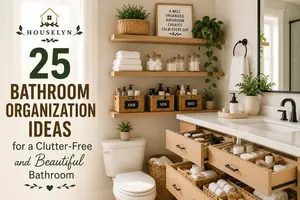
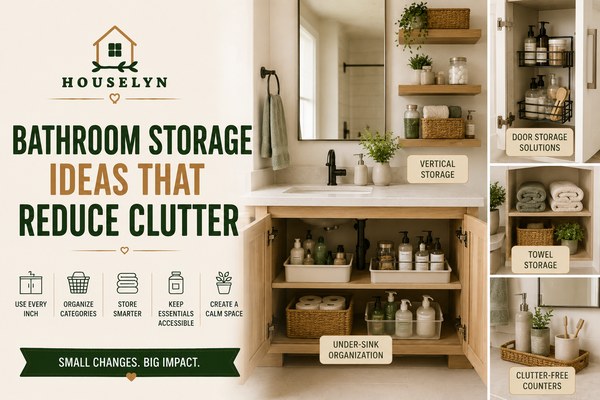 Practical bathroom storage ideas featuring under-sink organization, vertical shelving, towel storage, and clutter-free counters.
Recommended Bathroom Storage Essentials
Storage Ideas for Entryways
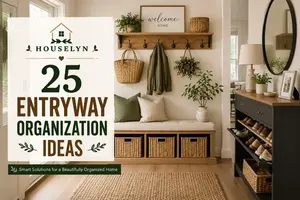
The entryway is often the first area people see when entering a home and one of the first places where clutter begins to accumulate.
Shoes, coats, bags, keys, mail, sports equipment, umbrellas, and everyday essentials frequently collect near the entrance because they are used so often.
When an entryway lacks a storage system, clutter quickly spreads into nearby rooms.
The goal of entryway storage is not simply to store belongings. It is to create an organized transition zone between the outside world and the home.
Create a Dedicated Drop Zone
One of the most effective entryway storage solutions is a dedicated drop zone.
A drop zone is a designated area where everyday items are placed immediately after entering the home.
Common drop-zone items include:
- Keys
- Wallets
- Handbags
- Backpacks
- Sunglasses
Without a dedicated location, these items often end up scattered throughout the house.
A simple tray, shelf, drawer, or basket can create enough structure to prevent daily clutter.
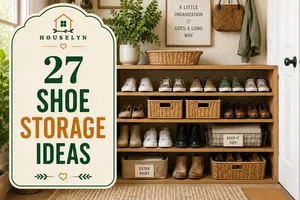
Establish a Shoe Storage System
Shoes are one of the largest contributors to entryway clutter.
A clear shoe storage system helps keep floors tidy while making footwear easier to find.
Popular options include:
- Shoe benches
- Shoe cabinets
- Open shelving
- Storage baskets
- Vertical shoe organizers
The best solution depends on household size and available space.
Families with children often benefit from open storage systems because they encourage quick and easy access.
Store Coats Near the Entrance
Coats should be stored as close to the entrance as possible.
Examples include:
- Coat closets
- Wall hooks
- Hall trees
- Entryway storage benches
Keeping outerwear near the door prevents it from migrating into bedrooms, dining rooms, and living spaces.
It also makes leaving the house faster and more convenient.
Create a Mail Management Station
Paper clutter often begins in the entryway.
Mail, receipts, school papers, and delivery notices can accumulate quickly if there is no dedicated system.
Consider creating a small mail station that includes:
- Incoming mail tray
- Outgoing mail area
- Recycling container
- Household paperwork folder
Processing mail regularly helps prevent paper piles from spreading throughout the home.
Plan for Seasonal Items
Entryway storage needs change throughout the year.
Winter may require space for:
- Heavy coats
- Boots
- Scarves
- Gloves
Summer may require storage for:
- Hats
- Sports equipment
- Lightweight jackets
A flexible storage system can adapt as seasons change without creating unnecessary clutter.
Use Multi-Functional Furniture
Entryways often benefit from furniture that combines storage with another function.
Examples include:
- Storage benches
- Hall trees with seating
- Console tables with drawers
- Shoe cabinets with display surfaces
Multi-functional furniture maximizes storage while maintaining a clean and welcoming appearance.
A Real Houselyn Example
A busy family of five struggled with constant entryway clutter.
Shoes were scattered across the floor.
School bags were left in random locations.
Keys and mail frequently disappeared.
The solution involved creating simple storage zones.
A shoe bench was added near the door.
Wall hooks were installed for coats and bags.
A small tray was placed on a console table for keys and wallets.
A mail organizer was added for incoming paperwork.
Within days, the entryway became easier to maintain because every frequently used item had a designated home.
Common Entryway Storage Mistakes
Several mistakes frequently create clutter in entryways.
These include:
- Storing too many shoes near the door
- Allowing mail to accumulate
- Lacking designated drop zones
- Ignoring seasonal changes
- Using decorative furniture with no storage function
Addressing these issues often produces immediate results.
Small Entryway Storage Strategies
Even the smallest entryways can function efficiently.
Focus on:
- Vertical storage
- Wall hooks
- Narrow shoe cabinets
- Floating shelves
- Multi-functional furniture
The goal is to create organization without blocking movement through the space.
Houselyn Takeaway
The best entryway storage systems make everyday routines easier.
By creating dedicated drop zones, managing shoes effectively, organizing mail, and planning for seasonal changes, you can reduce clutter and create a more welcoming first impression every time someone enters your home.
⚡ Houselyn Quick Win
If your entryway feels cluttered, start by creating a simple drop zone for keys, wallets, bags, and mail. This single change can eliminate many of the small items that tend to spread throughout the house.
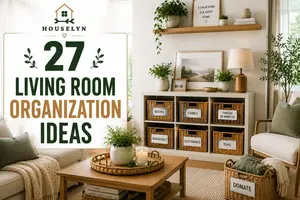
The living room is one of the most challenging spaces to organize because it serves multiple purposes.
Depending on the household, a living room may function as:
- A relaxation space
- A family gathering area
- A children's play area
- A home entertainment center
- A reading space
- A temporary workspace
With so many activities taking place in one room, clutter can accumulate quickly.
The most successful living room storage systems balance functionality with appearance. Unlike garages, utility rooms, and closets, living room storage must often look as good as it functions.
Start by Identifying What Belongs in the Living Room
One reason living rooms become cluttered is that they gradually become storage areas for items that belong elsewhere.
Before adding storage solutions, identify which categories genuinely belong in the room.
Common examples include:
- Books
- Remote controls
- Electronics
- Blankets
- Board games
- Children's toys
- Decorative items
Items that do not support the room's primary function should be evaluated carefully.
The fewer unrelated categories stored in the room, the easier organization becomes.
Use Hidden Storage Whenever Possible
Hidden storage helps maintain a clean and uncluttered appearance.
Examples include:
- Storage ottomans
- Coffee tables with storage
- Side tables with drawers
- Storage benches
- Media cabinets
These pieces allow everyday items to remain accessible without creating visual clutter.
A living room can feel dramatically more organized when everyday items are stored out of sight.
Create Storage for Entertainment Systems
Televisions and entertainment centers often generate clutter.
Common items include:
- Remote controls
- Gaming accessories
- Charging cables
- Streaming devices
- Board games
- Media equipment
Without a dedicated storage system, these items often spread across tables and shelves.
Creating a specific entertainment zone helps keep everything organized and easy to locate.
Use Decorative Storage
Living room storage should contribute to the room's design rather than compete with it.
Examples include:
- Decorative baskets
- Woven storage bins
- Built-in shelving
- Stylish cabinets
- Furniture with concealed storage
Storage solutions that complement the room's décor are more likely to remain in place long term.
Create a Family Storage Zone
For households with children, the living room often becomes a secondary play area.
A dedicated family storage zone can help contain:
- Toys
- Books
- Art supplies
- Games
- Activity materials
The goal is not to eliminate these items.
The goal is to give them a clearly defined home.
This makes cleanup faster and helps prevent clutter from spreading throughout the room.
Use Vertical Space Thoughtfully
Wall space can provide valuable storage without reducing floor space.
Examples include:
- Floating shelves
- Built-in shelving
- Wall-mounted cabinets
- Display shelving
Vertical storage works best when it balances storage with visual simplicity.
Overloading shelves can make a room feel more cluttered rather than less.
A Real Houselyn Example
A family of four used their living room as both a relaxation space and a children's play area.
Every evening, toys, books, blankets, and electronics were spread across the room.
The family initially considered purchasing additional storage furniture.
Instead, they first reassessed how the room was functioning.
A storage ottoman was added for blankets.
A woven basket was designated for books.
A cabinet was assigned to board games and electronics.
A single storage cube was created for children's toys.
Within a few weeks, the room felt calmer and easier to maintain because every category had a dedicated storage location.
Common Living Room Storage Mistakes
Several mistakes repeatedly create clutter in living rooms.
These include:
- Storing too many categories in one room
- Leaving electronics without designated storage
- Using open shelving for everything
- Allowing toys to spread throughout the room
- Choosing decorative furniture with no storage value
Correcting these habits often improves organization significantly.
Living Room Storage for Small Homes
In smaller homes and apartments, living rooms often need to perform multiple functions.
Focus on:
- Multi-functional furniture
- Hidden storage
- Vertical shelving
- Furniture with built-in compartments
- Clearly defined storage zones
The most successful small-space living rooms are designed to adapt to multiple activities throughout the day.
Houselyn Takeaway
The best living room storage systems create balance between function and comfort.
By using hidden storage, creating dedicated zones, and choosing furniture that works harder, you can maintain an organized living room without sacrificing style or relaxation.
Recommended Living Room Storage Solutions
Storage Ideas for Kids and Family Spaces
Family spaces often present unique storage challenges because they serve multiple people with different needs.
Unlike a home office or a master bedroom, family spaces must accommodate children, parents, guests, hobbies, school activities, and everyday life.
Without a clear storage strategy, these areas can quickly become some of the most cluttered spaces in the home.
The most successful family storage systems focus on simplicity, accessibility, and routines that every member of the household can follow.
Create Clear Activity Zones
One reason family spaces become disorganized is that different activities overlap without dedicated storage areas.
For example, a single room may be used for:
- Homework
- Crafts
- Reading
- Gaming
- Toy storage
- Family entertainment
When every activity shares the same storage space, clutter becomes difficult to control.
Creating activity zones helps establish boundaries and makes cleanup easier.
Examples include:
- Reading zone
- Homework zone
- Craft zone
- Play zone
- Family game zone
The clearer the zones, the easier it becomes to maintain organization.
Make Storage Accessible to Children
A storage system that works for adults may not work for children.
If children cannot easily access storage, they are less likely to use it.
Child-friendly storage should be:
- Easy to reach
- Easy to open
- Easy to understand
- Easy to return items to
Examples include:
- Open bins
- Low shelving
- Labeled baskets
- Storage cubes
The goal is to reduce barriers to cleanup.
Create a Family Command Center
Many households benefit from a centralized area for managing daily activities.
A family command center may include:
- Calendar
- School information
- Household reminders
- Mail management
- Shopping lists
- Activity schedules
Without a designated location, paperwork and important information often spread throughout the home.
A command center helps keep family logistics organized.
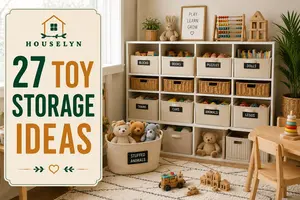
Store Toys by Category
Toy storage becomes easier when toys are grouped into clear categories.
Examples include:
- Building toys
- Arts and crafts supplies
- Dolls and action figures
- Educational toys
- Puzzles
- Board games
Clear categories help children find items more easily and make cleanup significantly faster.
Create Homework and Learning Storage
School supplies can quickly become scattered throughout a home.
A dedicated learning station should include storage for:
- Pens and pencils
- Paper
- Notebooks
- Chargers
- School materials
- Reference books
Keeping educational supplies together reduces frustration and improves productivity.
Build Simple Cleanup Routines
Storage systems are only effective when they are maintained.
One of the most powerful organization strategies is creating simple family cleanup routines.
Examples include:
- Five-minute evening reset
- Weekend organization check
- Toy pickup before bedtime
- Homework station reset after use
Consistency matters more than perfection.
A simple routine followed regularly usually outperforms a complicated system that nobody maintains.
A Real Houselyn Example
A family with three children felt overwhelmed by constant clutter in their family room.
Toys, books, art supplies, and school materials were spread throughout the space.
The family initially believed they needed more storage furniture.
After evaluating the room, the real issue became clear.
The space lacked categories and activity zones.
The solution included:
- A reading basket for books
- A storage cube for toys
- A homework station for school supplies
- A craft bin for art materials
Each category received a clearly defined home.
Within a few weeks, cleanup became significantly easier because every family member understood where items belonged.
Common Family Storage Mistakes
Several mistakes frequently create clutter in shared family spaces.
These include:
- Storing unrelated items together
- Creating overly complicated systems
- Using storage that children cannot access
- Failing to establish routines
- Allowing categories to become unclear over time
Addressing these habits often improves organization without requiring additional storage products.
Family Storage in Small Homes
Families living in apartments or smaller homes often need storage solutions that perform multiple functions.
Focus on:
- Multi-functional furniture
- Vertical storage
- Hidden storage
- Storage benches
- Portable storage bins
The goal is flexibility.
Storage systems should adapt as family needs change.
Houselyn Takeaway
The best family storage systems are designed around real daily habits.
When storage is accessible, categories are clear, and routines are consistent, shared spaces become easier to maintain and more enjoyable for everyone who uses them.
Explore More Houselyn Storage Guides
Continue building a more organized home with these related resources:
🏡 Houselyn Family Organization Insight
Families often assume they need more storage when they actually need clearer categories. A simple storage system that every family member understands will usually outperform a complex system that only one person maintains.
The Small Space Storage Framework
Many people believe they need a larger home when what they really need is a better storage strategy.
Small apartments, compact homes, studio flats, and older properties can all function exceptionally well when storage is planned intentionally.
In fact, some of the most organized homes are also some of the smallest.
The difference is that every square foot serves a purpose.
The Houselyn Small Space Storage Framework focuses on maximizing functionality without making a home feel crowded or overfilled.
Focus on Storage Density, Not Storage Quantity
One of the biggest mistakes people make in small spaces is trying to add more storage furniture.
Additional storage furniture often consumes valuable floor space and can make a room feel smaller.
Instead of asking:
"How can I add more storage?"
Ask:
"How can I make existing storage work harder?"
Examples include:
- Adding shelf risers inside cabinets
- Using stackable storage containers
- Installing additional closet shelving
- Using vertical wall space
- Utilizing under-bed storage
These solutions increase storage density without increasing the room's footprint.
Prioritize Multi-Functional Furniture
In small homes, furniture should ideally serve more than one purpose.
Examples include:
- Storage beds
- Storage ottomans
- Lift-top coffee tables
- Storage benches
- Console tables with drawers
- Window seats with hidden compartments
Multi-functional furniture allows storage to be integrated into everyday living rather than added as an afterthought.Use
Vertical Space From Floor to Ceiling
Many small homes underutilize wall space.
A common mistake is stopping shelving at eye level.
Vertical storage can often extend much higher.
Examples include:
- Floor-to-ceiling shelving
- Tall bookcases
- Wall-mounted cabinets
- Hanging storage systems
Higher shelves can store:
- Seasonal items
- Keepsakes
- Holiday decorations
- Backup supplies
This preserves valuable lower-level storage for daily-use belongings.
Create Storage Around Daily Habits
The most successful storage systems reflect how people actually live.
For example:
If shoes constantly collect near the entrance, create storage near the entrance.
If mail accumulates on the kitchen counter, create a mail station nearby.
If blankets are always left on the sofa, add a storage basket within reach.
When storage supports existing habits, maintaining organization becomes much easier.
Reduce Visual Clutter
Small homes can feel crowded even when they are technically organized.
Visual clutter often comes from:
- Too many open shelves
- Excessive decorative items
- Overfilled surfaces
- Visible storage containers
Balancing visible and hidden storage helps a space feel calmer.
For many small homes, closed storage furniture creates a cleaner appearance while still providing significant storage capacity.
Think in Zones, Not Rooms
Traditional organization often treats each room separately.
Small homes benefit from thinking in zones instead.
Examples include:
- Work zone
- Sleep zone
- Entertainment zone
- Storage zone
- Dining zone
A studio apartment may contain multiple zones within a single room.
Defining these zones creates structure and reduces clutter.
A Real Houselyn Example
A couple living in a one-bedroom apartment felt frustrated by the lack of storage.
They believed they needed larger wardrobes, additional cabinets, and more shelving.
After evaluating the apartment, several opportunities emerged.
The space beneath the bed was unused.
The living room furniture offered no hidden storage.
Vertical wall space was largely empty.
Closet shelves extended only halfway to the ceiling.
Instead of adding more furniture, they focused on improving existing storage.
Under-bed containers were introduced.
A storage ottoman replaced a standard coffee table.
Additional shelving was installed in the closet.
Wall-mounted storage was added above existing furniture.
The apartment gained substantial storage capacity without feeling more crowded.
Common Small Space Storage Mistakes
Many storage problems in small homes are caused by a few recurring mistakes.
These include:
- Purchasing oversized furniture
- Ignoring vertical storage
- Keeping rarely used items in prime locations
- Using too many open storage systems
- Failing to declutter regularly
Avoiding these mistakes can dramatically improve functionality.
Houselyn Takeaway
Small spaces do not require perfect organization.
They require intentional organization.
When storage is built around daily habits, vertical space is used effectively, and furniture serves multiple purposes, even the smallest home can feel organized, functional, and comfortable.
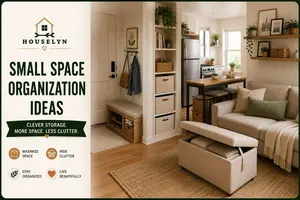
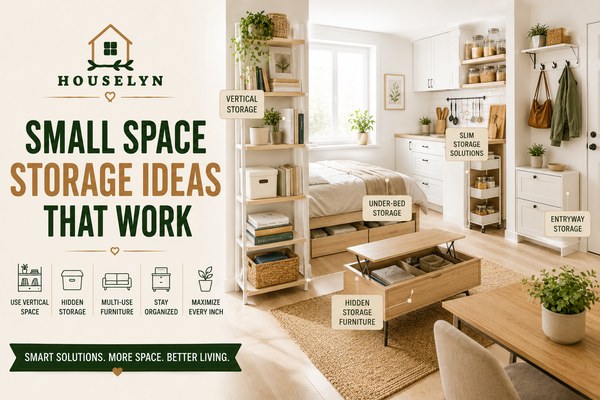 Smart small space storage ideas featuring vertical storage, hidden furniture storage, and organization solutions for apartments and compact homes.
Recommended Small Space Storage Solutions
Storage Mistakes That Waste Space
Many storage problems are not caused by a lack of storage.
They are caused by habits and systems that quietly waste the storage space already available.
This is why some large homes feel cluttered while some small apartments feel organized and spacious.
Before investing in new shelves, cabinets, baskets, or storage furniture, it is worth identifying the common mistakes that reduce storage efficiency.
Avoiding these mistakes can often create more usable storage space than purchasing additional organizers.
Buying Storage Products Before Solving the Problem
One of the most common organization mistakes is purchasing storage products before understanding the cause of the clutter.
Many homeowners buy:
- Baskets
- Storage bins
- Shelving units
- Drawer organizers
- Decorative containers
hoping the products will solve the problem.
Unfortunately, storage products often organize clutter rather than eliminate it.
For example, a homeowner may purchase six new storage bins for a garage that is already full of unused items.
The result is a garage that looks more organized but still contains unnecessary belongings.
The better approach is:Keeping Rarely Used Items in Prime Locations
- Declutter first.
- Identify categories.
- Evaluate storage needs.
- Purchase storage solutions only when necessary.
Prime storage space should be reserved for items used most frequently.
A common mistake is storing:
- Holiday decorations
- Seasonal clothing
- Special occasion dishes
- Rarely used appliances
in the most accessible areas of the home.
Meanwhile, everyday items may be difficult to reach.
This creates unnecessary frustration and makes storage systems less effective.
A simple rule is:
The more often an item is used, the easier it should be to access.
Ignoring Vertical Space
Many homes contain significant unused storage potential on walls and upper shelving areas.
People often focus only on floor-level storage while leaving valuable vertical space empty.
Examples include:
- Empty wall space
- Half-used closets
- Cabinets with excessive vertical gaps
- Unused space above furniture
Strategic use of vertical storage can dramatically increase storage capacity without increasing the room's footprint.
Creating Categories That Are Too Broad
A storage bin labeled "Miscellaneous" may seem harmless, but it often signals the beginning of storage problems.
Broad categories make it difficult to locate items and maintain organization.
For example, instead of creating a bin labeled:
"Random Household Items"
consider specific categories such as:
- Batteries
- Light bulbs
- Tools
- Gift wrapping supplies
Specific categories improve visibility and make storage systems easier to maintain.
Creating Categories That Are Too Detailed
The opposite problem can be equally damaging.
Some homeowners create so many categories that maintaining the system becomes exhausting.
For example:
- Small screwdrivers
- Medium screwdrivers
- Large screwdrivers
- Electrical screwdrivers
The system may look impressive initially but becomes difficult to maintain over time.
The most successful storage systems strike a balance between simplicity and specificity.
Storing Items Far From Where They Are Used
One of the core principles of the Houselyn Storage Framework is storing items close to their point of use.
When storage locations do not match daily habits, clutter often follows.
Examples include:
- Coffee supplies stored far from the coffee machine
- Cleaning products stored on another floor
- Office supplies scattered throughout the house
- Shoes stored far from entry points
Reducing the distance between use and storage increases the likelihood that items will be returned to their proper location.
Using Storage Systems That Are Too Difficult
Complex storage systems often fail because they create friction.
Examples include:
- Containers with multiple lids
- Deep storage bins that hide contents
- Hard-to-reach shelving
- Overly complicated labeling systems
The easier a system is to use, the more likely it is to succeed.
A simple system that is used consistently is almost always better than a perfect system that is ignored.
Failing to Reevaluate Storage Over Time
Storage needs change.
Children grow.
New hobbies develop.
Household routines evolve.
Many homeowners create a storage system and assume it will work forever.
In reality, storage systems require occasional adjustment.
A quarterly review can help identify:
- Overcrowded categories
- Underused storage areas
- New storage needs
- Items that should be removed
Regular maintenance prevents small problems from becoming major organization challenges.
A Real Houselyn Example
A homeowner believed she needed an additional storage cabinet for her dining room.
Before purchasing anything, she conducted a storage review.
The review revealed several issues:
- Seasonal decorations occupied prime cabinet space.
- Rarely used serving dishes filled accessible shelves.
- Duplicate kitchen items were stored in multiple locations.
- Several bins contained miscellaneous items with no clear category.
After reorganizing existing storage and removing unnecessary items, the homeowner discovered she no longer needed additional furniture.
The solution was not more storage.
The solution was better storage management.
Houselyn Takeaway
The most effective way to create more storage space is often to eliminate the habits that waste space in the first place.
Before buying additional organizers, evaluate:
- How items are categorized
- Where they are stored
- How often they are used
- Whether the storage system matches daily routines
In many cases, small adjustments create dramatic improvements without requiring additional square footage or expensive storage products.
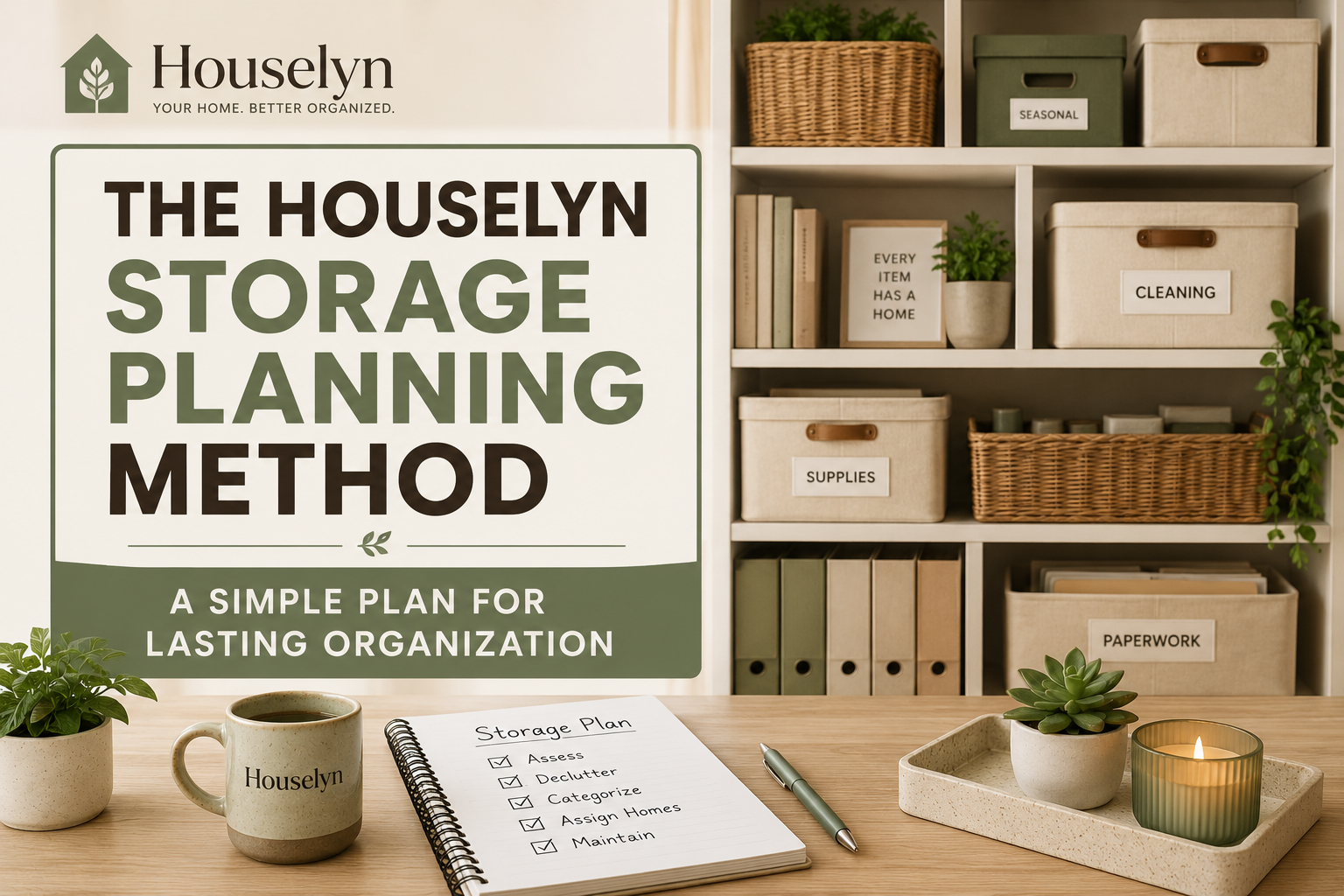 Learn the Houselyn Storage Planning Method to create simple, effective storage systems that bring lasting organization to every room in your home.
The Houselyn Storage Planning Method
Most organization projects fail because people focus on individual storage products instead of creating a complete storage plan.
A storage bin may solve one problem.
A shelf may solve another.
But long-term organization happens when every storage decision works together as part of a larger system.
The Houselyn Storage Planning Method is a simple framework designed to help homeowners create storage systems that remain effective long after the initial organization project is complete.
Rather than organizing room by room in isolation, this method evaluates the entire home and prioritizes storage decisions based on real-life needs.
Step 1: Identify Your Biggest Storage Frustrations
Every home has storage pain points.
The first step is identifying the areas that create the most daily frustration.
Examples include:
- Overflowing closets
- Cluttered kitchen counters
- Toy accumulation
- Shoe storage problems
- Bathroom overcrowding
- Lack of storage in small spaces
Focus on the problems that affect daily life most frequently.
Solving high-impact issues first creates momentum and often improves multiple areas of the home at once.Step
2: Evaluate Existing Storage Capacity
Before purchasing anything new, evaluate the storage that already exists.
Look at:
- Closets
- Cabinets
- Drawers
- Shelving
- Under-bed space
- Garage storage
- Utility rooms
Many homes already contain enough storage capacity but use it inefficiently.
The goal is to identify underused opportunities before investing in additional products.
Step 3: Declutter Before Organizing
Organization becomes much easier when unnecessary items are removed.
Ask:
- Do I use this regularly?
- Does it serve a purpose?
- Would I replace it if it disappeared tomorrow?
If the answer is no, it may not deserve valuable storage space.
Decluttering reduces the amount of storage required and simplifies every future organization decision.
Step 4: Create Storage Categories
Once unnecessary items have been removed, create clear categories.
Examples include:
- Cleaning supplies
- School supplies
- Seasonal decorations
- Sports equipment
- Kitchen tools
- Travel accessories
Strong categories create strong organization systems.
The clearer the category, the easier it becomes to maintain.
Step 5: Assign Permanent Homes
Every category should have a permanent storage location.
This location should remain consistent.
Examples include:
- Batteries in one drawer
- Gift wrapping supplies in one container
- Cleaning products in one cabinet
- Travel accessories in one storage bin
Consistency reduces searching and improves long-term organization.
Step 6: Match Accessibility to Frequency of Use
One of the most important principles in this guide is matching accessibility to frequency of use.
Items used daily should receive the best storage locations.
Items used occasionally can be stored farther away.
Items used rarely can move into long-term storage.
This simple adjustment often improves functionality more than any storage product.
Step 7: Build Maintenance Into Your Routine
Even the best storage system requires maintenance.
The goal is not perfection.
The goal is preventing small problems from becoming overwhelming.
Examples include:
- Five-minute daily resets
- Weekly decluttering sessions
- Monthly pantry reviews
- Quarterly storage assessments
Small maintenance habits keep storage systems functioning effectively.
A Real Houselyn Example
A homeowner felt overwhelmed by clutter throughout the house.
Instead of tackling every room at once, she applied the Houselyn Storage Planning Method.
First, she identified her biggest frustrations:
- Entryway clutter
- Kitchen counter clutter
- Closet overcrowding
Next, she evaluated existing storage and discovered several underused areas.
After decluttering, she created clear categories and assigned permanent storage locations.
Within a few weeks, the home felt significantly more organized despite purchasing very few storage products.
The transformation came from the plan rather than the products.
The Houselyn Storage Planning Checklist
Before starting any storage project, ask yourself:
- What problem am I trying to solve?
- Have I evaluated existing storage?
- Have I removed unnecessary items?
- Are my categories clear?
- Does every item have a permanent home?
- Does accessibility match frequency of use?
- How will I maintain the system?
These questions help ensure that storage solutions address the root cause of clutter rather than simply hiding it.
Houselyn Takeaway
Successful storage is not about owning more organizers.
It is about creating systems that support the way you live.
When storage decisions are guided by a clear plan, organization becomes easier to maintain, more effective, and far less stressful over the long term.
Conclusion
Creating an organized home is not about owning more storage products.
It is about creating storage systems that support the way you actually live.
Throughout this guide, we have explored how effective storage begins with understanding daily habits, identifying problem areas, creating clear categories, and assigning every item a logical home. Whether you are organizing a bedroom, closet, kitchen, pantry, bathroom, entryway, living room, or family space, the same principles apply.
The most successful storage systems are not necessarily the most expensive or the most visually impressive. They are the systems that remain easy to use day after day.
Remember the core principles of the Houselyn Storage Framework:
- Store items near where they are used.
- Match accessibility to frequency of use.
- Create clear categories.
- Reduce friction.
- Review systems regularly.
These principles work in homes of every size, from studio apartments to large family houses.
If your home feels cluttered today, resist the temptation to immediately buy more organizers. Start by assessing the space you already have, removing what is no longer needed, and building simple systems that fit your daily routines.
Small improvements made consistently often create bigger results than large organization projects that are difficult to maintain.
The goal is not perfection.
The goal is creating a home where belongings are easy to find, easy to put away, and easy to live with.
When storage systems support your lifestyle instead of working against it, every room becomes more functional, more comfortable, and easier to enjoy.
With the right strategy, every home can feel more organized, regardless of its size.
Frequently Asked Questions
What are the best storage ideas for every room?
What are the best storage ideas for every room?
The best storage ideas are the ones that match how each room is used.
For example, bedrooms benefit from under-bed storage, closets need clear categories, kitchens need storage zones, bathrooms need vertical storage, and living rooms often need hidden storage furniture.
The best whole-home storage system is not based on buying more containers. It is based on giving every item a logical home.
What should I do before buying storage products?
What should I do before buying storage products?
Before buying storage products, assess your home first.
Ask yourself:
- What area creates the most clutter?
- Which items are used daily?
- Which items are rarely used?
- What storage space is underused?
- Have I decluttered first?
- Have I measured the available space?
This prevents wasted money and helps you choose storage products that actually solve the problem.
Why does my home still feel cluttered after organizing?
Why does my home still feel cluttered after organizing?
Your home may still feel cluttered if the storage system does not match your daily habits.
Common causes include:
- Items stored too far from where they are used
- Too many belongings in prime storage areas
- Overly complicated categories
- Too much visible storage
- No regular maintenance routine
A simple system that is easy to maintain usually works better than a complicated system that looks perfect at first.
How often should storage systems be reviewed?
How often should storage systems be reviewed?
Most homes benefit from a storage review every three to four months.
A quarterly review helps you:
- Remove unused items
- Adjust categories
- Rotate seasonal belongings
- Identify overcrowded areas
- Improve storage systems before clutter builds up again
Storage needs change over time, so the system should change with them.
What is the Houselyn Storage Planning Method?
What is the Houselyn Storage Planning Method?
The Houselyn Storage Planning Method is a simple process for creating long-lasting storage systems.
It focuses on:
- Identifying storage problems
- Evaluating existing storage
- Decluttering first
- Creating categories
- Assigning permanent homes
- Matching accessibility to use
- Building maintenance habits
The goal is to create storage that supports real daily life, not just storage that looks good in photos.
Continue Your Home Organization Journey
Explore more expert Houselyn guides to build a clutter-free, organized home:
You might like these
25 Pantry Organization Ideas to Create Beautiful and Functional Pantry
Discover 25 pantry organization ideas to maximize storage, reduce food waste, organize shelves, and create a beautiful, clutter-free pantry.
25 Home Office Organization Ideas for a Productive Workspace
Discover 25 home office organization ideas to reduce clutter, organize paperwork, improve productivity, and create a more functional workspace.