- Home
- Free Home Decor Printables
- 30-Day Home Refresh Checklist
30-Day Home Refresh Checklist
This free 30-day home refresh checklist gives you one focused action each day to clear clutter, improve function, correct small decorating problems and make your home feel calmer and more finished without turning the month into a shopping challenge.
Work through the home gradually instead of trying to redesign everything in one weekend.
Move from observation and editing through practical fixes, styling and a final review.
Two separately formatted editions for UK, international and North American printing.
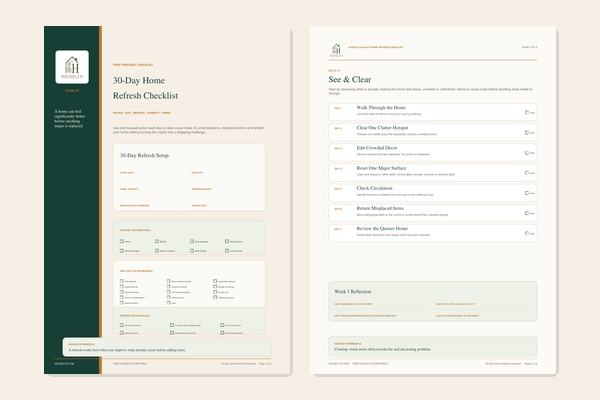
Download the 30-Day Home Refresh Checklist
Choose A4 for most UK and international printers or US Letter for standard North American paper. Both editions contain the complete six-page 30-day refresh system.
You Do Not Need a Renovation to Make Your Home Feel Better
A Tired Room Does Not Always Need New Furniture
When a home feels dull, crowded or unfinished, buying something new can feel like the fastest answer. But the real problem may be an awkward layout, weak lighting, visual clutter, neglected maintenance or styling that has slowly become disconnected.
The 30-day home refresh checklist helps you diagnose those smaller problems before assuming a major purchase is necessary.
The Houselyn Refresh Sequence
Notice → Edit → Improve → Connect → Finish
See the home clearly, remove what distracts, correct what weakens daily function, connect what remains through restrained styling and finish only after the real problems are understood.
Six Pages for Refreshing Your Home Over 30 Days
30-Day Refresh Setup
Set dates, choose the main goal, identify what feels wrong and establish simple refresh ground rules.
Days 1–7: See & Clear
Reduce visual noise, clear clutter hotspots and discover what the rooms actually need.
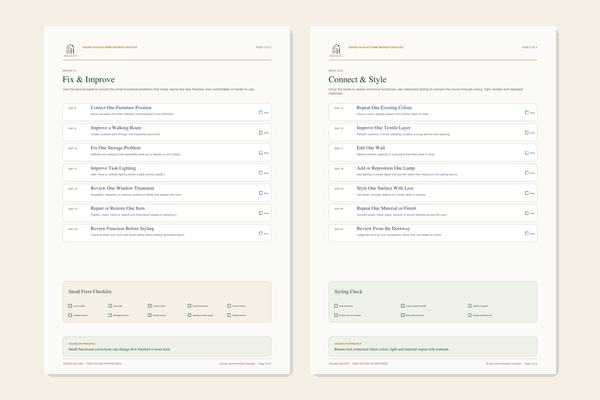
Days 8–14: Fix & Improve
Correct furniture positions, walking routes, storage problems, lighting and overlooked maintenance.
Days 15–21: Connect & Style
Use colour, textiles, lighting, artwork and repeated materials to make rooms feel more cohesive.
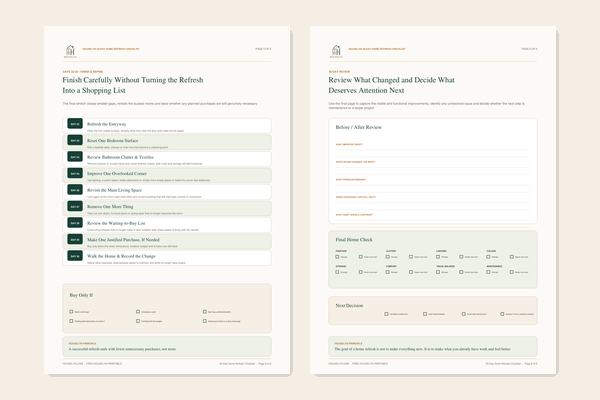
Days 22–30: Finish & Refine
Improve overlooked areas, revisit the purchase list and make only genuinely justified finishing decisions.
30-Day Review
Record what improved, what still needs attention and what the next decorating decision should be.
Preview the Actual 30-Day Home Refresh Checklist
These preview images are generated directly from the final approved A4 PDF.
Four Phases Keep the Refresh Manageable
Observe first. Clear visual clutter, edit crowded surfaces and notice what still feels wrong once the room is quieter.
Correct small functional problems, improve routes, repair tired items and address lighting or storage weaknesses.
Repeat colour, light and materials with restraint so the rooms begin to feel intentional rather than simply decorated.
Revisit overlooked spaces, remove what still does not belong and make only the purchases that remain genuinely justified.
Refresh the Home in Five Houselyn Steps
Walk through the home without fixing anything and identify what repeatedly feels off.
Remove clutter, crowded decor and misplaced objects so the real room becomes easier to evaluate.
Correct small functional weaknesses before assuming a new purchase is required.
Use light, colour, textiles and repeated finishes to create visual continuity.
Review the results, remove another unnecessary item and buy only where a clear gap remains.
Check the Problem Before You Shop for the Solution
A room can look tired for several reasons. Before adding another item, work out whether the problem is visual clutter, function or genuine absence.
Would the room improve by removing clutter, reducing accessories or clearing one overloaded surface?
Is the real issue furniture placement, poor lighting, neglected maintenance or a storage problem rather than missing decor?
Only after editing and correcting should a new purchase move from the waiting list into the actual refresh plan.
A Home That Feels Busy but Does Not Need Redecorating
The living room feels cluttered, the hallway looks unfinished, the bedroom lacks useful lighting and the dining table has become a permanent paperwork zone. The owner initially assumes several new purchases are needed.
The planned new coffee table is cancelled because the existing one works once the surface is edited. Decorative accessories are removed from the list. Existing cushion covers are reused.
A hallway cabinet and a better lamp remain justified because they solve clear functional problems.
The refresh creates clarity before spending.
Make the 30 Days Easier to Finish
Keep Each Day Small
The point of the checklist is consistency, not exhaustion. A clear coffee table or corrected lamp position can be enough for one day.
Use a Waiting-to-Buy List
Write possible purchases down instead of ordering them immediately. Many will stop feeling necessary once the room is clearer.
Review Function Before Style
A room that is difficult to walk through, badly lit or poorly stored will not be fixed by adding another decorative object.
Look From the Doorway
Stepping back makes balance, clutter, weak focal points and awkward furniture relationships easier to see than close-up styling.
What Can Turn a Simple Refresh Into Another Decorating Project?
Using the Checklist as a Shopping Calendar
- Buying something new just to complete a day's task.
- Replacing furniture before testing another layout.
- Buying storage before identifying what actually needs storing.
- Changing colour before checking whether the lighting is the problem.
- Judging progress by how many new items entered the home.
Trying to Improve Everything at Once
- Starting several rooms on the same day.
- Styling surfaces before clearing their practical use.
- Ignoring small repairs because they are not decorative.
- Saving every difficult task for the final week.
- Skipping the final review and immediately beginning another project.
Use the Checklist With Houselyn Refresh Tools
Turn the refresh into a more detailed living-room action plan when one space needs deeper attention.
Estimate the Next Stage Room Refresh Cost PlannerCost the larger changes that remain after the 30-day refresh has separated genuine needs from temporary wants.
Protect the Budget Decorating Budget PlannerPrioritise any purchases that remain after editing, repairing and reusing what you already own.
Continue the Refresh With the Right Worksheet
Use a deeper edit when clutter is preventing you from seeing what a room actually needs.
View Printable → Choose What Matters Decor Upgrade Priority WorksheetRank the improvements that remain once small refresh actions have been completed.
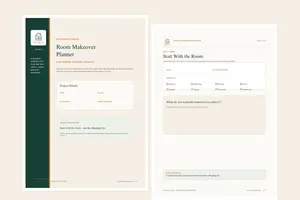
View Printable → Plan a Bigger Project Room Makeover Planner PrintableUse it when the 30-day review reveals that one room genuinely needs a more substantial makeover.
View Printable → Plan the Spending Home Decorating Budget PlannerAllocate money carefully when the refresh reveals several justified improvements.
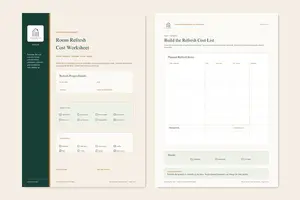
View Printable → Estimate the Cost Room Refresh Cost WorksheetCompare likely costs before committing to the next phase of a room refresh.
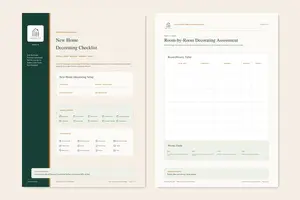
View Printable → Set Up a New Home New Home Decorating ChecklistUse a broader move-in sequence when the refresh is part of settling into a newly occupied home.
View Printable →Choose A4 or US Letter
Use A4 for standard UK and international paper or US Letter for 8.5 × 11 inch paper.
Print at Actual Size or 100%. Both versions are independently laid out so the daily tasks, weekly review areas and final home check remain easy to read and mark.
Keep the Checklist Visible
Place the printed pages somewhere easy to revisit rather than filing them away. Check off one focused action and move on.
Missing a day does not require restarting. Continue with the next useful action and preserve the order of the four refresh phases where practical.
30-Day Home Refresh Checklist FAQ
Is the 30-Day Home Refresh Checklist free?
Yes. Houselyn provides both A4 and US Letter versions of the checklist as free printable PDFs.
Do I need to spend money every day?
No. Most of the checklist is deliberately based on editing, rearranging, cleaning, repairing, improving function and reusing things you already own. Buying should be the exception rather than the daily goal.
How much time should each daily task take?
Many tasks can be completed in a short focused session. Some may take longer depending on the home, but the checklist is designed to avoid turning every day into a large decorating project.
Can I use the checklist for one room instead of the whole home?
Yes. The same sequence can be applied to a single room. Concentrate the daily actions on that space and use the final review to decide whether it needs a larger makeover.
What if I miss a day?
Continue rather than restarting. The important part is the overall order: observe and edit before moving into repairs, styling and final purchases.
Should I buy decor during the 30 days?
Only when a clear need remains after the room has been edited and improved. Keep possible purchases on a waiting list until the later stages of the refresh.
How is a home refresh different from a room makeover?
A refresh works primarily with what already exists and focuses on editing, correcting and improving. A makeover usually involves a broader redesign, larger purchases or more substantial changes to one room.
What should I do after the 30 days are finished?
Use the final review to choose between maintaining the improvements, planning one room in more detail or budgeting for a larger change that the refresh could not solve.
Download the 30-Day Home Refresh Checklist
Clear visual noise, correct small problems, reconnect the rooms and make better decorating decisions over the next 30 days.
Turn the 30-Day Review Into the Right Next Step
Build a more detailed action plan if the living room remains the strongest priority after the 30-day review.
Plan the Cost Room Refresh Cost PlannerEstimate the cost of the larger changes that are still justified after the refresh.
Editorial Guide Budget Decorating IdeasContinue improving the home with high-impact changes that do not depend on replacing everything.
Houselyn Editorial Team
The Houselyn Editorial Team creates practical guides for improving the way homes look, feel and function, with a focus on realistic decorating decisions, usable organization systems and attainable interior styling.
Better Rooms Often Begin With Better Decisions
Houselyn combines practical decorating guidance, interactive tools and printable planning resources so you can diagnose what feels wrong, improve what already exists and spend only where a clear need remains.
Understand common problems involving scale, balance, clutter, light and furniture relationships before adding more decor.
Interactive Tools Test the Next DecisionUse Houselyn planners and calculators when the refresh reveals a layout, budget, rug, curtain or furniture question.
Printable Library Plan It on PaperBrowse Houselyn checklists, worksheets and planners for decorating, measuring, budgeting, organisation and room planning.
You might like these
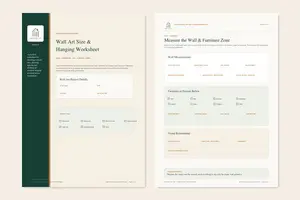
Wall Art Size And Hanging Worksheet: Free PDF | Houselyn
Free wall art size and hanging worksheet from Houselyn for measuring walls, furniture, artwork size, spacing, hanging height and hardware before installation.
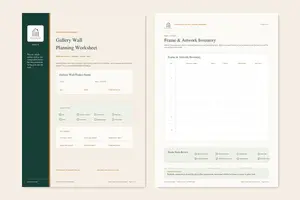
Gallery Wall Planning Worksheet: Free Printable PDF | Houselyn
Free gallery wall planning worksheet from Houselyn for measuring walls, organising frames, planning layouts, setting spacing and preparing accurate hanging positions.