- Home
- free home tools
- Decorating Budget Planner
Decorating Budget Planner
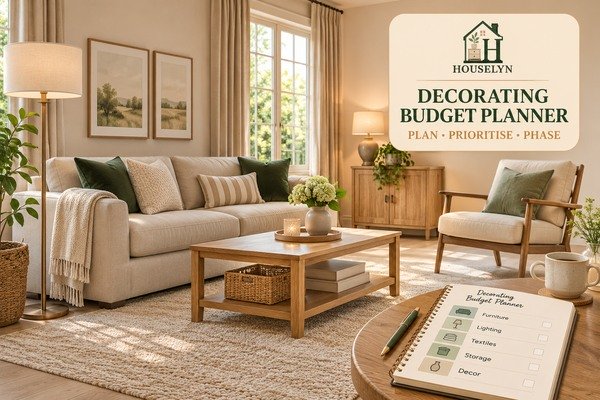
Decorating Budget Planner decisions become easier when you separate what the room genuinely needs from what would simply be nice to add. Instead of spreading your money evenly across furniture, lighting, textiles, storage and decor, the Houselyn planner helps you decide which areas deserve the largest share of your budget based on the room, what you already own and what matters most.
Set your total decorating budget, protect a reserve, choose the room and project stage, then tell the planner what you already have and what still needs attention. Houselyn will build a personalised spending plan that shows what to fund first, what can come next and what can safely wait.
See how your available money can be divided across the categories that actually matter in your room.
Give more weight to your priorities instead of letting small decorative purchases consume the plan.
Separate essential spending from upgrades and finishing touches so the room can improve in practical phases.
Give Every Part of the Room a Clear Budget
Start with the money you actually have, remove the categories you already own, then let Houselyn distribute the remaining budget around your room priorities instead of treating every decorating purchase as equally important.
See Where the Money Should Go
Houselyn removes categories you already have, protects the reserve, then redistributes the spendable amount around your room, project stage and chosen priorities.
Build the example plan first, or change the budget, room, ownership and priorities to make it your own.
—
Your Decorating Allocation
Your Three-Phase Plan
—
—
—
—
This planner allocates the budget you enter. It does not estimate local retail prices, installation costs or professional design fees.
Set a Realistic Budget With the Decorating Budget Planner
A useful decorating budget starts with the amount you are actually comfortable spending, not with a shopping list. The Decorating Budget Planner uses that fixed amount as the boundary, then helps you decide which room needs deserve funding and which can remain flexible.
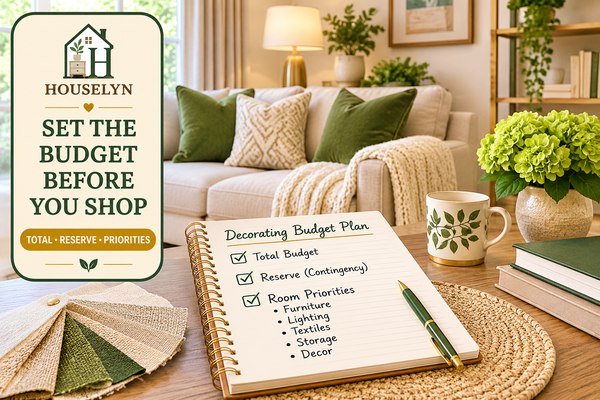
Set the Total
Enter the maximum amount you want the project to use. The planner treats that number as a limit rather than a target you must spend.
Protect a Reserve
Keep a small percentage outside the main allocation so delivery, price changes and finishing details do not force the plan off course.
Remove What You Own
Mark useful furniture, lighting and other pieces as already owned so the planner does not assign money to categories that do not need it.
Start With the Amount, Not the Wish List
It is easy to create a decorating list first and discover later that the total has become unrealistic. Reverse the process. Decide what you want the room project to cost overall, then let individual purchases compete for a share of that number. This makes every later choice easier to judge.
Keep Part of the Budget Flexible
The planner lets you protect 5%, 10% or 15% before it allocates the remaining money. That reserve can absorb delivery charges, small price changes or a finishing need that only becomes obvious later. It is not an instruction to spend the reserve; unused money can simply remain unspent.
Budget Only for What the Room Still Needs
Existing pieces should stay in the plan when they still work. A usable sofa, table, lamp or storage unit does not need a replacement budget simply because the room is being refreshed. Marking these categories as already owned allows more of the available money to move toward genuine gaps.
Be Honest About the Project Stage
A room refresh, a few key replacements and a mostly empty room require different allocations. The planner uses project stage to adjust the starting balance. Refresh projects place less pressure on major furniture, while from-scratch rooms protect a larger share for the functional pieces that must be solved first.
Do not increase the budget simply because too many categories are marked as “Need.” First ask whether everything has to be purchased in the same phase.
Once the real budget, reserve and existing pieces are clear, the planner can do something more useful than divide the money evenly: it can direct the spend toward the parts of the room that still need to change.
If you are budgeting for a living room but are not sure what actually needs changing, diagnose the room first so the budget solves the right problem.
How the Decorating Budget Planner Allocates Your Money
The Decorating Budget Planner does not divide your money into fixed percentages and assume every room needs the same things. It starts with a base structure, then changes the weighting according to the room, the project stage, what you already own and the priorities you choose.
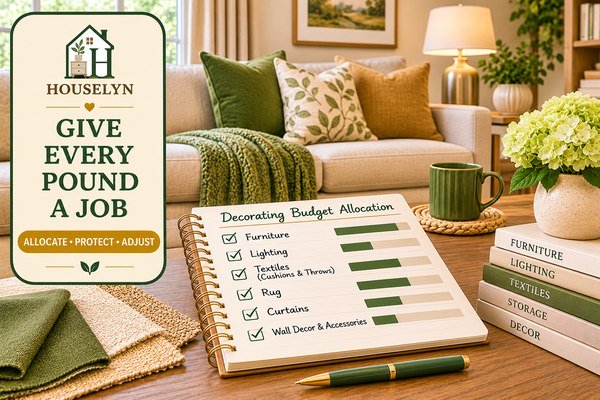
Remove What You Already Have
Categories marked as already owned receive no main allocation, so the available money can move toward genuine gaps in the room.
Increase What Matters
Room type, project stage and your chosen priorities increase or reduce the weight of each active category before the budget is divided.
Keep the Total Exact
The active category weights are rebalanced so the displayed allocations always add back to the spendable amount after the reserve is protected.
The Percentages Are Starting Weights, Not Shopping Rules
Furniture may deserve a large share when a room is being furnished from scratch, but the same weighting would make little sense in a refresh where the sofa, tables and storage already work. The planner adjusts the internal balance before converting it into actual amounts.
Priorities Move Money Toward the Problem You Want to Solve
Choosing lighting and atmosphere gives lighting more influence. Choosing storage increases the share available for organization. A textile-led priority strengthens soft layers such as rugs, curtains and cushions. The budget therefore responds to the purpose of the project rather than rewarding every category equally.
The planner has £1,350 available to allocate after the reserve. Because the main furniture is already owned, it does not direct a large share toward replacing the sofa or tables. Instead, lighting gains more influence, while the rug, curtains and textiles receive useful shares because they can connect and warm the existing room. Wall decor can still receive money, but finishing remains secondary to the categories that change the room's function and overall composition.
The Planner Protects Fundamentals From Decorative Drift
When a room still needs major furniture, lighting or practical storage, the planner deliberately reduces the influence of wall decor and accessories. This prevents a common budgeting problem: spending a series of smaller amounts on finishing pieces while the room's larger functional problem remains unresolved.
The allocation is a decision framework, not a price forecast. If a category receives £200, that means £200 is the share of your entered budget the planner believes that need deserves—not that a suitable item will necessarily cost £200 in your local market.
Treat the amounts as spending boundaries. If you solve one category for less than its allocation, you can keep the difference or deliberately rebalance it into another priority instead of automatically spending the remainder.
Spend Your Decorating Budget Where It Changes the Room
A larger allocation should go to the parts of the room that solve a real problem, improve everyday use or change the overall composition. Spending more is not automatically better; the stronger question is whether the money creates a visible or functional difference.
Solve the Main Furniture Need
When the room lacks the right sofa, bed, desk or dining table, that missing anchor can affect function more than several smaller decorative purchases combined.
Improve the Lighting
Better lighting can change how the room works at different times of day and can strengthen warmth, focus and the way finished surfaces are seen.
Strengthen the Main Layers
A correctly scaled rug, useful curtains or well-chosen textiles can connect existing furniture and make the room feel more deliberate without replacing major pieces.
Fix the Largest Problem Before Funding the Smallest Details
If the main sofa is uncomfortable, storage is failing or the room relies on one harsh light source, decorative accessories are unlikely to solve the underlying problem. The planner gives functional and high-impact needs more influence so the budget does not disappear into smaller items that leave the room fundamentally unchanged.
Look for Changes That Affect More Than One Thing
Strong spending often improves several aspects of the room at once. Curtains can add privacy, softness and vertical balance. A rug can define the seating zone while adding colour and texture. Storage can improve both function and visual calm. These multi-purpose changes often deserve more budget than decorative pieces with only one role.
The purchase makes the room more usable, corrects a proportion problem, creates a needed anchor or improves an important everyday task.
The purchase helps furniture, colour, lighting or surfaces relate more clearly instead of introducing another unrelated object.
An empty corner or surface does not automatically need a purchase. Negative space can be more useful than a decorative object with no clear purpose.
Replacing a serviceable piece purely because the room is being refreshed can consume money that would create more impact elsewhere.
High Impact Does Not Mean Highest Price
A major furniture purchase can deserve a large allocation, but cost alone does not determine importance. Paint, lighting or textiles may produce a larger improvement when the existing furniture already fits and functions well. The planner therefore responds to what the room needs instead of automatically placing the most expensive category first.
Protect money for the changes that improve function, proportion or connection. Decorative finishing should strengthen a room that is already working, not compensate for a problem the budget could have solved earlier.
If you are budgeting for a compact room, use the Houselyn guide to prioritise multifunction, visual calm and higher-impact changes without overcrowding the space.
The Houselyn Decorating Budget Framework
A decorating budget works better when spending follows the order in which a room comes together. The Houselyn framework uses four layers—Anchor, Function, Layer and Finish—to help prevent decorative spending from getting ahead of the room's main needs.
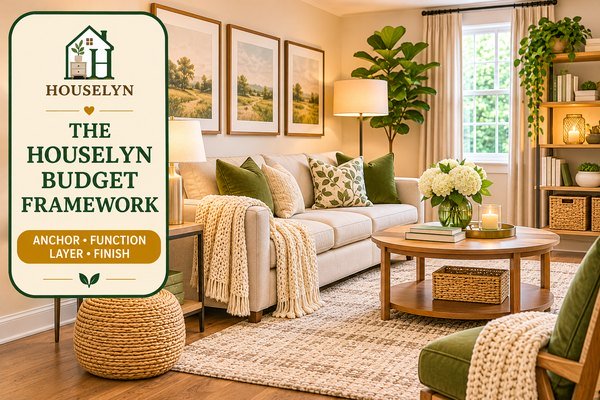
Protect budget for the major furniture or surface that gives the room its main structure, scale and visual direction.
Fund the lighting, storage and supporting furniture required for comfortable everyday use.
Add rugs, curtains and textiles that bring existing furniture and surfaces into a more coherent whole.
Use artwork and accessories after the room's structure, function and connecting layers are already doing their jobs.
Anchor Sets the Spending Foundation
Every room needs something that establishes its main purpose and scale. In a living room this may be the sofa; in a bedroom, the bed; in a dining room, the table. If the anchor is missing or genuinely unsuitable, the planner protects more budget for that problem before decorative categories are allowed to compete for the same money.
Function Protects Everyday Use
Once the room has a workable anchor, the next question is whether it functions properly. Lighting, practical storage and supporting furniture often sit here. These purchases may attract less visual attention than a statement accessory, but they affect how comfortably the room works every day.
Layer Makes Separate Pieces Feel Intentional
Rugs, window treatments and textiles help bridge the room between furniture and architecture. This layer can soften hard surfaces, repeat colour, improve proportion and make existing pieces feel more connected. It is especially useful in refresh projects where major furniture is staying.
Finish Should Complete the Plan
Wall decor and accessories belong at the end because they work best when the larger decisions are already resolved. Finishing pieces can add personality, rhythm and detail, but they should not consume the budget needed to correct uncomfortable furniture, poor lighting or missing storage.
Spend in the order the room needs to work: establish the anchor, solve function, connect the layers, then finish with restraint.
The framework is not a command to buy something from every layer. If the room already has a suitable anchor and enough storage, the planner can move directly toward lighting, textiles or another genuine gap. The order exists to protect the budget from unnecessary replacement—not to create a longer shopping list.
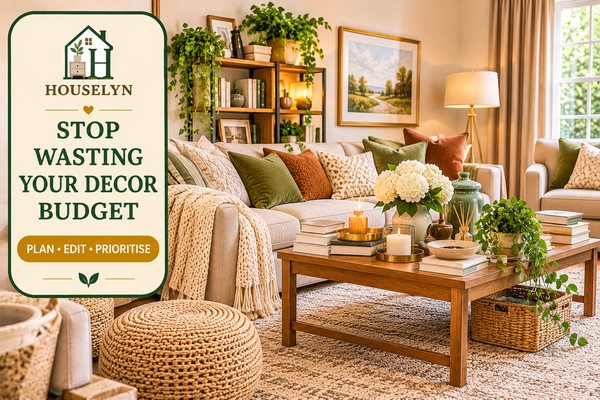
Decorating Budget Mistakes That Waste Money
Most decorating overspending is not caused by one expensive purchase. It often happens through a series of smaller decisions made without a clear order. These mistakes can leave the budget depleted while the room's main problem is still waiting to be solved.
Buying Accessories Before Solving the Main Problem
Small decorative purchases can feel productive, but they rarely fix poor lighting, uncomfortable furniture, weak storage or an unresolved room layout.
Replacing Useful Furniture Automatically
A room refresh does not require every older piece to disappear. Replacing furniture that still fits and functions can consume the largest part of the budget without solving a new problem.
Spending Evenly Across Every Category
Equal spending sounds balanced, but rooms rarely have equal needs. A category that barely affects the project should not automatically receive the same protection as one that changes function or scale.
Forgetting Delivery and Finishing Costs
Using the entire budget on headline purchases leaves no room for delivery, small installation needs or the final item that connects the project. This is why the planner protects a reserve first.
Repeating Small, Low-Impact Purchases
Several inexpensive items can quietly cost more than one purposeful upgrade. Repeated baskets, ornaments, cushions or table accessories should not crowd out a more useful improvement.
Buying Before Measuring
A bargain is not good value if the rug is too small, curtains are the wrong length or furniture blocks circulation. Measurement protects both the budget and the finished room.
Letting One Impulse Purchase Break the Plan
A single unplanned purchase can force cuts across several higher-priority categories. Compare it with the current allocation before deciding whether the budget should move.
Trying to Finish Everything in One Shopping Trip
Pressure to make the room look complete can push finishing purchases ahead of decisions that deserve more thought. A phased plan gives the strongest categories time to settle first.
A Discount Does Not Create a Need
Sale prices can make an item feel urgent even when it was never part of the room plan. Judge the purchase against the category it belongs to. If that category is already funded, already owned or deliberately scheduled for later, the discount does not automatically make the purchase useful.
Protect the Plan From Gradual Budget Drift
Budget drift usually happens when individual purchases are considered in isolation. £30 here and £50 there may each feel manageable, but together they can remove the amount intended for lighting, a properly scaled rug or another higher-impact need. The planner gives each category a visible boundary so those trade-offs are easier to notice.
Return to the original priorities, identify which planned category would lose money if you make the new purchase, and decide whether that trade is actually worth making.
The strongest decorating budget is not the one that manages to buy the most. It is the one that reaches the end of the project having solved the room's most important problems without filling the space with unnecessary replacements.
If the room still feels wrong after decorating, check scale, placement, visual weight and circulation before using more of the budget on new decor.
Phase Your Decorating Budget Without Losing the Plan
A phased room does not have to look unfinished or random. The key is to plan the full direction first, then separate the spending into stages that protect function, connection and finishing in the right order.
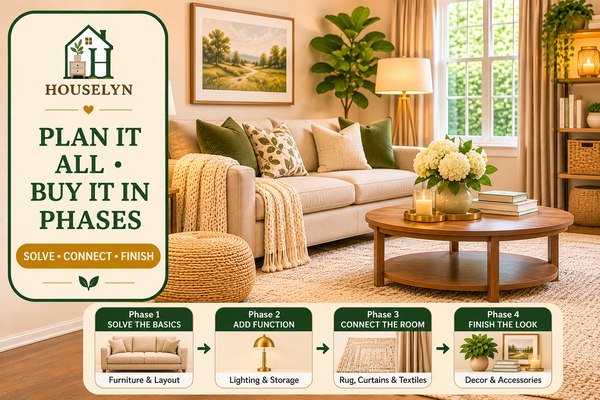
Solve the Room
Fund the anchor, essential lighting, storage and practical furniture needed for the room to work comfortably before adding decorative pressure.
Connect the Room
Add the rug, window treatment, textiles or wall finish that help the main pieces relate to one another and make the room feel intentional.
Finish the Room
Complete the plan with artwork and restrained accessories once the larger functional and visual relationships are already resolved.
Plan the Destination Before Splitting the Purchases
Phasing works best when the eventual room direction is already clear. Decide which existing pieces will remain, what the room needs to do and which colours, materials or visual anchors will connect the finished space. That keeps later purchases aligned with the same plan instead of turning each shopping trip into a fresh decorating direction.
Phase by Dependency, Not by Excitement
Some purchases affect the choices that follow. The size and position of major furniture can influence the rug; the wall colour can affect textiles; a focal piece can change how artwork is placed. Buying in a sensible sequence reduces the chance of paying twice because an earlier decorative decision no longer works with a later essential purchase.
If later dimensions, colours or furniture relationships rely on this decision, it probably belongs in an earlier phase.
Essential seating, useful lighting and necessary storage should normally come before decorative finishing.
A temporary existing item can allow the budget to stay focused on a more urgent problem without forcing an immediate replacement.
Artwork, accessories and secondary styling often become easier to choose once the main room has settled and the real gaps are visible.
Keep the Original Allocation Visible
Phasing should change timing, not erase the budget plan. If a later category was allocated £150, keep that amount visible rather than quietly spending it during Phase 1. This protects future decisions from being absorbed by earlier purchases and makes it easier to see whether the project is still following the original priorities.
Rebalance Deliberately When the Room Changes
A plan can change. You may find a suitable item for less than expected, decide an existing piece works better than anticipated or discover that a different category needs more attention. Rebalance the unused money intentionally rather than treating every saving as permission to buy something new.
Plan the whole room now, but buy only what the current phase needs. A slower purchase schedule can still produce a coherent room when every phase is working toward the same finished direction.
This is also why a smaller decorating budget does not always require a smaller idea. The full direction can remain intact while the spending is spread over time, protecting both the room concept and the household budget.
Decorating Budget Planner FAQ
Use these answers alongside your Decorating Budget Planner result when you need to decide how much to protect, what deserves funding first and whether a purchase belongs in the current phase or a later one.
How do I set a decorating budget?
Start with the maximum amount you are genuinely comfortable using for the room rather than adding up a wish list first. Protect a small reserve, then divide the remaining amount across the categories the room actually needs.
How should I divide my decorating budget?
Avoid dividing it evenly. Give larger shares to the needs that affect function, scale or the main room composition, then allocate smaller amounts to connecting layers and decorative finishing. The planner adjusts this balance according to your room, project stage and priorities.
What should I spend the most money on when decorating?
The strongest category depends on the room. If major furniture is missing or unsuitable, it may deserve the largest share. If the main furniture already works, lighting, a rug, curtains, storage or another high-impact gap may produce a greater improvement.
Should I buy furniture or decor first?
Solve essential furniture and everyday function first when they are genuine problems. Decorative finishing works best after the room has a useful anchor, appropriate lighting or storage and the main layers needed to connect the space.
How much should I keep aside for delivery and unexpected costs?
The planner offers 5%, 10% and 15% reserves. Ten percent is a useful balanced starting point for many decorating projects, but the correct amount depends on how much uncertainty remains around delivery, finishing details and individual purchases. Unused reserve money does not need to be spent.
How do I decorate a room on a small budget?
Narrow the number of problems you are trying to solve at once. Keep useful furniture, prioritise changes that affect more than one aspect of the room and move lower-priority styling into later phases instead of spreading a small budget across everything.
Should I replace furniture I already own?
Not automatically. Keep a piece when it still fits the room, functions properly and can work with the new direction. Replacing usable furniture simply because the room is being refreshed can remove money from more important gaps.
How do I stop overspending on home decor?
Give each active category a clear allocation and compare unplanned purchases against it. If a new item requires taking money from a higher-priority need, make that trade-off consciously rather than treating the purchase as separate from the room budget.
Is it better to decorate a room all at once or in stages?
Either can work, but staged decorating is often useful when the budget is covering several needs. Plan the full room direction first, then solve function, connect the main layers and finish the room in sequence so later purchases still belong to the same design plan.
What should I do if my budget is spread across too many things?
Reduce the number of categories being funded now. Protect the room's most important functional or visual needs, move lower-priority categories into later phases and avoid weakening every allocation just to make the full list fit.
Make the Next Decorating Decision With More Confidence
Use these Houselyn guides to diagnose the room, improve layout and make more deliberate choices before spending more.
Check scale, visual weight, circulation and placement before assuming the room needs more decor.
Arrange Living Room Layout BasicsBuild stronger furniture relationships before putting money into pieces that may not fit the final layout.
Design Living Room Design IdeasImprove composition, lighting, colour and room function with practical design decisions.
Edit Small Space Decorating IdeasPrioritise multifunction, visual calm and higher-impact choices in compact rooms.
Finish Coffee Table StylingAdd a controlled decorative layer after the room's larger functional decisions are already resolved.
Refine Blank Wall DecorDecide when an empty wall needs art, scale or restraint rather than filling space automatically.

Houselyn Editorial Team
The Houselyn Editorial Team creates practical guides for improving the way homes look, feel and function, with a focus on realistic decorating decisions, usable organization systems and attainable interior styling.
Meet the Houselyn Editorial Team →Plan More. Replace Less. Improve What Matters.
Houselyn tools and editorial guides are designed to help you diagnose the room before buying, make practical improvements in the right order and build a home that feels more considered over time. Better homes are built through thoughtful decisions, not constant replacement.
You might like these
Coffee Table Size Calculator: Find the Right Size for Your Sofa
Use the Houselyn Coffee Table Size Calculator to find the right coffee table length, depth, height and clearance for your sofa and living room.
Living Room Refresh Planner | Plan What to Change First | Houselyn
Use the Houselyn Living Room Refresh Planner to decide what to keep, move, improve or replace first for a more cohesive room.