- Home
- Home Organization
- Pantry Organization Ideas
25 Pantry Organization Ideas to Create a Beautiful and Functional Pantry
Simple pantry storage solutions, organization tips, and space-saving ideas to help you create a pantry that is easy to maintain and enjoyable to use.
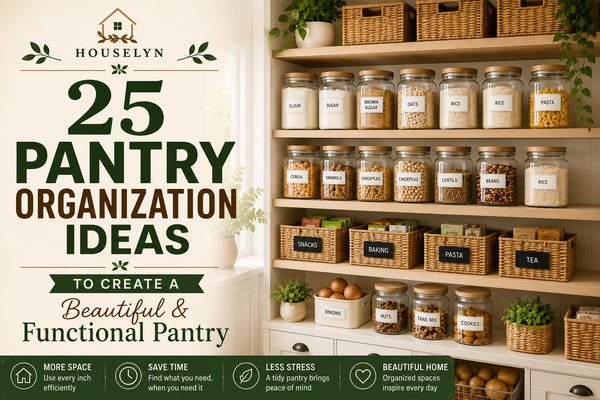 Explore pantry organization ideas from Houselyn with labeled containers, woven baskets, organized shelves, clear storage systems and warm neutral styling.
Pantry organization ideas can completely transform the way your kitchen functions by making food easier to find, reducing waste, and creating a storage system that supports your daily routines.
The pantry is one of the hardest-working storage areas in any home. It holds everything from breakfast foods and snacks to baking supplies, canned goods, and meal-prep essentials. When it becomes cluttered, simple tasks such as preparing meals or creating grocery lists can quickly become frustrating.
An organized pantry saves time, reduces duplicate purchases, helps prevent food from expiring unnoticed, and makes meal planning easier. It can also help you maximize every inch of storage space, whether you have a large walk-in pantry or a small cupboard tucked into the corner of your kitchen.
The good news is that creating an organized pantry does not require expensive custom shelving or a complete renovation. Simple systems such as grouping similar foods together, using clear containers, adding labels, and creating dedicated storage zones can dramatically improve both the appearance and functionality of your pantry.
In this guide, we will explore 25 pantry organization ideas that can help you create a beautiful, efficient, and easy-to-maintain pantry that works for your lifestyle.
Why Pantry Organization Ideas Matter
A well-organized pantry does much more than improve appearances. It directly impacts how efficiently your kitchen operates.
When pantry items are visible and grouped logically, grocery shopping becomes easier because you can quickly identify what you already have. This reduces duplicate purchases and helps save money.
Organization also helps reduce food waste. Many households throw away food simply because it becomes hidden behind newer purchases. Proper pantry systems ensure older products remain visible and are used before they expire.
Meal preparation becomes faster when ingredients are easy to locate. Instead of searching through crowded shelves, you can quickly find what you need and focus on cooking.
An organized pantry also creates a sense of calm. Opening a pantry filled with neatly arranged containers, labels, and categories makes the entire kitchen feel more functional and enjoyable.
Whether your goal is saving money, reducing clutter, or simplifying everyday routines, pantry organization is one of the highest-impact improvements you can make in your home.
1. Declutter Your Pantry First
Before purchasing storage containers or organizing supplies, take time to declutter your pantry.
Remove everything from the shelves and evaluate each item individually. Check expiration dates, dispose of damaged packaging, and donate unopened products that your household is unlikely to use.
Many pantries contain expired spices, duplicate ingredients, half-empty packages, and impulse purchases that have been forgotten over time. Removing these items immediately creates more usable storage space.
As you declutter, sort products into categories such as:
- Keep
- Donate
- Recycle
- Discard
This process provides a clearer picture of what actually needs to be organized.
Decluttering first also prevents you from spending money on storage solutions for products that should not remain in the pantry.
2. Group Similar Foods Together
One of the most effective pantry organization ideas is grouping foods by category.
Instead of storing products wherever space is available, create dedicated sections for specific food types.
Examples include:
Breakfast Foods
- Cereal
- Oats
- Pancake mix
Baking Supplies
- Flour
- Sugar
- Baking powder
Snacks
- Crackers
- Granola bars
- Nuts
Pasta and Grains
- Rice
- Pasta
- Couscous
Canned Goods
- Vegetables
- Soups
- Beans
Grouping similar foods together makes grocery shopping easier and helps family members locate items quickly.
It also reduces the chance of purchasing duplicates because everything is visible in one location.
3. Use Clear Storage Containers
Clear storage containers are one of the most popular pantry organization solutions for good reason. They create a cleaner appearance while making it easier to monitor food supplies.
Instead of storing products in bulky boxes and partially opened bags, transfer dry goods into matching containers.
Ideal foods for containers include:
- Rice
- Pasta
- Flour
- Sugar
- Cereal
- Snacks
- Oats
- Baking ingredients
Clear containers improve visibility, maximize shelf space, and help protect food from moisture and pests.
Stackable designs are especially useful because they allow you to use vertical storage space more effectively.
Labels can further improve the system by helping everyone identify contents quickly.
4. Label Everything Clearly
Labels are one of the simplest tools for maintaining an organized pantry.
A labeling system removes guesswork and helps family members return items to the correct locations.
Common pantry labeling categories include:
- Baking
- Snacks
- Breakfast
- Pasta
- Rice
- Canned Goods
- Spices
Labels can be created using:
- Label makers
- Waterproof stickers
- Chalkboard labels
- Printable tags
Consistency is more important than perfection. The goal is creating a system that remains easy to maintain over time.
Clearly labeled shelves and containers make the pantry more functional while creating a polished appearance.
💡 Houselyn Tip
Before purchasing new organizers, complete your decluttering process and create pantry categories first. This ensures you buy storage solutions that actually fit your needs rather than guessing what might work.
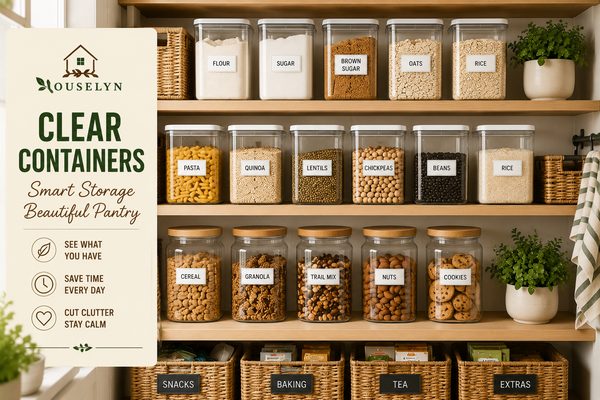 Explore pantry organization ideas from Houselyn with clear food storage containers, labeled shelves, natural wood shelving and warm neutral styling.
5. Create Dedicated Pantry Zones
Creating pantry zones helps transform a cluttered storage area into an efficient system.
Just as kitchen zones improve cooking efficiency, pantry zones improve food storage.
Consider creating separate areas for:
- Breakfast foods
- Snacks
- Baking supplies
- Dinner ingredients
- Beverages
- Canned goods
- Meal prep items
Each category should have a designated shelf, basket, or storage container.
Dedicated zones make it easier to locate ingredients and help maintain organization over time.
6. Organize Snacks in Baskets
Snack packaging is often one of the biggest sources of pantry clutter.
Storage baskets provide an easy solution by grouping similar snacks together while keeping shelves neat.
Create baskets for:
- Children's snacks
- Healthy snacks
- Lunchbox items
- Entertaining snacks
Baskets make it easy to grab what you need while preventing packages from becoming scattered across multiple shelves.
This system works especially well for families with children because snack options remain visible and accessible.
7. Use Shelf Risers
Shelf risers instantly increase usable pantry space by creating multiple storage levels within a shelf.
Without risers, products are often stacked behind one another, making items difficult to see.
Shelf risers work particularly well for:
- Canned goods
- Spices
- Condiments
- Jars
- Small pantry items
By elevating products, risers improve visibility and reduce the chance of food becoming forgotten.
They are especially valuable in small pantries where maximizing vertical space is essential.
8. Store Food by Expiry Date
One of the smartest pantry organization ideas is using a "first in, first out" system.
Whenever new groceries are purchased, place them behind older products so the oldest items are used first.
This method helps:
- Reduce food waste
- Save money
- Improve inventory management
- Simplify meal planning
A dedicated "Use First" basket can be particularly effective for products approaching their expiration dates.
This simple habit can significantly reduce the amount of food that ends up being discarded.
Recommended Amazon Finds: Pantry Organization Essentials
Best for: creating organized pantry zones, improving visibility, and maximizing storage space.
- Shop Pantry Storage Containers on Amazon
- Shop Pantry Storage Baskets on Amazon
- Shop Shelf Risers on Amazon
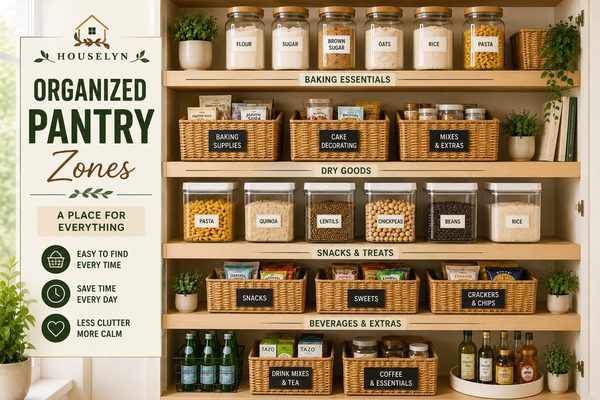 Create organized pantry zones with baskets, labels, clear containers, natural wood shelves and warm neutral Houselyn-style storage ideas.
9. Use Lazy Susans for Small Pantry Items
Lazy Susans are one of the most effective pantry organization tools because they make it easy to access items stored at the back of shelves. Instead of reaching over products or removing multiple items to find what you need, a simple turn brings everything into view.
They work particularly well for:
- Condiments
- Cooking oils
- Vinegars
- Sauces
- Jams
- Nut butters
- Small snack packets
- Baking extracts
Corner pantry shelves and deep cabinets benefit the most from Lazy Susans because these areas are often difficult to access.
A two-tier Lazy Susan can provide even more storage capacity while keeping products visible and organized. By grouping similar items together on a rotating tray, you create a system that is easy to maintain and highly functional.
One of the biggest advantages is preventing products from becoming hidden and forgotten at the back of shelves, which helps reduce food waste and duplicate purchases.
10. Organize Spices Efficiently
Spices may be small, but they can quickly create clutter if they are not stored properly. A well-organized spice collection makes cooking easier, saves time, and helps prevent unnecessary duplicate purchases.
Start by checking expiration dates and removing spices that have lost their freshness. Then group spices by category or arrange them alphabetically.
Popular spice organization methods include:Tiered Spice Shelves
These elevate jars so labels remain visible.Drawer Spice Organizers
Perfect for keeping spices neatly arranged while freeing up shelf space.Wall-Mounted Spice Racks
Ideal for small kitchens and compact pantries.Basket Storage
Useful for grouping specialty spices and seasonings together.
Using matching spice jars can create a cleaner appearance while improving visibility and consistency.
11. Create a Breakfast Station
Mornings are often rushed, which is why creating a dedicated breakfast station can make a significant difference in your daily routine.
A breakfast station keeps all breakfast-related items together in one convenient location.
Include items such as:
- Cereal
- Oats
- Granola
- Coffee
- Tea
- Bread
- Spreads
- Breakfast bars
The goal is to minimize searching and simplify busy mornings.
If children prepare their own breakfasts, a breakfast station can also encourage independence because everything they need is stored together and easy to access.
For smaller pantries, a single shelf or basket may be enough to create an effective breakfast zone.
This simple system saves time while helping maintain pantry organization.
12. Store Baking Supplies Together
Baking supplies often end up scattered throughout the pantry, making baking projects more complicated than they need to be.
Creating a dedicated baking section allows you to store all ingredients and tools together.
Items commonly included in a baking zone:
- Flour
- Sugar
- Brown sugar
- Baking powder
- Baking soda
- Cocoa powder
- Vanilla extract
- Sprinkles
- Cake decorations
Transfer dry ingredients into clear containers and label them clearly for easy identification.
Store frequently used ingredients at eye level while placing specialty baking items on higher shelves.
A dedicated baking zone not only improves organization but also makes baking more enjoyable because everything you need is within easy reach.
⚡ Quick Win
Choose one pantry shelf today and create a dedicated category. Whether it's breakfast foods, snacks, spices, or baking supplies, organizing just one section can immediately make your pantry easier to use.
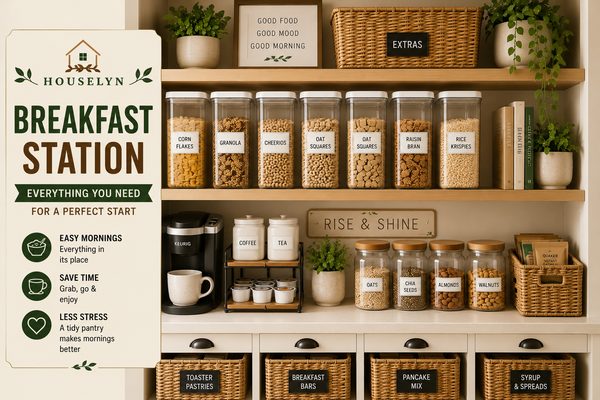 Create a pantry breakfast station with cereal containers, coffee supplies, labeled jars, natural wood shelving and warm neutral Houselyn styling.
13. Keep Frequently Used Items at Eye Level
One of the simplest pantry organization ideas is storing your most frequently used products at eye level. This placement makes items easier to find and helps streamline meal preparation.
Products that are used daily or several times a week should occupy the most accessible shelves.
Examples include:
- Coffee
- Tea
- Breakfast foods
- Cooking oils
- Everyday snacks
- Pasta
- Rice
Less frequently used products can be stored on higher or lower shelves.
This strategy improves efficiency because you spend less time searching for ingredients and more time focusing on meal preparation.
Eye-level storage also helps prevent food waste because frequently used products remain visible and are less likely to be forgotten.
14. Use Vertical Space to Increase Storage
Many pantries contain significant amounts of unused vertical space. Maximizing this area is one of the most effective ways to increase storage without adding more shelves.
Consider using:
- Shelf risers
- Stackable bins
- Tiered organizers
- Hanging baskets
- Door-mounted storage
Vertical storage is especially important in smaller pantries where every inch counts.
Instead of stacking products in unstable piles, use storage solutions that create multiple organized levels.
This approach improves visibility while allowing you to store more items in the same amount of space.
15. Organize Canned Goods Efficiently
Canned goods are pantry staples, but they can quickly become difficult to manage when stacked randomly on shelves.
Creating a dedicated canned food section improves visibility and inventory management.
Organize canned goods by category:
Vegetables
SoupsBeans
Tomatoes
Fruits
Arrange newer purchases behind older products to maintain a first-in, first-out rotation system.
Can organizers can further improve visibility by allowing cans to roll forward automatically as items are removed.
This simple system reduces food waste and makes meal planning easier because ingredients remain visible.
16. Create a Family Snack Station
A family snack station is one of the most practical pantry organization ideas for busy households.
By dedicating a shelf or basket to snacks, family members can quickly find what they need without disrupting other pantry areas.
A snack station may include:
- Granola bars
- Crackers
- Fruit snacks
- Popcorn
- Nuts
- Healthy snack options
Clearly labeled baskets help maintain order and make it easier to see when supplies need replenishing.
Snack stations work especially well for families with children because they encourage independence while reducing pantry clutter.
Recommended Amazon Finds: Advanced Pantry Storage Solutions
Best for: maximizing pantry space, improving visibility, and organizing specialty food categories.
17. Use Stackable Storage to Maximize Shelf Space
One of the easiest ways to increase pantry storage without adding extra shelving is to use stackable storage solutions. Many pantry shelves contain unused vertical space simply because products are placed side by side rather than layered efficiently.
Stackable storage works particularly well for:
- Food containers
- Snacks
- Canned goods
- Beverages
- Baking supplies
- Meal prep ingredients
The key is choosing storage products that are stable, easy to access, and appropriately sized for your shelves.
Clear stackable bins are especially useful because they allow you to see contents at a glance while maintaining a clean and organized appearance.
Stackable storage also makes it easier to create categories within larger pantry sections. Instead of products becoming mixed together, each container can hold a specific category such as snacks, breakfast foods, or baking supplies.
For smaller pantries, stackable systems can dramatically increase usable storage capacity without making shelves feel crowded.
18. Organize Beverages in Dedicated Zones
Beverages often take up a surprising amount of pantry space. Water bottles, soft drinks, coffee, tea, juice boxes, and specialty drinks can quickly create clutter if they are not stored properly.
Creating a dedicated beverage zone helps keep drinks organized and easy to access.
Consider separating beverages into categories:
Hot Beverages
- Coffee
- Tea
- Hot chocolate
Everyday Drinks
- Water
- Juice
- Soft drinks
Entertaining Drinks
- Sparkling water
- Specialty beverages
Storage bins, baskets, and beverage organizers can help prevent bottles and cartons from becoming scattered across multiple shelves.
Keeping beverages grouped together also makes grocery shopping easier because you can quickly identify items that need replenishing.
A beverage station works particularly well in family homes where multiple household members regularly access drinks throughout the day.
19. Store Bulk Items Properly
Buying pantry staples in bulk can save money, but bulk purchases often create storage challenges if they are not organized properly.
Large bags of rice, flour, oats, pasta, and pet food can become difficult to manage when left in their original packaging.
The best solution is to transfer bulk products into large airtight containers.
Benefits include:
- Improved freshness
- Better pest protection
- Easier access
- Cleaner appearance
- Improved inventory visibility
Clearly label each container and include purchase dates when appropriate.
For very large quantities, consider keeping a smaller everyday container in the pantry while storing excess supplies elsewhere.
This approach makes daily use easier while still allowing you to take advantage of bulk purchasing savings.
20. Maintain a Pantry Inventory List
One of the most overlooked pantry organization ideas is maintaining a simple inventory list.
An inventory does not need to be complicated. It can be as simple as a notepad, whiteboard, or digital note that tracks pantry staples.
Common items to track include:
- Rice
- Pasta
- Flour
- Sugar
- Canned goods
- Snacks
- Coffee
- Baking supplies
A pantry inventory helps:
- Prevent duplicate purchases
- Reduce food waste
- Simplify grocery shopping
- Improve meal planning
For busy households, this small habit can save both time and money.
Reviewing your inventory before shopping helps ensure you purchase only what you actually need.
💡 Houselyn Tip
When creating pantry categories, think about how your family actually uses food. Organize according to daily habits rather than copying someone else's pantry system. Personalized systems are much easier to maintain long term.
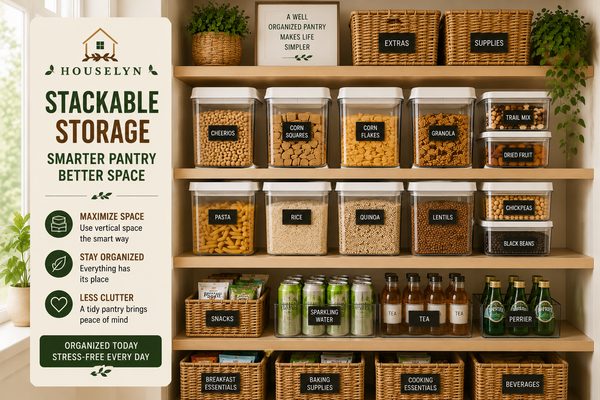 Explore stackable pantry storage ideas from Houselyn with labeled food bins, beverage sections, natural wood shelving and warm neutral styling.
Related Reading
Want to organize more than just your pantry? Explore these helpful Houselyn guides:
21. Keep a Pantry Donation Basket
One of the easiest ways to prevent pantry clutter from returning is to keep a dedicated donation basket inside or near your pantry.
Most households occasionally purchase foods that are never used. Sometimes tastes change, meal plans change, or products are bought on impulse and forgotten. Instead of allowing these items to take up valuable shelf space, place them in a donation basket.
The basket can be used for:
- Unopened canned goods
- Packaged snacks
- Duplicate pantry items
- Foods your family no longer enjoys
- Excess grocery purchases
Once the basket is full, donate the contents to a local food bank, community pantry, or charitable organization.
This simple habit prevents clutter from accumulating while helping others in your community.
A donation basket also encourages more intentional grocery shopping because it highlights products that may not be necessary to repurchase.
22. Rotate Food Regularly
Even the most organized pantry can become inefficient if products are not rotated regularly.
Food rotation is one of the most important pantry organization ideas because it helps reduce waste and ensures ingredients remain fresh.
The simplest approach is the First-In, First-Out (FIFO) method:
- New purchases go behind older products.
- Older products move to the front.
- Products nearing expiration receive priority.
This system is widely used in professional kitchens because it keeps inventory moving efficiently.
Schedule a quick pantry review every month to identify products that should be used soon.
Food rotation only takes a few minutes but can save a significant amount of money over time.
23. Clean Pantry Shelves Monthly
Organization and cleanliness go hand in hand.
Even a beautifully organized pantry will eventually collect crumbs, dust, spills, and food residue.
A monthly shelf-cleaning routine helps maintain a healthier storage environment while keeping your pantry looking its best.
A simple monthly pantry maintenance routine may include:
- Wiping shelves
- Cleaning containers
- Removing expired products
- Checking labels
- Vacuuming corners
- Reviewing food inventory
Regular cleaning also provides an opportunity to assess whether your current organization system is still working effectively.
The cleaner your pantry remains, the easier it will be to maintain long term.
24. Adjust Your Pantry Systems as Needs Change
One mistake many people make is assuming that a pantry organization system should remain exactly the same forever.
In reality, households change.
Your family size may change.
Children may grow older.
Eating habits may evolve.
Meal planning routines may shift.
As your needs change, your pantry should evolve as well.
A flexible organization system is more successful than a rigid one because it can adapt over time.
Review your pantry every few months and ask:
- Which categories are working well?
- Which shelves feel overcrowded?
- Which products are no longer used?
- What changes would improve efficiency?
Small adjustments can make a significant difference.
25. Maintain Your Pantry Organization Routine
The final and most important pantry organization idea is maintaining the systems you create.
Organization is not a one-time project.
It is an ongoing habit.
The best pantry systems are simple enough to maintain consistently.
A monthly maintenance routine may include:
- Rotating food
- Cleaning shelves
- Updating labels
- Checking inventory
- Decluttering unused items
A few minutes of maintenance each week can prevent hours of reorganization later.
Remember that the goal is not perfection. The goal is creating a pantry that supports your lifestyle and makes daily routines easier.
When organization becomes part of your routine, maintaining a functional pantry becomes much easier.
🚫 Common Mistake
Many people organize their pantry once and never revisit it. Over time, products accumulate, categories become mixed together, and clutter slowly returns. Pantry organization works best when supported by simple weekly and monthly maintenance habits.
✓ Pro Organizer Tip
The most successful pantry systems are the easiest to maintain. If a storage solution requires too much effort to use, family members are less likely to follow it consistently. Choose systems that feel natural and convenient for everyday life.
Recommended Amazon Finds: Pantry Maintenance Essentials
Best for: maintaining pantry organization, reducing clutter, and keeping storage systems easy to manage.
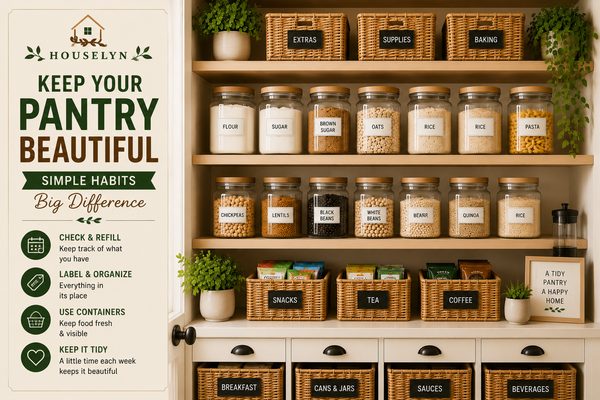 Keep your pantry beautiful with labeled containers, woven baskets, clean shelving, natural wood styling and simple Houselyn organization habits.
Pantry Organization Ideas for Small Spaces
Not every home has a large walk-in pantry, but small pantries can still be highly functional with the right organization strategies.
One of the most important principles is maximizing vertical space. Shelf risers, stackable bins, and hanging storage solutions help increase capacity without requiring additional square footage.
Door organizers can also provide valuable storage for spices, snacks, condiments, and small pantry items.
Slim baskets are particularly useful because they allow categories to remain organized while fitting into narrow shelves.
For very small pantry cupboards, focus on storing only products that are used regularly. Reducing clutter is often more effective than adding additional storage products.
Small pantry organization ideas work best when every item has a designated location and categories remain simple.
Budget-Friendly Pantry Organization Ideas
Creating an organized pantry does not require expensive custom storage systems.
Some of the most effective organization solutions are inexpensive or completely free.
Budget-friendly ideas include:
- Repurposing glass jars
- Reusing baskets you already own
- Creating DIY labels
- Using storage containers from other rooms
- Repurposing shoe boxes
- Decluttering before buying organizers
The biggest improvement often comes from reducing clutter rather than purchasing new products.
Start with simple solutions and upgrade storage systems gradually as your needs evolve.
Frequently Asked Questions
What are the best pantry organization ideas?
What are the best pantry organization ideas?
The best pantry organization ideas focus on creating simple systems that are easy to maintain. Start by decluttering expired and unused items, then group similar foods together into categories such as snacks, baking supplies, breakfast foods, canned goods, and beverages.
Using clear storage containers, labels, baskets, and shelf risers can dramatically improve visibility and maximize storage space. Regular food rotation and monthly pantry maintenance also help prevent clutter from returning.
The most effective pantry organization systems are those that fit your household's daily habits and make food easy to find and use.
How do I organize a small pantry?
How do I organize a small pantry?
Small pantries benefit most from vertical storage solutions. Shelf risers, stackable containers, door organizers, and storage baskets can help maximize every inch of available space.
Keep frequently used products at eye level and store less frequently used items higher or lower. Grouping foods into categories also helps reduce visual clutter and makes the pantry easier to navigate.
One of the most important strategies for small pantry organization is reducing unnecessary items. A smaller pantry functions best when it contains only products that are regularly used.
What containers work best for pantry storage?
What containers work best for pantry storage?
Clear airtight containers are generally considered the best option because they improve visibility while helping maintain freshness.
Popular pantry storage containers include:
- Airtight food containers
- Stackable storage containers
- Glass storage jars
- Clear plastic containers
- Storage bins with handles
The best choice depends on the types of foods you store and the size of your pantry shelves.
Consistency is often more important than the specific container style. Matching containers create a cleaner and more organized appearance.
How often should I reorganize my pantry?
How often should I reorganize my pantry?
Most pantries benefit from a quick monthly review and a deeper reorganization every three to six months.
Monthly tasks may include:
- Checking expiration dates
- Rotating food
- Cleaning shelves
- Updating inventory
- Replenishing categories
More comprehensive reorganizations can help address changing household needs and prevent clutter from accumulating.
How do I reduce food waste in my pantry?
How do I reduce food waste in my pantry?
Reducing food waste starts with visibility and food rotation.
Store older products at the front of shelves and place newer purchases behind them. Use clear containers whenever possible and regularly review expiration dates.
Creating a dedicated "Use First" basket for products approaching their expiration dates can also help reduce waste.
Meal planning around ingredients that need to be used soon is another effective strategy.
An organized pantry naturally makes food waste easier to prevent because products remain visible and accessible.
Final Thoughts on Pantry Organization Ideas
Pantry organization ideas can completely transform the way your kitchen functions. A well-organized pantry saves time, reduces food waste, simplifies grocery shopping, and makes meal preparation significantly easier.
The most important thing to remember is that pantry organization does not have to happen all at once. Small improvements often create the biggest long-term results.
Start by de-cluttering one shelf. Create a simple category system. Add labels where helpful. Use baskets to group similar foods. Introduce clear containers for pantry staples. As these small changes accumulate, your pantry will become easier to use and easier to maintain.
The goal is not perfection. The goal is creating a storage system that supports your household and works with your daily routines.
Whether you have a large walk-in pantry or a small cupboard, the pantry organization ideas in this guide can help you maximize storage, reduce clutter, and create a pantry that feels both beautiful and functional.
If you've already completed our Kitchen Organization Ideas guide, pantry organization is the perfect next step toward creating a more organized and efficient home.
Related Houselyn Guides
Continue organizing your home with these helpful Houselyn guides:
Have A Great Story About This Topic?
Do you have a great story about this? Share it!
You might like these
25 Nightstand Organization Ideas for a Clutter-Free Bedroom | Houselyn
Discover 25 nightstand organization ideas that help reduce clutter, maximize bedside storage, and create a calm, organized bedroom.
27 Shoe Storage Ideas to Organize Every Pair and Maximize Space
Discover 27 shoe storage ideas that help organize footwear, maximize storage space, and reduce clutter throughout your home.