- Home
- bedroom ideas
- Bedroom Color Ideas
25 Bedroom Color Ideas to Create a Calm and Stylish Retreat


Relaxing bedroom color palettes, warm neutrals, soft greens, earthy tones, and stylish color combinations for a beautiful bedroom refresh.
Bedroom color ideas can completely change the mood of your room, helping it feel calmer, cozier, brighter, warmer, or more stylish depending on the palette you choose.
Color is one of the most powerful tools in bedroom design. The right bedroom color scheme can make a small room feel larger, a plain room feel more elegant, and a busy room feel more peaceful. Whether you love warm neutrals, soft greens, earthy tones, muted blues, or modern dark accents, choosing the right colors can help you create a bedroom that feels personal and relaxing.
At Houselyn, we believe bedroom colors should be beautiful, practical, and easy to live with. This guide shares 25 bedroom color ideas you can use for walls, bedding, curtains, rugs, furniture, and accessories so your space feels cohesive and comfortable.
Why Bedroom Color Ideas Matter
Bedroom color ideas matter because color affects how a space feels before you even notice the furniture or decor. A bedroom painted in soft warm tones can feel calm and welcoming, while a room filled with harsh or mismatched colors can feel busy and less restful.
The best bedroom color schemes support the mood you want to create. If you want a cozy bedroom, warm neutrals, beige, terracotta, and soft browns can work beautifully. If you want a relaxing bedroom, sage green, muted blue, warm white, and soft grey are excellent choices. If you want a more dramatic bedroom, charcoal, navy, olive, and chocolate brown can add depth.
Bedroom colors also affect how easy the room is to style. A clear palette makes it easier to choose bedding, curtains, rugs, wall art, and furniture. Instead of buying random decor pieces, you can build a room that feels intentional and balanced.

Warm neutral bedroom colors create a calm and timeless foundation.
Best Bedroom Color Ideas for a Calm Space
The best bedroom color ideas for a calm space are usually soft, warm, and easy on the eye. Bedrooms are meant for rest, so your palette should help the room feel peaceful rather than overwhelming.
That does not mean every bedroom must be beige or white. Calm bedroom colors can include sage green, dusty blue, muted terracotta, soft blush, warm grey, clay, mushroom, olive, and even deeper tones when used carefully.
The key is balance. If your wall color is bold, keep your bedding and curtains simple. If your walls are neutral, you can add personality through pillows, artwork, rugs, and smaller accessories.
1. Warm White Bedroom
Warm white is a classic bedroom color because it feels clean without looking cold. Unlike bright clinical white, warm white has a softer undertone that works beautifully with natural wood, linen bedding, woven baskets, and neutral decor.
This is a good choice if you want a bedroom that feels bright, airy, and easy to update. You can add seasonal colors through throws, cushions, and artwork without changing the whole room.
2. Soft Beige Bedroom
Soft beige is one of the most timeless bedroom color ideas because it brings warmth without overpowering the space. Beige works well in modern, traditional, Japandi, farmhouse, and Scandinavian-style bedrooms.
Pair beige walls with white bedding, wood furniture, rattan details, and warm lighting for a calm and elegant look.
Recommended Amazon Finds: Neutral Bedding
Best for: warm white, beige, greige, and neutral bedroom color schemes.
3. Greige Bedroom
Greige is a mix of grey and beige, making it a perfect choice if you want something soft, modern, and warm. It is less cool than standard grey and more contemporary than traditional beige.
Greige bedrooms look beautiful with black accents, oak furniture, cream bedding, and textured rugs. This color is especially useful if you want a neutral room that still has depth.
4. Sage Green Bedroom
Sage green is one of the most popular relaxing bedroom colors because it feels natural, soft, and peaceful. It brings a gentle connection to nature without feeling too bright.
Sage green works well with warm white, beige, tan, oak, brass, and soft grey. Use it on walls, bedding, curtains, or accent pillows.

Sage green is calming, natural, and easy to pair with warm neutrals.
5. Olive Green Bedroom
Olive green is deeper and moodier than sage green. It works well if you want a cozy bedroom with character and warmth.
Use olive green on an accent wall, upholstered headboard, curtains, or bedding. Pair it with cream, wood, brass, and soft brown for a grounded look.
6. Dusty Blue Bedroom
Dusty blue is a soft, muted blue that feels peaceful without looking too cold. It is a good choice for bedrooms because it creates a relaxed and airy feeling.
Pair dusty blue with warm white, beige, light wood, and soft grey to keep the room balanced.
7. Muted Navy Bedroom
Navy can feel elegant and restful when used correctly. A muted navy bedroom works especially well with crisp white bedding, brass lamps, warm wood furniture, and neutral rugs.
If your bedroom is small, consider using navy on one feature wall rather than every wall.
8. Soft Blush Bedroom
Soft blush adds warmth and romance without feeling too bright or childish. It works best when paired with cream, taupe, warm grey, and natural textures.
For a mature blush bedroom, keep the shade muted and use it through bedding, pillows, curtains, or artwork.
Recommended Amazon Finds: Bedroom Throw Pillows
Best for: adding accent colors without repainting the room.
9. Taupe Bedroom
Taupe is a sophisticated neutral that sits between brown and grey. It feels warmer than grey but more refined than beige.
Taupe bedrooms look beautiful with cream bedding, black metal accents, woven decor, and soft lighting.
10. Mushroom Bedroom
Mushroom is a soft earthy neutral that gives a bedroom a calm and organic feel. It works especially well in warm minimalist and Japandi-inspired spaces.
This color pairs beautifully with natural wood, stone, linen, rattan, and warm white.
11. Terracotta Bedroom
Terracotta adds warmth and personality. It is ideal if you want a cozy bedroom that feels earthy and inviting.
Use terracotta as an accent color through pillows, throws, rugs, wall art, or one painted feature wall. Balance it with cream, beige, and natural wood.
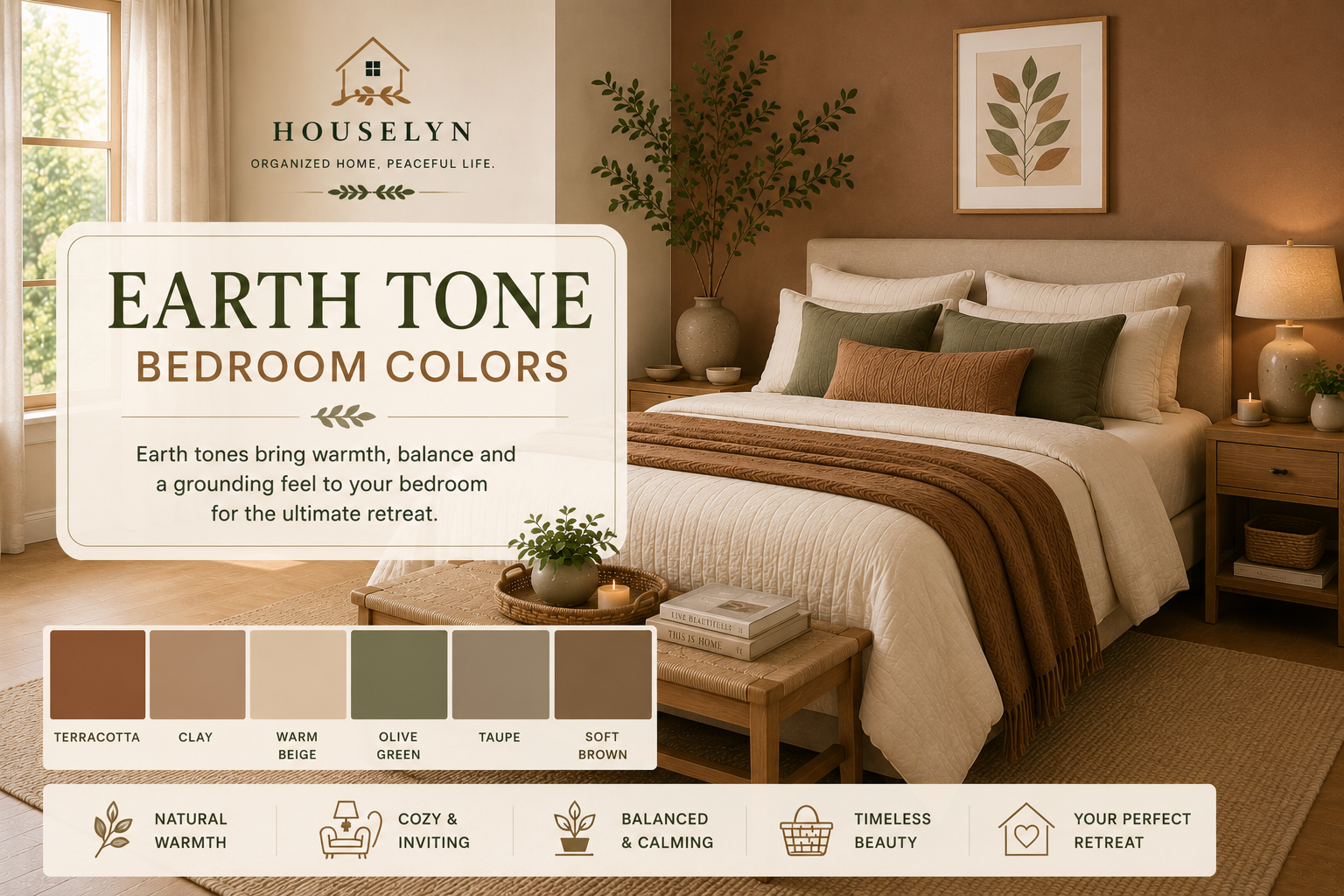
Earth tones add warmth, comfort, and personality to a bedroom.
``` ```html12. Clay Bedroom
Clay is a softer version of terracotta. It feels warm, earthy, and modern without being too bold. This color works well if you want a bedroom that feels cozy but still calm.
Use clay tones through bedding, cushions, curtains, wall art, or a painted accent wall. Pair clay with cream, warm white, oak, rattan, and muted brown for a balanced bedroom color palette.
13. Chocolate Brown Bedroom
Chocolate brown can make a bedroom feel rich, grounded, and relaxing. It works especially well when balanced with lighter colors.
Try chocolate brown through a headboard, accent wall, throw blanket, rug, or curtains. Add cream bedding and warm lighting to prevent the room from feeling too dark.
14. Charcoal Bedroom
Charcoal is a strong bedroom color idea for anyone who loves a modern and dramatic look. It can make a room feel elegant when used with the right contrast.
For a softer look, pair charcoal with warm white, beige, light wood, and textured fabrics. If your bedroom is small, use charcoal as an accent instead of painting every wall.
15. Pale Grey Bedroom
Pale grey is calm, simple, and easy to style. To keep it from feeling cold, choose a grey with a warm undertone and layer it with cream, beige, wood, and soft textiles.
Pale grey works well in modern bedrooms, apartment bedrooms, and rooms where you want a peaceful but polished look.
16. Cream and Wood Bedroom
Cream and wood is one of the most timeless bedroom color combinations. Cream keeps the room light and soft, while wood adds warmth and texture.
This combination works beautifully with linen bedding, woven baskets, rattan lighting, natural rugs, and simple wall art.

Cream, beige, and natural wood create a warm and timeless bedroom palette.
Recommended Amazon Finds: Bedroom Curtains
Best for: adding softness, privacy, and color to your bedroom palette.
17. Black and Beige Bedroom
Black and beige creates a modern bedroom that feels stylish without being too harsh. Beige softens the look, while black adds structure and contrast.
Use black through lighting, picture frames, curtain rods, side tables, or small decor. Keep the larger surfaces warm and neutral to maintain a relaxing feel.
18. White and Sage Bedroom
White and sage green is a fresh, calming combination that works well in many bedroom styles. White keeps the room bright, while sage adds a soft natural tone.
This palette is especially beautiful with oak furniture, cream bedding, woven baskets, and simple botanical prints.
19. Beige and Blue Bedroom
Beige and blue creates a calm bedroom with a gentle coastal feeling. The beige adds warmth, while blue brings softness and relaxation.
Choose muted blue rather than bright blue for a more grown-up look. Dusty blue cushions, blue-grey curtains, or a soft blue rug can all work beautifully.
20. Green and Gold Bedroom
Green and gold can make a bedroom feel elegant and slightly luxurious. Use muted green tones such as sage, olive, or eucalyptus, then add small gold accents.
Gold works well through lamps, frames, handles, mirrors, or decorative trays. Keep the gold details subtle so the room still feels calm.
21. Earth Tone Bedroom
Earth tones are perfect for creating a cozy and grounded bedroom. Think terracotta, clay, sand, olive, taupe, camel, rust, and warm brown.
Earth tone bedroom colors work especially well with natural materials such as wood, linen, jute, rattan, and stone.
Recommended Amazon Finds: Bedroom Rugs
Best for: grounding your bedroom color palette and adding softness underfoot.
22. Soft Green and Cream Bedroom
Soft green and cream is a gentle color pairing that feels calm, clean, and relaxing. It is a beautiful option for anyone who wants a bedroom inspired by nature.
Use cream as the base color and add soft green through bedding, curtains, wall paint, pillows, or artwork.
23. Warm Grey and White Bedroom
Warm grey and white can create a bedroom that feels simple and polished. The key is choosing a warm grey rather than a blue-toned grey.
Layer the palette with cream, beige, wood, and soft fabrics to make the room feel more welcoming.
24. Neutral Bedroom Color Palette
A neutral bedroom color palette is ideal if you want a room that feels timeless and easy to update. Use warm white, cream, beige, taupe, and soft brown as your foundation.
Then add interest through textures instead of strong color. Linen bedding, woven baskets, wooden furniture, and soft rugs can make a neutral bedroom feel rich and layered.
25. Moody Bedroom Color Palette
A moody bedroom color palette can feel cozy and dramatic when used carefully. Deep navy, charcoal, olive, chocolate brown, and dark taupe can all work well.
To keep the room balanced, add lighter bedding, warm lamps, mirrors, and natural textures. This helps the bedroom feel stylish rather than heavy.
Bedroom Color Ideas for Small Rooms
Bedroom color ideas for small rooms should help the space feel open, calm, and uncluttered. Light colors are usually a safe choice, but small bedrooms do not have to be plain.
Warm white, cream, pale beige, soft grey, muted sage, and dusty blue can all make a small bedroom feel brighter. If you want to use darker colors, try them on one accent wall, through bedding, or in small decor pieces.
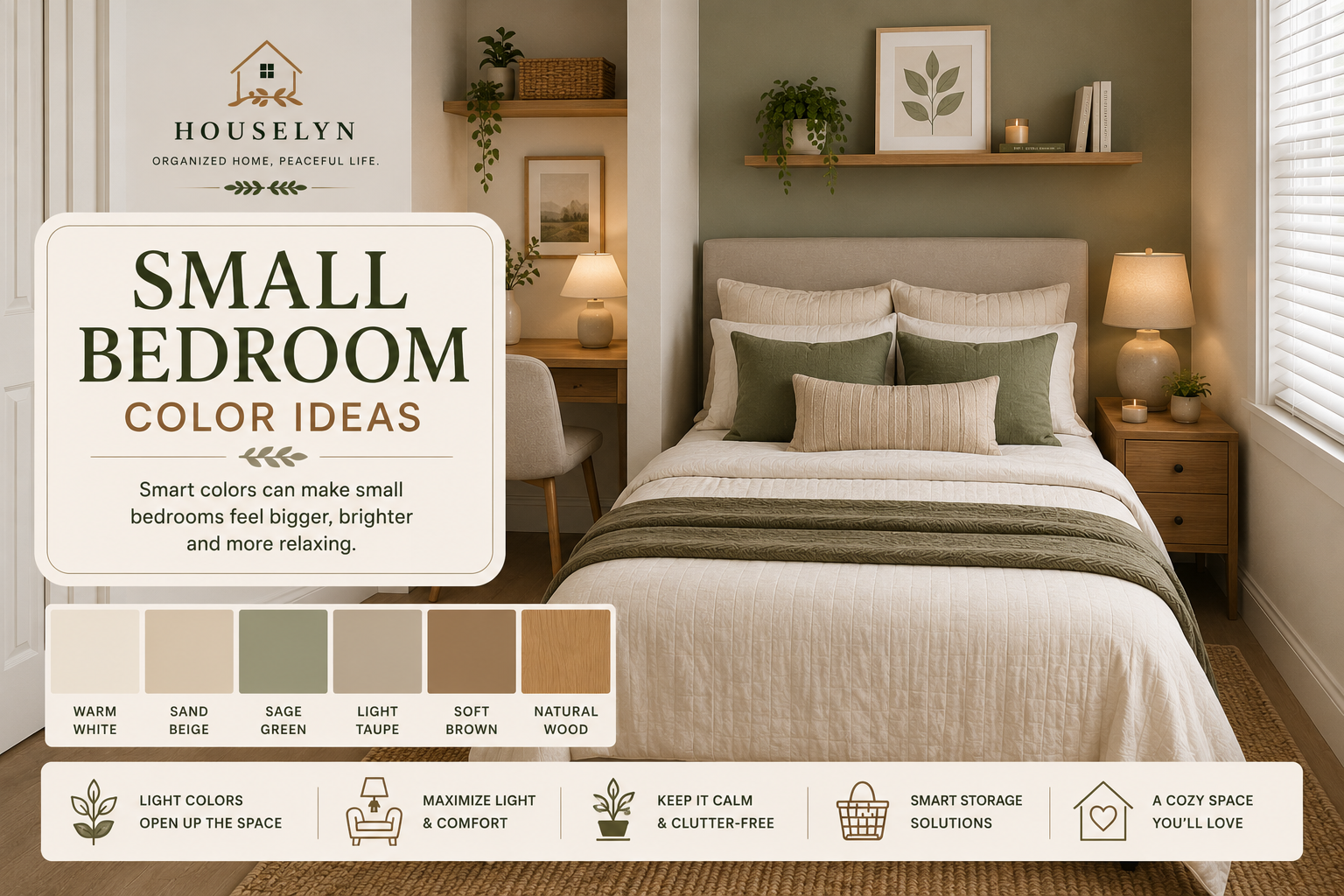
Light and warm bedroom colors can help small rooms feel more spacious.
Budget-Friendly Bedroom Color Ideas
Budget-friendly bedroom color ideas can refresh your space without a complete makeover. You do not have to repaint the whole room to change the mood.
Start with smaller updates such as new pillow covers, a throw blanket, wall art, curtains, lampshades, or a rug. These pieces can introduce a new color palette at a lower cost.
Recommended Amazon Finds: Bedroom Wall Art
Best for: adding color and personality without repainting your bedroom.
How to Choose the Best Bedroom Color Ideas for Your Home
The best bedroom color ideas depend on your room size, natural light, furniture, and personal style. Before choosing a color, look at how much daylight your bedroom receives.
If your room is dark, warm whites, cream, beige, and pale sage can help brighten it. If your room gets plenty of natural light, you can experiment with deeper tones such as olive, navy, charcoal, or chocolate brown.
Also consider your existing furniture. If you already have dark wood furniture, warm neutrals and soft greens can balance the space. If your furniture is light, you may have more flexibility with deeper wall colors.
Bedroom Color Ideas Checklist
| Color Goal | Best Palette | Amazon Search |
|---|---|---|
| Calm and neutral | Warm white, beige, taupe | View Options |
| Natural and relaxing | Sage green, cream, oak | View Options |
| Warm and cozy | Terracotta, clay, beige | View Options |
| Modern and bold | Charcoal, black, beige | View Options |
| Soft and airy | Dusty blue, warm white | View Options |
Frequently Asked Questions
What are the best bedroom color ideas?
The best bedroom color ideas include warm white, beige, sage green, dusty blue, taupe, greige, soft blush, terracotta, olive green, and warm grey.
What bedroom colors are most relaxing?
Relaxing bedroom colors usually include soft greens, warm whites, muted blues, beige, taupe, pale grey, and earth tones.
What colors make a small bedroom look bigger?
Warm white, cream, pale beige, soft grey, and light sage green can help a small bedroom feel brighter and more spacious.
Are dark colors good for bedrooms?
Yes, dark colors can work well in bedrooms when balanced with lighter bedding, warm lighting, mirrors, and natural textures.
How do I add color to a bedroom without painting?
Use bedding, curtains, rugs, pillows, wall art, lampshades, and decorative accessories to add color without changing the wall paint.
Related Houselyn Guides
- Bedroom Decor Ideas
- Cozy Bedroom Ideas
- Small Bedroom Decor Ideas
- Bedroom Organization Ideas
- Home Decor Ideas
Final Thoughts on Bedroom Color Ideas
Bedroom color ideas can help you create a room that feels calm, cozy, stylish, and personal without needing a full renovation.
Start by choosing the mood you want your bedroom to have. Warm neutrals create softness, greens feel natural, blues feel peaceful, earth tones add warmth, and darker colors can create drama and depth.
Once you have a clear color palette, it becomes easier to choose bedding, curtains, rugs, wall art, and accessories that work together. With the right colors, your bedroom can become a relaxing retreat that feels beautiful every day.
Create a Bedroom Color Palette You Love
Explore more Houselyn guides for bedroom decor, cozy styling, smart organization, and home decor inspiration.
Have A Great Story About This Topic?
Do you have a great story about this? Share it!
You might like these
25 Garage Organization Ideas for a Clean and Functional Space
Discover 25 garage organization ideas to maximize storage, organize tools, reduce clutter, and create a more functional garage.
25 Nightstand Organization Ideas for a Clutter-Free Bedroom | Houselyn
Discover 25 nightstand organization ideas that help reduce clutter, maximize bedside storage, and create a calm, organized bedroom.