Thrift Store Decorating Plan: How to Find Better Pieces Without Bringing Home Clutter
Houselyn Budget Decorating Guide
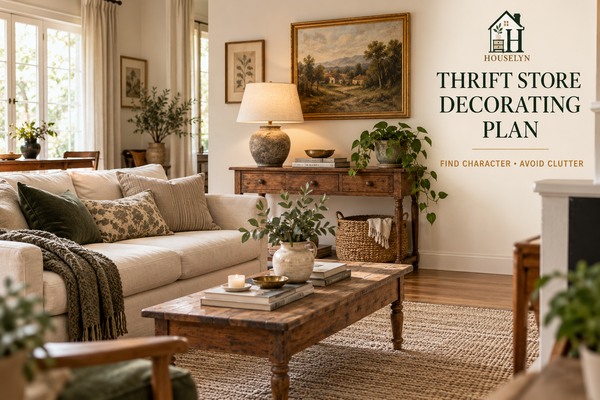
Thrift store decorating plan decisions become far easier when you stop shopping for
bargains and start shopping for the room. The strongest secondhand finds are not
necessarily the cheapest pieces on the shelf; they are the ones with useful proportions,
worthwhile materials, manageable condition and a clear reason to come home with you.
Thrift store decorating can bring depth, individuality and material character into a
home, but secondhand shopping also creates a particular kind of pressure. The stock may
disappear tomorrow, the price may look unusually low and the object may feel too unique
to leave behind.
That combination can make almost anything look like an opportunity. A better approach is
to judge the piece against the room first. If it does not fit the space, serve a purpose
or improve the visual direction, the bargain is not doing you a favour.
Disclosure: Houselyn may earn a commission from qualifying purchases
made through selected affiliate links in this article, at no additional cost to you.
The strongest secondhand rooms feel collected rather than crowded because each older
piece has a clear relationship to the space around it.
Choose Character With Discipline
A Good Thrift Find Should Improve the Room, Not Simply Win the Bargain
Secondhand decorating works best when three things happen at the same time: the piece
has something worthwhile about it, it solves a real room need and the total effort
required to make it usable remains reasonable.
Character Is Valuable
Older wood, ceramic, woven materials and distinctive shapes can add depth that a
room may be missing.
Condition Still Matters
Age can create patina, but instability, swelling, odour, damaged wiring and weak
construction are different problems.
Cheap Is Not the Same as Useful
A low price does not make the wrong size, wrong function or wrong material a good
purchase.
A good thrift find should add character to the room without creating another
decorating problem.
This is why the plan begins before the shop. Know which room you are working on, which
visual or practical gap you are trying to fill and what dimensions the space can
actually handle. That information turns browsing into selection.
Once you are in the shop, look beyond colour and styling. A dated finish can sometimes
be changed. Poor proportion is harder to correct. Minor surface wear may add character.
Weak joints or serious damage can turn a cheap piece into an expensive project.
The strongest thrifted homes also use restraint. A room usually needs only a few
pieces with character to gain depth. When every shelf, wall and surface is filled with
finds, individuality begins to turn into visual noise.
Chapter 1 — Shop the Room, Not the Store
Build Your Thrift Store Decorating Plan Around a Real Room Need
Thrift store decorating becomes more selective when you decide what the room needs
before you start browsing. A shop full of unusual furniture, frames, baskets and
ceramics can make almost anything feel tempting, but a good find should answer a
problem that already exists at home.
The strongest thrift store decorating plan starts with an empty space, a missing
function or a weak visual area—not with whatever happens to be available that day.
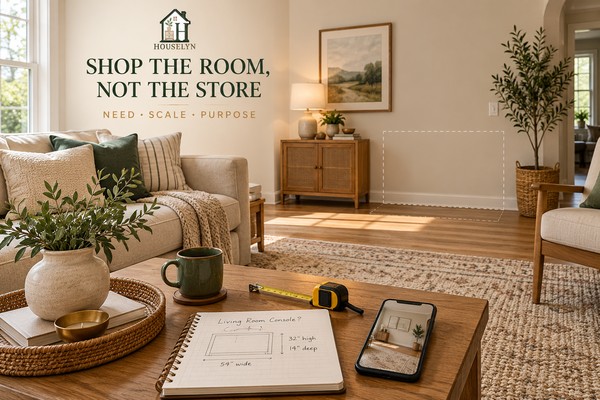
Measure the space, photograph the room and decide which materials, colours and
proportions would actually improve it.
A photo, measurements and a short room brief can protect you from buying a beautiful
object that has no useful place once you get home.
Instead of deciding that you want “a thrifted table” or “some vintage decor,” identify
what is actually missing. Perhaps an empty corner needs a narrow surface, a blank wall
needs stronger scale or an entryway needs somewhere practical to place keys.
This matters because categories are broad. Room problems are specific. A specific problem
gives you a much stronger filter when dozens of inexpensive objects compete for your
attention.
Measure Before the Store Creates Urgency
Temporary stock can make you feel that a decision has to be made immediately. Carrying
measurements removes much of that pressure because the piece either fits the available
space or it does not.
Record maximum width, depth and height where necessary. For furniture, also consider
walking routes, door clearance and the visual weight of the piece beside what you already
own.
Photograph the Room Before You Leave
A quick room photograph is one of the most useful thrift-shopping tools because memory
is unreliable when you are comparing colours and proportions in a completely different
environment.
Use the photo to check whether a wood tone, ceramic colour, frame finish or overall shape
has a relationship to something already present in the room.
Decide What You Do Not Need
A shopping brief is stronger when it includes exclusions. If you already own enough
baskets, vases or small frames, make those categories off-limits for the trip. Cheap
duplicates still take up physical and visual space.
Set a Real Spending Limit
The limit should cover more than the price tag. Leave room for transport, cleaning or
minor correction if the type of piece you are seeking may need it.
A £20 table that requires substantial repair is a different decision from a £20 table
that needs only cleaning. The price on the ticket is not always the final cost.
Once the room brief is clear, the next skill is learning what deserves your attention.
Strong thrift decorating depends less on spotting a fashionable object and more on
recognizing good material, useful proportion and pieces with genuine potential.
Build Secondhand Finds Into a Smarter Decorating Strategy
Look for Material Quality and Good Proportions Before You Look for a Trend
Thrift store decorating becomes far more reliable when you judge the bones of a piece
before its colour, finish or current styling. A dated surface can sometimes be cleaned,
refinished or restyled; weak construction and poor proportion are much harder to turn
into a good purchase.
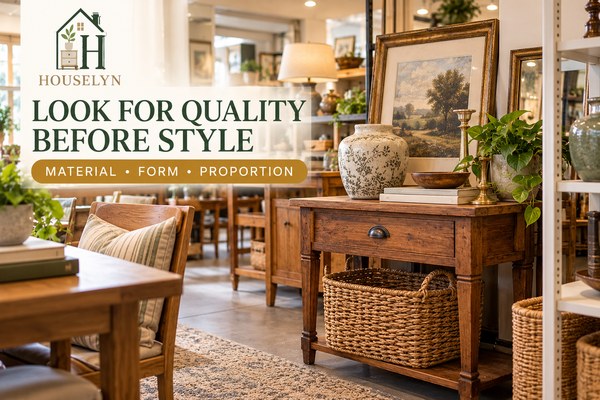
Strong secondhand pieces often have something substantial about them before any styling
begins. That may be solid wood, a useful silhouette, a weighty ceramic form, a well-made
woven basket or a frame with enough presence to hold its own on the wall.
Look past temporary styling and ask whether the material, shape and proportion would
still be appealing once the piece is placed in your own room.
Age can add visual depth, but not every sign of wear is desirable. Softened wood colour,
gentle surface variation or naturally aged metal can add character when the piece remains
sound and usable.
Damage is different. Swollen board, unstable joints, cracked structural parts, mould,
severe odour or failing fittings reduce usefulness and may create additional work that
the price tag does not reveal.
Buy Shape Before You Buy Someone Else's Styling
A secondhand table may be surrounded by dated accessories in the shop, yet its
proportions could be exactly right for a modern room. Likewise, a frame with an
unattractive print may still have an excellent scale and finish.
Try to mentally remove the surroundings. Judge the piece as an object: its shape,
material, weight and potential relationship to your own room.
Give Material More Weight Than Fashion
Trends can make ordinary objects temporarily desirable. Material quality tends to have
more staying power. Solid or well-constructed wood, substantial ceramics, useful metal
forms and good natural fibres are often easier to integrate over time than novelty pieces
chosen only because they match a current look.
Recognize Categories That Often Reward a Closer Look
Certain categories are worth examining carefully because material and shape can matter
more than age. Solid side tables, simple storage furniture, substantial ceramics,
baskets in good condition, mirrors, frames and useful trays can all offer strong value
when the construction and proportions are right.
That does not mean every item in those categories is a good buy. The room brief from
Chapter 1 still applies: the object must fit a real need.
Do Not Let a Recognizable Style Override Poor Proportion
A piece may look fashionable and still be wrong for your home. An oversized table can
dominate a small seating area, while a delicate lamp may disappear on a broad console.
Scale affects the room every day; trend recognition does not correct it.
Be Cautious With Pieces That Need Too Much Imagination
Potential matters, but project optimism can be expensive. If the item only becomes
attractive after sanding, repainting, rewiring, replacing hardware and changing several
parts, you are no longer judging the object in front of you—you are imagining a future
version that may require more time and money than you intended.
Once a piece has passed the material and proportion test, the next step is inspection.
The front may look promising, but the underside, joints, back and interior often reveal
whether the bargain is actually worth bringing home.
Chapter 3 — Inspect Before You Buy
Inspect Every Thrifted Find as Carefully as You Would a New Purchase
Thrift store decorating works best when you treat condition as part of value, not as
an afterthought. A beautiful shape or appealing material can still become a poor buy
if the piece is unstable, difficult to clean or hiding damage that turns a simple find
into a larger project.
The strongest secondhand shoppers slow down before they commit. Turn the piece around.
Look underneath. Open the drawers. Check the joints. Smell the interior. Test the
movement. The front tells you how the object was presented; the less visible areas often
tell you how it has actually lived.
The most useful inspection happens beyond the styled surface: check the back,
underside, joints and interior before deciding that a thrifted piece is good value.
Scratches and finish wear may be manageable. A loose frame, unstable joint or weakened
base is a different problem. For furniture, gently test whether the piece rocks, twists
or moves in ways it should not.
A small cosmetic flaw can sometimes be corrected cheaply. Structural weakness may require
more skill, time and expense than the original price suggests.
Open, Slide and Test Moving Parts
Drawers should open and close without excessive force. Cabinet doors should align
reasonably well. Hinges, handles and catches should be present or straightforward to
replace.
A missing knob is very different from a warped drawer box. Learn to separate a small
replaceable detail from a deeper construction problem.
Use Your Nose as Well as Your Eyes
Strong musty, smoky or persistent damp smells can be difficult to remove, especially
from porous materials. A piece that looks attractive may still be a poor choice if the
odour would make it unpleasant to use indoors.
Look for Water Damage and Swelling
Pay particular attention to the base of cabinets, table feet, drawer interiors and the
edges of engineered boards. Swelling, delamination or soft material can signal moisture
exposure rather than harmless age.
Inspect Frames, Mirrors and Baskets Differently
Frames and mirrors need secure corners, usable backing and stable hanging points. Check
for cracked glass or loose sections before focusing on finish.
Baskets should have an intact base and firm structure. Broken fibres, mould, dampness or
sharp protruding ends can turn a decorative bargain into something impractical.
Be More Cautious With Upholstery
Upholstered furniture can hide more than surface wear. Odour, staining, internal
condition and hygiene are harder to assess than on a wood or ceramic piece. Unless you
are confident about condition and cleaning requirements, the lower price may not justify
the uncertainty.
Electrical caution: secondhand lamps and electrical fittings deserve
extra care. Do not assume an older item is safe because it lights up in a shop. Damaged
plugs, flexes, lampholders or other questionable components should be properly assessed
before use. Avoid using visibly damaged electrical items.
Do Not Confuse Repairability With Value
Almost anything can become a project if enough time and money are available. That does
not make every project worthwhile. The relevant question is whether the repair unlocks
enough quality, usefulness or character to justify the work.
Once condition is understood, price becomes easier to judge. The next chapter moves
beyond the ticket price and calculates what the piece will actually cost after transport,
cleaning and any correction required to make it usable.
Connect Secondhand Inspection to Smarter Home Decisions
Calculate What a Thrift Store Find Will Cost After You Bring It Home
A thrift store decorating plan can fall apart when the ticket price is treated as the
whole cost. The real spend may include transport, cleaning, new fixings, minor repairs,
finishing materials and the time required to make the piece usable.
A low purchase price can still represent excellent value, but only when the work that
follows is proportionate to the quality of the piece. The goal is not to avoid every
item that needs attention. It is to know what that attention will cost before the bargain
becomes emotional.
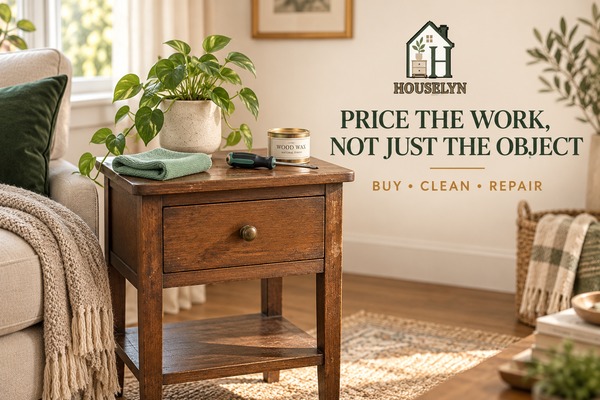
Price the complete journey from shop floor to finished room, not only the number on
the ticket.
The sticker price gets the piece through the shop door. Ownership cost gets it into
usable condition at home. Those are not always the same number.
A compact table may need only cleaning. Another may require transport, replacement
hardware and several hours of repair. Both can still be worthwhile, but they should not
be judged as equally inexpensive.
Count Transport Before Buying Large Furniture
A piece that will not fit safely in your vehicle may require delivery, a larger vehicle
or paid transport. That expense belongs in the decision before you commit.
Also consider access at home. A cabinet that physically fits the room may still be
unsuitable if it cannot reasonably pass through a doorway, staircase or hallway.
Price Cleaning and Minor Correction Honestly
Cleaning is part of secondhand ownership. So are replacement screws, a missing handle,
small surface corrections or fresh backing for a frame. None of these automatically
makes a piece poor value, but pretending they cost nothing can distort the decision.
Ask Whether the Work Unlocks Something Worth Keeping
Minor effort can be worthwhile when it reveals a good material, useful shape or piece
that suits the room unusually well. Cleaning an attractive solid-wood table is different
from investing heavily in weak furniture simply because the starting price was low.
This is where quality from Chapter 2 matters. Repair should unlock value that is already
present, not manufacture value that the object never had.
Do Not Forget the Cost of Your Time
Time does not need to be priced like professional labour to matter. If you enjoy cleaning
or making small improvements, that may be part of the appeal. If the piece requires a
weekend of work you do not want to do, that effort belongs in the value calculation.
Compare With a Realistic Alternative
Do not compare a damaged secondhand piece only with an expensive designer version. Compare
it with a realistic new or used alternative that could perform the same job.
A thrifted find can still win because of material, character or longevity. The comparison
simply keeps the decision grounded.
Once the true cost makes sense, the next challenge is visual integration. A good
secondhand piece should feel distinctive without looking disconnected from everything
around it.
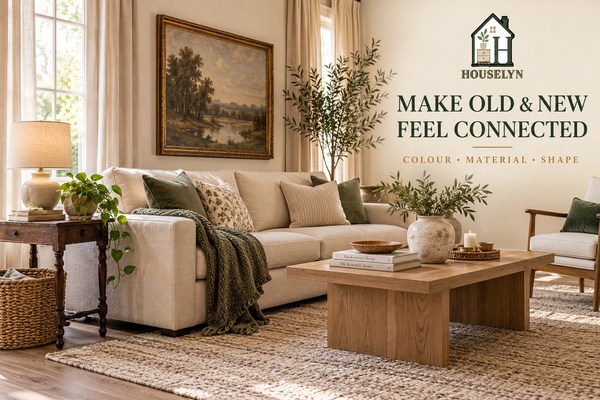
Chapter 5 — Make Old and New Speak the Same Language
Style Thrifted Decor So the Room Feels Collected, Not Themed
Thrift store decorating looks strongest when older pieces feel connected to the room
rather than displayed as a separate style. The goal is not to make a modern home look
like an antique shop. It is to use secondhand character to deepen a room that still
feels current, functional and recognizably yours.
A thrifted piece does not have to match the age of the furniture around it. It needs a
visual relationship. An older dark-wood side table can sit comfortably beside a simple
cream sofa when its scale is right and another warm wood tone appears somewhere else in
the room.
Old and new do not need to match. They need enough shared colour, material or shape to
make the contrast feel deliberate.
Repeat One Material So the Older Piece Has Company
A darker thrifted wood table can feel isolated in a pale modern room if it is the only
warm wood present. Repeating a similar tone in a frame, tray or smaller object can make
the contrast feel intentional without turning the room into a matching set.
Connect Through Colour Rather Than Age
A vintage frame may sit comfortably beside contemporary furniture when its finish relates
to an existing lamp, textile or wood tone. Likewise, an older ceramic piece can feel
modern when its colour is already present elsewhere in the room.
Thrifted home decor becomes easier to integrate when you stop asking, “Does this look
old?” and start asking, “What does this connect to?”
Let Contrast Be Visible
Do not try to disguise every age difference. Contrast is often what gives the piece its
value. A room of entirely new furniture can gain depth from one older table, substantial
ceramic vessel or worn-but-sound frame.
The premium result comes from controlled contrast, not from making every item appear to
come from the same decade.
Keep the Strongest Thrifted Piece Visually Clear
If a secondhand table, mirror or artwork has real character, avoid crowding it with
several competing objects. Give it enough negative space to read as a deliberate choice.
This is particularly important in smaller rooms, where too many distinctive pieces can
compete for attention quickly.
Avoid Turning Secondhand Decor Into a Theme
One vintage-style frame can create contrast. Ten similar frames, several old candlesticks
and multiple distressed tables can shift the entire room into a theme whether you
intended it or not.
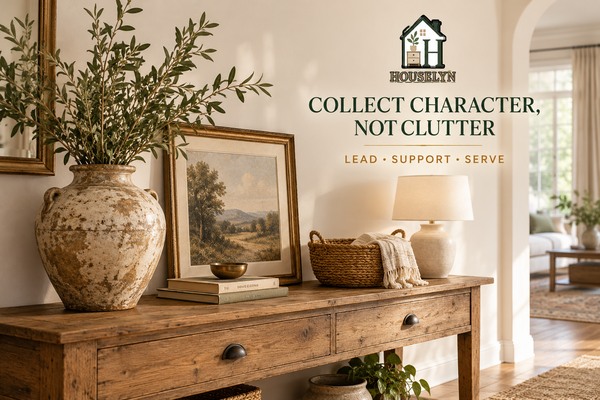
A collected room feels layered because pieces come from different sources and periods,
but restraint keeps those differences from becoming visual noise.
Use Scale to Connect Old and New
Connection is not only about colour. An older mirror may feel right above a modern
console because its width relates properly to the furniture beneath it. A substantial
lamp may work on a clean-lined table because both pieces have enough visual weight to
balance one another.
Once old and new feel connected, the next challenge is restraint. Thrift stores make it
easy to accumulate small objects because each one feels inexpensive and unique. Chapter
6 focuses on preventing those bargains from quietly taking over the room.
Stop Thrift Store Decorating From Turning Into Decorative Clutter
Thrift store decorating can become cluttered for a simple reason: every object seems
inexpensive enough to justify individually. The problem appears later, when baskets,
frames, vases, trays and small furniture begin competing for the same visual space.
Secondhand shopping also adds two pressures that ordinary retail does not always create:
scarcity and uniqueness. You may never see the same object again, so leaving it behind
can feel like losing an opportunity. That feeling is useful to recognise because it is
not the same as the room genuinely needing the piece.
Character becomes easier to appreciate when every thrifted object has enough space to
be seen and a clear reason to remain in the room.
Small decor is especially easy to accumulate because each purchase feels harmless.
Baskets, candleholders, bowls, picture frames, decorative boxes, trays and vases can
gradually become collections without ever being chosen as one.
Count categories occasionally. If five baskets already solve five real needs, the sixth
should earn its place rather than arriving simply because it was attractive and cheap.
Give Every Thrifted Piece a Role
A room can hold different styles and periods more easily when each object has a clear
purpose within the composition. Some pieces deserve attention. Others should quietly
reinforce the main elements. Functional pieces should earn their space through use.
Use One In, One Decision
A strict one-in, one-out rule is not always necessary, but every new find should trigger
a decision about what is already nearby.
When something new enters the room, another object may remain, move, rotate out, be
stored intentionally or be donated. The important part is that the new piece does not
automatically receive space without the surrounding composition being reconsidered.
Rotate Character Instead of Displaying Everything
If you genuinely enjoy collecting frames, ceramics or seasonal finds, not every piece
needs to be visible at the same time. Rotation preserves variety while protecting the
room from constant visual competition.
Do Not Buy Storage to Justify More Decor
Organization becomes false economy when new containers are required simply because too
many inexpensive objects have been brought home. Edit the collection before expanding
the storage system.
Protect Negative Space
Empty surface is not wasted surface. It separates shapes, makes distinctive materials
easier to notice and helps an older piece feel intentional rather than lost inside a
crowd.
The more character a thrifted object has, the less competition it may need around it.
The final chapter applies the strongest form of thrift-store discipline: leaving the
wrong piece behind. A bargain has no decorating value when the room has no real place
for it.
Keep Character While Protecting Function and Space
Know When a Thrift Store Bargain Does Not Belong in Your Home
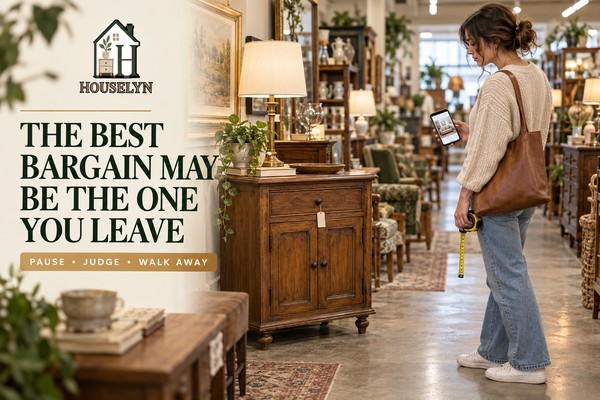
Thrift store decorating becomes far more successful when walking away is treated as a
skill rather than a missed opportunity. A low price, unusual shape or one-off find can
create urgency, but none of those things automatically makes the piece right for your
room.
The hardest secondhand decisions are often not about quality. They are about restraint.
You may find something attractive, affordable and perfectly usable that still does not
solve a need, fit the available space or belong with the direction of the room.
Leaving the wrong piece behind is not a failed shopping trip. It protects the room,
the budget and the opportunity to recognise a better find later.
Secondhand stock is temporary, and that can make a piece feel more valuable simply
because someone else might buy it. Scarcity changes the speed of the decision, not the
requirements of the room.
If the dimensions are wrong, the condition is poor or the piece has no real place at
home, urgency does not improve those facts.
Be Suspicious of Bargain Psychology
A very low price can cause you to lower standards that you would apply to a more
expensive purchase. Suddenly the wrong colour seems acceptable, an inconvenient size
feels manageable and a repair project looks easier than it really is.
The price should influence value, but it should not rewrite the room brief.
Walk Away From the Wrong Scale
A piece can be beautifully made and still fail because of proportion. An oversized
cabinet may make a small room feel compressed. A tiny side table may look lost beside a
substantial sofa. Scale affects how the room works every day.
Walk Away From Projects You Do Not Want
There is a difference between something that needs a clean and something that needs a
restoration plan. If you are already reluctant about sanding, repairing, repainting or
arranging specialist work while standing in the shop, that reluctance is useful
information.
Do not buy the future version of an object unless you genuinely want the work required
to create it.
Do Not Buy a Duplicate Just Because This Version Is Better
A more attractive basket, frame, tray or side table can still be unnecessary if you
already own one that performs the same role well. Replacing may make sense, but
accumulating both without a plan usually does not.
Leave Trend-Led Finds Behind When They Have No Staying Power
Thrift stores often contain yesterday's trends at attractive prices. That can be useful
when you genuinely like the object, but a familiar style is not the same as lasting
value.
Return to material, proportion, function and connection. If those are weak, trend
recognition alone is not enough.
Know When Condition Ends the Conversation
Serious structural weakness, persistent damp or mould concerns, significant odour,
questionable electrical condition or repair requirements beyond your comfort level are
valid reasons to leave a piece behind.
The purpose of thrift shopping is not to rescue every object. It is to find the few that
can become useful, attractive parts of your home without creating disproportionate risk,
cost or work.
That completes the shopping side of the plan. The strongest secondhand rooms begin with
a need, recognise quality, inspect carefully, calculate the real cost, connect old and
new, control the collection and leave the wrong bargain where it is.
Frequently Asked Questions
Thrift Store Decorating Plan FAQs
The best secondhand decorating decisions become easier when you know what to look for,
what to question and what to leave behind. These answers cover the most common concerns
from first-time thrift shoppers through to more selective secondhand decorating.
1
What is a thrift store decorating plan?
A thrift store decorating plan is a simple strategy for deciding what your room needs
before you start browsing secondhand furniture and decor. It usually includes the
intended room, measurements, useful materials, colour direction, spending limit and
any condition or project requirements that would make you walk away. The purpose is
to make secondhand shopping selective instead of reactive.
2
What home decor is usually worth buying secondhand?
Pieces that reward a closer look often include solid or well-made side tables,
substantial ceramics, mirrors, picture frames, useful trays, baskets in good
condition and compact storage furniture. The category alone does not make something
worthwhile. Material, proportion, condition and whether the piece solves a real need
matter more than the fact that it is secondhand.
3
What materials should I look for in thrifted furniture?
Look for materials that feel appropriate and substantial for the object, such as
sound wood construction, durable metal components and other surfaces that remain
stable and usable. The most important test is not whether something is labelled
vintage or solid wood, but whether the material, construction and condition justify
the cost and intended use.
4
What is the difference between patina and damage?
Patina is age-related wear that can add character without reducing usefulness. It may
include gentle finish variation, softened colour or naturally aged metal. Damage
affects condition or function, such as unstable joints, swelling, cracked structural
parts, persistent odour, mould concerns or failing fittings. Character should never
require you to ignore a genuine condition problem.
5
How should I inspect thrifted furniture before buying it?
Check more than the visible front. Look at the sides, back, underside and interior.
Test drawers and doors, examine joints, check for wobble, inspect for swelling or
damage and pay attention to strong smells. The Houselyn approach is simple:
look, touch, smell and test before deciding that a piece is good
value.
6
What secondhand items should I be more cautious about?
Be more cautious with upholstered pieces where hygiene and internal condition are
difficult to assess, electrical items with questionable plugs, flexes or fittings,
and anything showing significant damp, mould, structural weakness or persistent
odour. The lower price should not outweigh concerns you are not comfortable assessing
or correcting.
7
How do I calculate the real cost of a thrifted find?
Add the purchase price to transport, cleaning, minor repair and finishing costs.
Then consider the time required to make the piece usable. A low ticket price can
still be excellent value, but only when the full cost remains reasonable compared
with the quality, usefulness, fit, character and expected life of the piece.
8
How do I make thrifted decor look intentional?
Give the piece a visual relationship to the room. Repeat at least two connections
through colour, material or shape, and make sure the scale is appropriate. A darker
thrifted wood table, for example, may feel more deliberate when another warm wood
tone appears elsewhere and its proportions suit the nearby furniture.
9
How do I mix vintage or older pieces with modern furniture?
Let some contrast remain visible instead of trying to make every piece match. One
older table, frame or ceramic object can add depth to a modern room when it connects
through colour, material, shape or scale. The goal is a collected interior, not a
room where every object appears to come from the same period.
10
How do I stop thrift shopping from creating clutter?
Track the categories that multiply most easily, such as baskets, frames, vases,
trays and candleholders. Give each visible piece a role: it should lead, support or
serve. When a new object comes home, reassess the surrounding display rather than
automatically adding it to what is already there.
11
When is a thrift-store find not worth repairing?
Walk away when the required work is disproportionate to the underlying quality,
usefulness or character. A minor clean, missing handle or small cosmetic correction
may be reasonable. Serious structural problems, major restoration, specialist work
or a project you do not actually want can erase the financial and practical value of
the find.
12
How do I know when to leave a thrift store bargain behind?
Ask whether you would still choose the piece without the bargain price, whether you
know exactly where it will go and whether you accept any work required to use it.
One doubtful answer deserves a pause. Two usually mean the piece should stay in the
shop. A bargain is only useful when it still works for the room after the excitement
of finding it has passed.
Put the Strategy Into Practice
The Houselyn 5-Step Thrift Decorating Plan
A good secondhand decorating strategy should be simple enough to use before, during
and after a shopping trip. These five steps turn the full article into a practical
decision sequence you can repeat whenever you shop for thrifted furniture or decor.
1
Define the Gap
Start with the room rather than the shop. Identify one visual or practical weakness:
perhaps an empty corner needs a surface, a wall needs stronger scale or an entryway
needs useful storage.
Write down the dimensions, useful materials, preferred colour direction and the
maximum amount you are prepared to spend.
Before you leave home: know what problem the find is supposed to
solve.
2
Carry the Measurements
Keep maximum width, depth and height on your phone or in a small note. Add a
photograph of the intended room so you can compare wood tones, colour, visual
weight and proportion while you shop.
Measurements protect you from the temporary urgency of one-off stock. The piece
either works within the room's physical boundaries or it does not.
In the shop: measure before imagining how you might somehow make
the piece fit.
3
Inspect Beyond the Surface
Look at the front, sides, back, underside, interior, joints and fittings. Test
drawers and doors. Check stability. Pay attention to odour, swelling, missing
components and repairs that are more serious than they first appear.
The attractive surface should never be allowed to hide condition problems that
reduce usefulness.
Inspection rule: look, touch, smell and test before calling
something a bargain.
4
Calculate the Real Cost
Add purchase price, transport, cleaning, repairs and finishing. Then consider
whether you genuinely want the time or work required to bring the piece into usable
condition.
Compare the complete cost with the quality, function, fit, character and expected
life of the item—not simply with its original retail price.
Value test: the work should unlock worthwhile quality, not rescue
a weak purchase.
5
Place It, Then Edit the Room
Once the piece comes home, integrate it through colour, material, shape or scale.
Give it enough visual space to be appreciated, then reassess what is already around
it.
Another object may need to move, rotate out or leave entirely. A successful thrift
find should strengthen the room rather than simply increase the number of things in
it.
Final step: add the piece deliberately, then edit the surrounding
room with equal care.
Conclusion
A Thrift Store Decorating Plan Should Help You Buy Less and Choose Better
The best thrift store decorating plan does not turn every shopping trip into a hunt
for more objects. It gives you a way to recognize the few pieces that deserve space in
your home and the confidence to leave everything else behind.
Secondhand decorating can add something valuable that new furniture and accessories do
not always provide immediately: material variation, individuality, history and the
feeling that a room has developed over time. Those qualities become more powerful when
they are selective.
A well-chosen older table can warm up a room of newer furniture. A substantial ceramic
object can add shape and depth without requiring an entire new decorating scheme. A good
frame, basket or mirror can bring texture and character into a space for relatively
little money.
But thrifted pieces do not improve a room simply because they are inexpensive,
distinctive or old. They still have to earn their place through proportion, condition,
usefulness and visual connection.
The Houselyn Thrift Decorating Framework
Return to the Same Six Decisions Every Time You Shop
The entire strategy can be reduced to one repeatable sequence. Start with the room,
evaluate what you notice, investigate the condition, calculate the real cost, confirm
the placement and edit once the piece comes home.
NEED → NOTICE → INSPECT → PRICE → PLACE → EDIT
Need prevents you from shopping without direction.
Notice trains your eye to recognise material, shape and proportion rather
than being distracted by styling. Inspect separates attractive age from
real damage. Price exposes the cost beyond the ticket.
Place makes sure the object has a genuine destination.
Edit protects the room from becoming crowded after the excitement of
the find has passed.
Used together, these decisions make thrift store decorating less dependent on luck. You
can still enjoy the discovery of an unexpected object, but you are no longer relying on
excitement alone to decide whether it belongs in your home.
The most polished secondhand interiors are rarely the ones with the highest number of
thrifted objects. They are the ones where a smaller number of pieces have enough
substance and space to matter.
That is the difference between filling a home with finds and building a room with
character. One is driven by opportunity. The other is guided by judgement.
Continue Learning
Build a Smarter Budget Decorating Strategy
Thrift shopping works best as one part of a larger decorating plan. Continue with
these Houselyn guides to decide where to spend, where to save and which affordable
changes can make the biggest difference.
The Houselyn Editorial Team creates practical guidance for home styling, interiors
and organization, with a focus on helping everyday rooms feel more functional,
intentional and visually balanced.
Our decorating guides emphasize realistic homes, usable layouts, sensible spending
and decisions that improve the room rather than simply adding more to it.
Discover practical budget decorating ideas for improving your home with better priorities, affordable upgrades, thrifted finds, wall decor and smarter styling.