- Home
- Free Home Decor Printables
- Coffee Table Styling Checklist
Coffee Table Styling Checklist
This free coffee table styling checklist helps you protect everyday function, choose the right decor, vary height, balance visual weight and edit the finished arrangement before adding anything new.
Move from table function and styling inventory to arrangement, balance and the final edit.
Separate print-ready layouts for UK, international and North American paper sizes.
Keep enough clear surface for the table to remain practical after the styling is finished.
Download the Coffee Table Styling Checklist
Choose A4 for most UK and international printers or US Letter for standard North American paper. Both contain the same four-page coffee table styling system.
A Coffee Table Can Look Cluttered Long Before It Looks Styled
More Objects Do Not Automatically Create More Style
Coffee tables often become crowded because books, candles, remotes, trays, seasonal pieces and decorative objects are added one at a time without reviewing the whole surface.
A good arrangement needs enough visual interest to feel intentional, but it also needs room for drinks, everyday items and movement.
The Houselyn Styling Sequence
Function → Anchor → Layer → Balance → Edit
Start by protecting the table's real use. Then choose the anchor, add supporting layers, vary height, balance the visual weight and remove anything the composition does not need.
Four Pages for Styling the Coffee Table With Intention
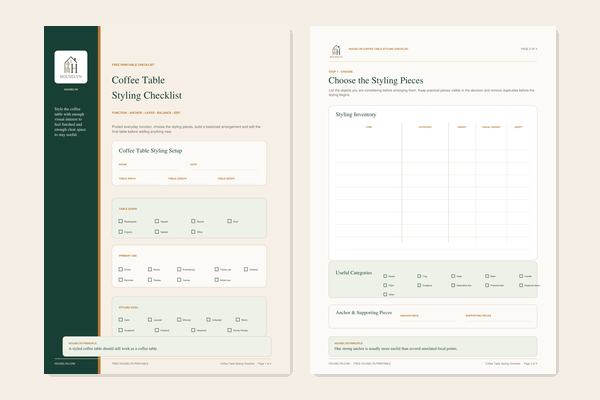
Styling Setup
Record the table size, shape, primary use and the visual feeling you want the finished arrangement to create.
Choose the Pieces
Inventory decor and practical items, judge their height and visual weight, then identify the anchor.
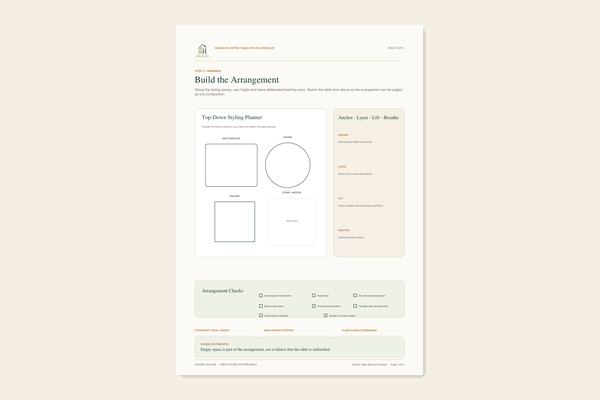
Build the Arrangement
Sketch the layout from above and use Anchor, Layer, Lift and Breathe to create a balanced composition.
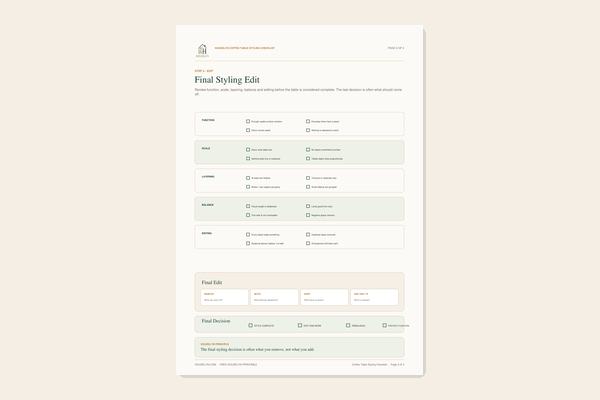
Final Styling Edit
Review function, scale, layering and balance before deciding what to remove, move, keep or add.
Preview the Actual Coffee Table Styling Checklist
These previews are generated directly from the corrected final A4 PDF.
Style a Coffee Table in Five Steps
Decide how the table actually needs to work before placing decor.
Choose one strong object or grouping to visually lead the arrangement.
Add books, trays or smaller objects that support the anchor.
Vary height and visual weight while protecting clear surface.
Remove anything that makes the table busier without making it better.
Anchor → Layer → Lift → Breathe
Use a tray, vase, bowl, book stack or sculptural piece to create a clear visual starting point.
Add secondary objects that support rather than compete with the anchor.
Introduce height variation without blocking conversation or sightlines.
Leave deliberate clear surface so the arrangement feels calm and usable.
A 120 × 60 cm Oak Coffee Table
Imagine a rectangular coffee table used for drinks, books, remote controls and light entertaining.
The initial styling included a tray, three books, vase, candle, decorative bowl, plant, sculpture, remotes, coaster set and a seasonal ornament.
Editing the arrangement creates clearer height variation, groups practical items and leaves enough negative space for the table to remain useful.
Protect Function Before Adding Decor
Keep the Surface Usable
A coffee table needs enough clear area for drinks, books, games or whatever the household actually uses it for.
If every object has to be moved before someone can put down a cup, the arrangement is asking too much of the table.
Group Small Objects
Several small pieces spread independently across the table can look visually noisy.
A tray, book stack or shared base can make those pieces read as one intentional group instead.
Vary Height Carefully
Height creates rhythm, but tall styling should not obstruct normal conversation or the view across the room.
Use Negative Space Deliberately
Empty surface is part of the composition. It gives the styled areas contrast and keeps the table from feeling overloaded.
What Makes a Coffee Table Feel Cluttered?
Too Much on the Surface
- Using too many small decorative objects.
- Filling almost every available area.
- Adding seasonal decor without removing anything.
- Buying new decor before editing existing pieces.
- Using too many books or stacks.
- Allowing practical items to become visual clutter.
Weak Composition
- Keeping every object at the same height.
- Scattering small objects individually.
- Using an oversized tray that dominates the table.
- Styling only from the overhead view.
- Ignoring the table shape.
- Blocking conversation with tall objects.
- Putting too much visual weight on one side accidentally.
Use the Checklist With Houselyn Living Room Tools
Check the coffee table's dimensions and proportion before styling a surface that may already be too large or too small.
Check Placement Living Room Layout PlannerConfirm table placement, sofa relationship and circulation before treating styling as the main issue.
Review the Room Living Room Refresh PlannerDecide whether coffee-table styling is the right refresh move or whether another room issue should come first.
Use the Right Printable for the Next Living Room Decision
Check whether coffee-table styling deserves attention before larger room problems.
View Printable → Review the Room Living Room Decorating ChecklistAssess the wider living room before treating the coffee table as an isolated styling problem.
View Printable → Check Placement Living Room Layout WorksheetReview the table's relationship to sofas, chairs and circulation before styling the surface.
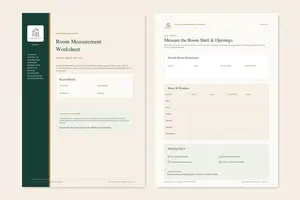
View Printable → Measure Room Measurement WorksheetRecord reliable dimensions where coffee-table scale or placement is still uncertain.
View Printable → Whole Project Room Makeover Planner PrintableCoordinate coffee-table styling with the broader layout, colour, budget and room-refresh plan.
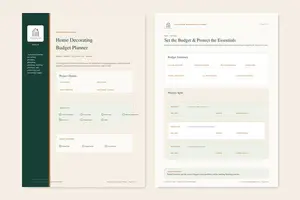
View Printable → Budget Purchases Home Decorating Budget PlannerSet spending priorities before buying trays, books, objects or other new styling pieces.
View Printable →Choose A4 or US Letter
Use A4 for standard UK and international paper or US Letter for 8.5 × 11 inch paper.
Print at Actual Size or 100%. Both editions are independently laid out so the inventory, planner and final-edit sections remain usable.
Work With What You Already Own First
Gather the books, trays, bowls, candles, plants and practical items you already have before shopping.
The checklist is most useful when it helps you remove unnecessary pieces before suggesting that anything else needs to be purchased.
Coffee Table Styling Checklist FAQ
Is the Coffee Table Styling Checklist free?
Yes. Houselyn provides both A4 and US Letter versions as free printable PDFs.
How many items should I put on a coffee table?
There is no fixed number. The useful test is whether the objects read as an intentional composition while enough clear surface remains for normal use.
Should every coffee table have a tray?
No. A tray is useful when it helps group smaller items or makes practical objects easier to contain, but it is not required for every table or styling arrangement.
How much empty space should I leave?
Leave enough clear surface for the way the table is actually used. The right amount varies by table size and household, but negative space should feel intentional rather than accidental.
How do I style a round coffee table?
Think in compact groupings rather than long horizontal rows. A central or slightly off-centre anchor with supporting pieces can work well while preserving clear space around the arrangement.
How do I style a rectangular coffee table?
Divide the surface visually into zones. One area can hold the anchor, another can contain practical items, while a third remains relatively quiet so the entire table does not become evenly filled.
How tall should coffee-table decor be?
Varying height creates interest, but tall objects should remain proportionate to the table and should not interfere with normal conversation or important sightlines.
How is this different from the Coffee Table Size Calculator?
The Coffee Table Size Calculator helps determine suitable table dimensions relative to seating. The Coffee Table Styling Checklist helps arrange and edit the objects placed on the table once its size and position are appropriate.
Download the Coffee Table Styling Checklist
Protect the table's function, create a balanced arrangement and use the final edit to decide what genuinely deserves to stay.
Create a Better Coffee Table and Living Room
Check table width, length, height and proportion relative to your seating.
Styling Guide Coffee Table StylingExplore practical styling principles, arrangements and ideas in more depth.
Room Diagnosis Living Room Feels Off?Check whether scale, layout, clutter, lighting or visual balance is contributing to the room feeling unresolved.
Houselyn Editorial Team
The Houselyn Editorial Team creates practical guides for improving the way homes look, feel and function, with a focus on realistic decorating decisions, usable organization systems and attainable interior styling.
Style the Surface Without Losing the Function
Houselyn combines practical decorating guidance, interactive tools and printable planning resources so you can choose better proportions, create calmer arrangements and make decorating decisions before buying more than the room needs.
Explore scale, layering, grouping, height and negative space in more depth.
Interactive Tools Check the Room DecisionsUse Houselyn calculators and planners for coffee-table sizing, room layout, budget and other decorating decisions.
Printable Library Plan It on PaperBrowse Houselyn worksheets, planners and checklists for decorating, measuring, budgeting, buying and room planning.