- Home
- Home Organization
Home Organization: The Ultimate Guide to Creating an Organized Home
Transform Your Home with Smart Organization Systems That Actually Last
⚡ Home Organization
An organized home isn't about buying more storage bins or following the latest trends—it's about creating practical systems that make everyday life easier. Whether you're tackling one room or your entire house, this comprehensive Houselyn guide will teach you how to organize every space with confidence, reduce clutter, maximize storage, and build habits that keep your home functional for years to come.
Keeping your home organized isn't about achieving perfection—it's about creating practical systems that make everyday life simpler. Whether you live in a compact apartment, a growing family home, or a larger property, effective home organization helps you reduce clutter, save time, improve productivity, and create a calmer environment that supports your daily routines.
Many people believe the answer to a cluttered home is buying more storage baskets or containers. While the right storage products can certainly help, lasting organization begins with understanding how your home functions, identifying the root causes of clutter, and building systems that are easy to maintain. When every item has a logical place and every room supports the way you live, organization becomes part of your lifestyle rather than another chore on your to-do list.
This comprehensive guide has been created to help you organize your entire home from the ground up. Instead of focusing on one room or offering a collection of disconnected tips, you'll learn a complete organization system that can be applied throughout your home. From planning your organization journey and understanding professional organizing principles to organizing each major room and maintaining your progress over time, every chapter builds upon the previous one.
By the end of this guide, you'll have more than a tidy home—you'll have the knowledge and confidence to create sustainable organization systems that continue working as your needs change. Whether you're tackling years of accumulated clutter or simply looking for smarter ways to organize your home, this guide will provide the practical framework you need.
What You'll Learn
Throughout this guide, you'll learn how to:
- Understand the principles behind successful home organization.
- Plan a whole-home organization project with confidence.
- Organize every major room using practical systems.
- Choose storage solutions that genuinely solve everyday problems.
- Build simple routines that prevent clutter from returning.
- Avoid common organization mistakes that waste time, money, and effort.
- Apply the Houselyn Home Organization Blueprint to any home, regardless of size or budget.
Who This Guide Is For
This guide has been written for:
- Homeowners improving their forever home.
- Renters looking for flexible organization solutions.
- Families managing busy households.
- Apartment dwellers making the most of limited space.
- Anyone beginning a whole-home organization project.
- Readers who want practical, sustainable systems instead of quick fixes.
No matter where you're starting, this guide is designed to meet you there and help you move forward with confidence.
Why You Can Trust Houselyn
At Houselyn, we believe an organized home should make life easier—not more complicated. Our advice is built around practical organization systems, realistic routines, and thoughtful planning rather than expensive products or short-lived trends.
Every recommendation in this guide has been developed to help you build habits that last. Rather than encouraging constant purchases or complicated methods, Houselyn focuses on simple, sustainable solutions that can adapt as your home and lifestyle evolve.
How to Use This Guide
Although you can jump to any chapter that interests you, we recommend reading this guide from beginning to end the first time. The early chapters explain the principles behind successful organization, making the room-by-room advice more effective and easier to apply.
Each section builds upon the previous one, creating a complete learning journey that takes you from understanding organization to confidently maintaining an organized home for years to come.
The Houselyn Promise
Our goal is not simply to help you organize your home this weekend.
Our goal is to help you build organization systems that continue working next month, next year, and well into the future.
By the time you finish this guide, you'll have a complete framework for creating a home that is more organized, more functional, and more enjoyable to live in—one thoughtful system at a time.
PART I UNDERSTAND
Before you start buying storage containers, rearranging furniture, or clearing out closets, it's important to understand why some organization systems succeed while others quickly fall apart.
Many people begin with enthusiasm, only to find themselves reorganizing the same spaces a few months later. The problem usually isn't a lack of effort—it is the absence of a clear system. Lasting home organization isn't built by purchasing more products or following trendy hacks. It begins with understanding how your home functions, how clutter develops, and how simple, repeatable systems can support the way you and your family actually live.
In this first part of the guide, you'll learn the principles that form the foundation of every well-organized home. These concepts will help you make better decisions throughout the rest of the guide, ensuring that every room you organize is built on practical strategies rather than temporary fixes.
Once you understand these core ideas, you'll be ready to create organization systems that are easier to maintain, adapt as your lifestyle changes, and continue working long after the initial excitement of organizing has passed.
Understanding Home Organization: Building a Home That Works for Everyday Life
Home organization is often misunderstood as simply keeping a house tidy or finding better places to store belongings. While neat shelves and labelled containers can certainly make a home look more appealing, true organization goes much deeper. At its core, home organization is about creating systems that make your home easier to live in every single day.
An organized home supports your daily routines instead of slowing them down. It helps you prepare meals without searching for utensils, get ready for work without hunting for misplaced items, and keep shared family spaces functional even during busy weeks. Rather than constantly reacting to clutter, you begin working within systems that naturally keep your home running smoothly.
One of the biggest misconceptions about organization is that it requires a perfectly tidy house at all times. In reality, organized homes are still lived in. Children leave toys out, laundry accumulates, groceries need unpacking, and everyday life creates temporary messes. The difference is that organized homes have simple systems that make it easy to restore order quickly.
Another common misunderstanding is believing that buying more storage products automatically creates organization. Storage products are tools—not solutions. Without a clear purpose, labelled bins, decorative baskets, and drawer organizers can simply hide clutter rather than solve it. Effective organization always begins with understanding what you own, how often you use it, and where it makes the most sense to keep it.
Professional organizers often focus on reducing the number of decisions people have to make throughout the day. When every item has a logical home, daily routines become easier because you're no longer wasting time deciding where something belongs or searching for misplaced belongings. These small improvements add up, reducing stress and creating a home that feels calmer and more manageable.
Home organization also has a positive effect on many aspects of everyday life. Well-designed organization systems can help you save time during busy mornings, reduce duplicate purchases, improve cleaning routines, protect valuable belongings, and make it easier for every member of the household to contribute to keeping the home organized. Instead of constantly managing clutter, you can spend more time enjoying your home.
Perhaps most importantly, organization is not about achieving perfection. Every home is different, and every family has unique routines, priorities, and storage needs. The goal is to build systems that work for your lifestyle rather than trying to copy someone else's perfectly styled pantry or magazine-worthy closet.
Throughout the rest of this guide, you'll learn how these principles apply to every major room in your home. Whether you're organizing a compact apartment, a busy family house, or your forever home, understanding these foundations will help you create practical systems that continue working long after the initial organization project is complete.
Understanding Home Organization: Building a Home That Works for Everyday Life
Home organization is much more than arranging shelves or storing belongings in attractive baskets. At its heart, it is the process of creating practical systems that make everyday life easier, reduce unnecessary stress, and help your home function more efficiently. An organized home doesn't have to be perfectly tidy every hour of the day—it simply needs systems that make it easy to restore order after everyday life happens.
Every home has routines. You prepare meals, get dressed, work, study, relax, entertain guests, clean, and manage countless daily tasks. When these routines are supported by thoughtful organization, everyday activities become smoother because you spend less time searching for misplaced items, moving clutter from one place to another, or repeating the same frustrating tasks. Instead of your home working against you, it begins working with you.
One of the biggest misconceptions about home organization is that it is only about appearance. Social media often highlights beautifully styled pantries, colour-coordinated wardrobes, or perfectly labelled containers, making organization seem like a decorating project. While these spaces can certainly be attractive, appearance alone does not create an organized home. A system only succeeds when it makes daily life simpler, faster, and easier to maintain.
This is why Houselyn views organization as a lifestyle rather than a one-time project. A home can look perfectly organized on the day it is completed, but if the systems don't match the way the household actually lives, clutter will gradually return. Long-term success depends on designing organization around real habits, realistic routines, and the unique needs of the people using each space.
Another common misunderstanding is believing that buying more storage products will automatically solve clutter. Storage bins, baskets, drawer dividers, labels, and containers are valuable tools, but they cannot replace good planning. Without a clear purpose, they often become places to hide clutter rather than solve it. Effective organization begins by understanding what you own, why you keep it, how often you use it, and where it naturally belongs.
Professional organizers often describe organization as reducing the number of decisions you make each day. When every item has a logical home, putting things away becomes almost automatic. Family members know where to find what they need and where to return it when they're finished. These simple habits reduce daily frustration and help maintain order with far less effort.
An organized home also creates benefits that extend beyond neat rooms. It can save time during busy mornings, reduce duplicate purchases, make cleaning faster, protect valuable belongings, improve household routines, and create a calmer environment for everyone living in the home. Many people also find that well-organized spaces improve concentration, reduce feelings of overwhelm, and make their homes more enjoyable places to spend time.
Perhaps the most important principle to remember is that organization is never about perfection. Every household is different. A young family, a retired couple, a single professional, and a student living in a small apartment all have different priorities and storage needs. The goal is not to copy someone else's home but to create systems that fit your own lifestyle and continue working as your needs change.
Throughout the rest of this guide, you'll discover how these principles can be applied to every major area of your home. By understanding the foundations of effective organization first, you'll be able to make smarter decisions about storage, decluttering, room layouts, and long-term maintenance. Instead of constantly reorganizing the same spaces, you'll begin building systems that support your everyday life for years to come.
Why Organization Systems Work Better Than Products
🏡 Houselyn Expert Insight
One of the biggest mistakes people make is shopping for storage before understanding the problem they are trying to solve. At Houselyn, we recommend creating the system first, then choosing products that fit that system—not the other way around. This simple change often saves money, reduces clutter, and leads to organization solutions that last much longer.
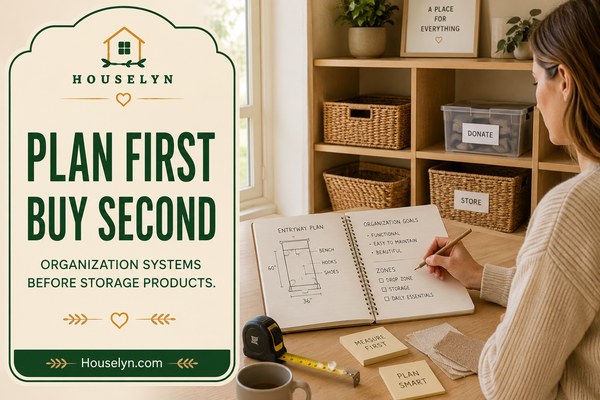
If you've ever bought a set of beautiful storage baskets, matching containers, or drawer organizers only to find your home becoming cluttered again a few months later, you're not alone. Many people assume that buying better storage products is the solution to home organization. In reality, products rarely solve organization problems on their own. They simply support the systems you create.
Think of organization as building a house. Storage products are the furniture, but organization systems are the foundation. No matter how attractive the furniture is, it cannot compensate for a weak foundation. Likewise, even the highest-quality storage products cannot create lasting organization without a clear system behind them.
An organization system is simply a repeatable way of managing your belongings. It answers important questions before any storage products are purchased:
- Where should this item live?
- How often is it used?
- Who uses it?
- How easy should it be to access?
- Does it belong with similar items?
- Can every family member return it to the same place?
When these questions are answered first, choosing storage products becomes much easier because every product has a clear purpose. Instead of buying containers and hoping they solve the problem, you select products that support an already well-designed system.
For example, imagine organizing a kitchen pantry. Buying matching containers before sorting your food often results in containers that are the wrong size, unnecessary duplicates, or storage that doesn't fit your family's shopping habits. A better approach is to first group foods into logical categories, identify what needs to be stored together, measure available shelf space, and decide how the pantry will function. Only then do you choose containers that fit those decisions.
The same principle applies throughout your home. In a bedroom, deciding how clothing should be organized comes before purchasing drawer dividers. In a bathroom, understanding your daily routine comes before buying countertop organizers. In a garage, identifying activity zones comes before installing shelving. Every successful organization project follows the same sequence: plan first, buy second.
Another advantage of building systems before buying products is flexibility. Families grow, children get older, hobbies change, and homes evolve over time. A good organization system can adapt to those changes without requiring you to replace every storage solution. Products become tools that support the system rather than the system itself.
Many professional organizers also recommend starting with decluttering before purchasing any storage products. Once unnecessary items have been removed, you'll have a much clearer understanding of how much storage you actually need. This often saves money because people discover they need fewer containers, fewer baskets, and fewer organizers than they originally expected.
Well-designed systems also reduce decision fatigue. When every item has a clearly defined home, putting things away becomes automatic rather than something you have to think about. This consistency is what allows organized homes to stay organized over the long term. Instead of relying on motivation, the system itself encourages good habits.
Ultimately, products should support your organization goals—not define them. A beautifully organized home is created by thoughtful planning, practical routines, and systems that reflect the way your household actually lives. Storage products simply make those systems easier to maintain.
PART II — PLAN
Before organizing a single drawer or buying a single storage container, taking time to create a simple plan can save hours of work later. Planning helps you understand your home's unique challenges, set realistic goals, and avoid common mistakes that often lead to frustration.
In this section, you'll learn how to assess your home, prioritize projects, and build an organization strategy that fits your lifestyle, budget, and available time. By planning first, you'll create systems that are easier to maintain and much more likely to succeed over the long term.
Planning Your Home Organization Journey
⚡ Houselyn Quick Win
Before buying any storage products, walk through your home with a notebook or your phone and write down the three areas that frustrate you most each day. Start with the one that will have the biggest impact on your daily routine. Solving your highest-priority problem first builds momentum and makes the rest of your organization journey feel much more manageable.
Successful home organization rarely happens by accident. Behind every organized home is a clear plan that takes into account how the household functions, what challenges need to be solved, and what realistic improvements can be made over time. Planning may seem like an extra step, but it often makes the difference between short-term results and long-lasting success.
One of the first decisions to make is whether you're organizing your entire home or focusing on one area at a time. While tackling everything at once may feel productive, it can quickly become overwhelming. Breaking your home into smaller projects allows you to complete one space before moving on to the next, building momentum and confidence along the way.
It's also important to understand how your family uses each room. A kitchen used by a large family has very different organization needs than one used by a single person. Children's bedrooms require flexible systems that can adapt as they grow, while home offices may need solutions that support both work and storage. The best organization plans are always designed around real routines rather than ideal scenarios.
As you assess each space, ask yourself a few simple questions:
- What activities happen in this room every day?
- Which items are used most often?
- Where does clutter usually accumulate?
- What causes frustration or wastes time?
- Which areas need immediate improvement?
These questions help identify the real problems that your organization systems need to solve.
Budget is another important consideration. Creating an organized home doesn't require buying everything at once. In many cases, you can make significant progress simply by decluttering, rearranging existing storage, and using containers you already own. Once you've identified genuine storage needs, you can gradually invest in products that support your long-term systems.
Time is equally important. Rather than setting aside an entire weekend to organize your whole home, consider scheduling shorter sessions of 30 to 60 minutes. Smaller, focused projects are often easier to complete and maintain, helping you avoid burnout while making steady progress.
Finally, remember that organization is a journey rather than a one-time event. As your family grows, your routines change, or your home evolves, your organization systems should evolve too. A flexible plan allows you to adapt without starting over, ensuring your home continues to meet your needs for years to come.
The next chapter will introduce the core principles that every successful organization system shares. These principles form the foundation for organizing every room in your home and will guide the decisions you make throughout the rest of this guide.
The Core Principles of an Organized Home
💡 Houselyn Tip
When creating a new organization system, ask yourself one simple question: "Could someone else in my household find this item and put it back without asking?" If the answer is yes, your system is probably simple enough to succeed over the long term.
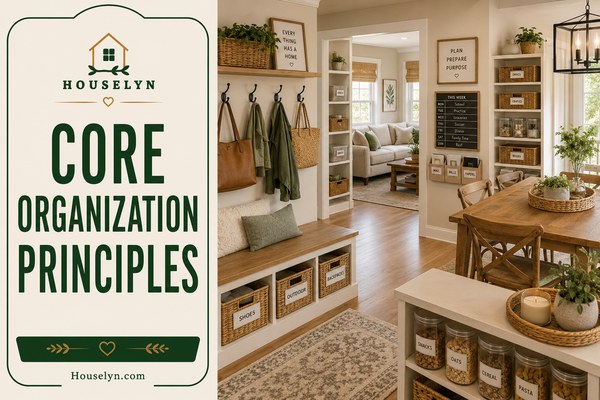
Every organized home may look different, but the systems behind them are built on the same core principles. These principles are what allow homes to stay functional long after the initial excitement of organizing has faded. Rather than relying on constant tidying, they create simple routines that make it easier to keep every room under control.
The first principle is that everything needs a home. Every item you own should have one clearly defined place where it belongs. When family members know exactly where to find something and where to return it, putting items away becomes a natural habit rather than another decision to make.
The second principle is to store items where they are used. Keeping frequently used items close to the place where they are needed reduces unnecessary movement around the home and makes daily routines more efficient. Cooking utensils belong near food preparation areas, cleaning supplies should be easy to access where they're used, and everyday essentials should always be within comfortable reach.
Another important principle is organizing by zones. Instead of thinking about an entire room, divide it into smaller activity areas. For example, a kitchen may include cooking, baking, coffee, food storage, and cleaning zones. A bedroom may have separate areas for clothing, accessories, reading, and personal care. Organizing by zones makes every space more intuitive and easier to maintain.
Visibility also plays an important role. When important items are easy to see, they're more likely to be used and returned to their proper place. Clear containers, open shelving where appropriate, and thoughtful labels can reduce frustration while making organization systems easier for everyone in the household to follow.
Accessibility is equally important. Frequently used items should require the least amount of effort to reach, while seasonal or rarely used belongings can be stored in higher shelves, deeper cabinets, or long-term storage areas. Designing your storage around frequency of use helps make everyday life more convenient.
Simplicity should always guide your decisions. Complicated organization systems often fail because they require too much effort to maintain. The best systems are easy to understand, quick to use, and realistic for every member of the household, including children.
Flexibility is another characteristic of successful organization. Homes change over time. Children grow, hobbies develop, work situations evolve, and family routines shift. Good organization systems allow for these changes without requiring a complete redesign every few months.
Finally, consistency is what turns organization into a habit. Returning items to the same place, following simple daily routines, and making small adjustments before clutter builds up are far more effective than waiting until the home feels overwhelming again.
Together, these principles create a strong foundation for organizing every room in your home. As you continue through this guide, you'll see how each room-specific strategy is built upon these same ideas, making your organization systems easier to understand, easier to maintain, and much more likely to succeed over the long term.
Continue Learning with These Houselyn Guides
Now that you understand the core principles of home organization, explore these detailed room-by-room guides to see how they can be applied throughout your home.
PART III — APPLY
Understanding the principles of organization is the foundation, but lasting results come from putting those principles into practice. Every room in your home serves a different purpose, faces different challenges, and requires organization systems that support the way it is used every day.
In this part of the guide, you'll see how the same core organization principles can be adapted to each major area of the home. Rather than treating every room as a separate project, you'll learn how to apply one consistent organization philosophy throughout your home. This approach creates systems that are easier to maintain, simpler for every member of the household to follow, and flexible enough to adapt as your lifestyle changes.
As you move through each room, focus on understanding the underlying system rather than copying a particular layout. The goal isn't to create a picture-perfect home—it's to create spaces that work efficiently for the people who live in them.
Organizing the Bedroom: Creating a Calm, Functional, and Restful Space
🏡 Houselyn Family Organization Insight
If more than one person shares a bedroom, assign each person clearly defined storage areas for clothing, accessories, and personal belongings. Shared spaces remain organized much more easily when every family member knows exactly what belongs to them and where it should be returned.
The bedroom should be one of the most peaceful spaces in your home. It's where you begin and end each day, making it one of the most important rooms to organize well. When clothing, accessories, paperwork, and everyday items compete for space, the room can quickly feel cluttered and overwhelming. A well-organized bedroom creates a calmer environment that supports better routines and makes daily life easier.
Start by thinking about how you use the room rather than simply where furniture is placed. Most bedrooms include several activity zones, such as sleeping, dressing, reading, and personal care. Identifying these zones makes it easier to decide where belongings should be stored and how frequently used items can remain easily accessible.
Clothing is often the largest source of bedroom clutter. Group similar items together, separate seasonal clothing where appropriate, and store frequently worn pieces where they are easiest to reach. Drawer dividers, wardrobe shelves, and under-bed storage can all support these systems once you've decided how you want your clothing organized.
Nightstands should only contain the items you use regularly before bed or immediately after waking. Keeping these surfaces simple makes the room feel more relaxing while ensuring essentials remain easy to find. Books, chargers, glasses, medications, and a bedside lamp are common examples, while unrelated items should be stored elsewhere.
Don't overlook hidden storage opportunities. The space beneath the bed, the backs of wardrobe doors, vertical wall space, and multi-functional furniture can all provide valuable storage without making the room feel crowded. These solutions are especially useful in smaller bedrooms where floor space is limited.
Maintaining an organized bedroom also means creating simple habits. Spending just a few minutes each morning making the bed, returning clothes to their proper place, and clearing bedside surfaces can prevent clutter from building throughout the week. Small daily routines are often far more effective than occasional large-scale reorganizing sessions.
Most importantly, your bedroom should support rest rather than distraction. If possible, avoid using it as a storage space for unrelated household items, paperwork, or unfinished projects. Keeping the room focused on relaxation and personal routines helps create a more comfortable environment while making organization easier to maintain over time.
As you continue through this guide, you'll notice that the same organization principles apply to every room in your home. The details change, but the foundation remains the same: create logical systems, store items where they're used, keep frequently used belongings accessible, and build habits that make organization part of everyday life.
Continue Your Organization Journey: Ready to take your bedroom organization even further? Explore our dedicated Bedroom Organization Ideas guide for detailed strategies, practical storage solutions, and room-specific inspiration.
Organizing the Kitchen: Creating an Efficient Space That Works Every Day
💡 Houselyn Tip
Store your most frequently used kitchen items between waist and shoulder height whenever possible. This "easy-reach zone" reduces unnecessary bending and stretching, making everyday cooking faster, safer, and more comfortable.
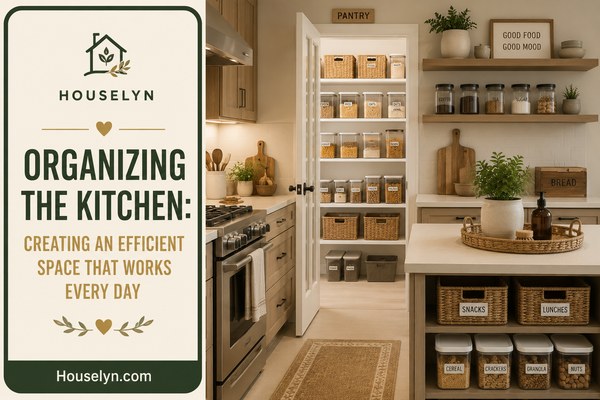
The kitchen is one of the busiest rooms in any home. From preparing meals and making drinks to storing groceries and cleaning up, it's a space that supports countless daily routines. When the kitchen is well organized, these routines become faster, easier, and far less stressful. The goal isn't to create a picture-perfect kitchen—it's to create one that works efficiently for the people who use it every day.
Begin by identifying your kitchen's main activity zones. Most kitchens naturally include areas for food preparation, cooking, baking, cleaning, food storage, and drinks. Keeping the items used for each activity within its respective zone reduces unnecessary movement and helps create a smoother workflow.
Accessibility is another key principle. Everyday cookware, utensils, and ingredients should be stored where they can be reached easily, while seasonal appliances and rarely used serving dishes can be placed in higher cabinets or long-term storage. This simple adjustment makes the kitchen feel more intuitive and reduces the time spent searching for frequently used items.
Cabinets and drawers should also have a clear purpose. Rather than storing unrelated items together, group similar products into logical categories. For example, dedicate one drawer to cooking utensils, another to food preparation tools, and another to baking equipment. The same approach applies to cupboards, where grouping similar foods and kitchenware creates a more functional storage system.
Countertops deserve special attention. While it can be tempting to keep many appliances within easy reach, overcrowded worktops reduce usable preparation space and make cleaning more difficult. Keeping only the items you use regularly on display creates a cleaner, more efficient workspace while helping the kitchen feel larger and less cluttered.
Pantries, whether large or small, benefit from the same organization principles. Group similar foods together, rotate older products to the front, and store frequently used ingredients at eye level. Simple labelling and clearly defined zones make it easier for every member of the household to find what they need and return items to the correct place.
Finally, remember that maintaining an organized kitchen is far easier than constantly reorganizing one. Spending a few minutes returning items to their proper places after each meal, wiping surfaces, and checking food supplies regularly prevents small messes from becoming larger organization challenges.
By applying these principles, your kitchen becomes a space that supports everyday life rather than slowing it down. The focus isn't on owning more organizers—it's on creating systems that make cooking, cleaning, and meal preparation feel more natural and efficient.
Recommended Kitchen Organization Essentials
If you're ready to put these kitchen organization principles into practice, these essentials can help you create efficient, easy-to-maintain storage systems.
These recommendations support the organization system you've just learned—they don't replace it.
📚 Continue Learning with Houselyn
You've learned how to create an efficient kitchen organization system built around workflow and activity zones. For detailed storage ideas, cabinet solutions, pantry layouts, and step-by-step kitchen organization projects, continue with our Kitchen Organization Ideas Guide.
Organizing the Pantry: Building a Storage System That Saves Time and Reduces Waste
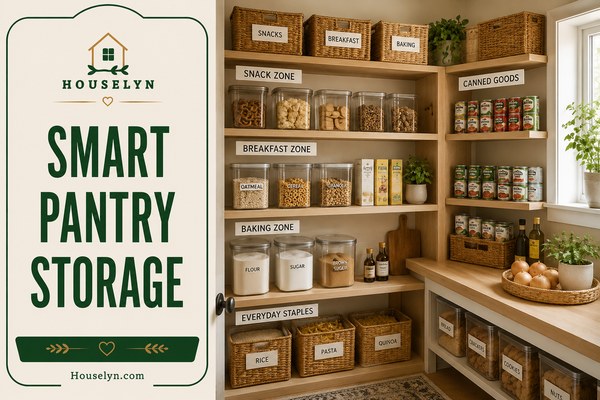
⚡ Houselyn Quick Win
Before reorganizing your pantry, remove everything and group similar foods together on your countertop. You'll quickly spot duplicate items, expired products, and opportunities to create logical storage zones before anything goes back on the shelves.
A well-organized pantry does much more than look tidy—it supports better meal planning, reduces food waste, simplifies grocery shopping, and makes everyday cooking far more efficient. Whether you have a dedicated walk-in pantry or a single kitchen cupboard, the same organization principles apply: create logical categories, keep frequently used items accessible, and design a system that's easy to maintain.
The first step is to think in terms of food categories rather than shelves. Group similar items together, such as breakfast foods, baking ingredients, canned goods, pasta, snacks, drinks, and cooking essentials. This simple approach makes it easier to find what you need while helping every member of the household return items to the correct place.
Next, organize according to frequency of use. Everyday staples should be stored at eye level where they're quick to access, while seasonal ingredients, bulk purchases, and rarely used items can be placed on higher or lower shelves. This keeps your most important ingredients within easy reach and improves the overall flow of your kitchen.
Visibility is another key principle. Clear storage containers, simple labels, and consistent shelving arrangements allow you to see what you have at a glance. This reduces duplicate purchases, helps you use older ingredients first, and makes it easier to identify when supplies need replenishing.
It's equally important to leave room for flexibility. Grocery shopping habits change, new products are introduced, and family preferences evolve over time. A pantry organization system should adapt easily without requiring a complete reorganization every few months. Adjustable shelves, modular containers, and clearly defined categories all contribute to a system that grows with your household.
Regular maintenance keeps your pantry functioning well. A quick weekly check for expired products, low supplies, or misplaced items prevents clutter from building up and ensures your organization system continues to support your daily routine.
Remember that the goal isn't to create a pantry that looks perfect in photographs. The goal is to create one that makes preparing meals easier, reduces waste, and helps your household operate more efficiently every day. When the system works well, maintaining it becomes a simple habit rather than a major project.
Houselyn Recommended Pantry Storage Essentials
Once you've planned your pantry layout and created clear food categories, these products can help you build a practical system that's easy to maintain.
Choose products that support your pantry system—not products that create the system for you.
📚 Continue Learning with Houselyn
This chapter explained the pantry organization framework. If you'd like detailed container ideas, shelf layouts, labeling systems, and pantry makeovers, explore our complete Pantry Organization Ideas Guide.
Organizing the Bathroom: Creating a Clean, Functional, and Easy-to-Maintain Space
🏡 Houselyn Expert Insight
The most organised bathrooms are designed around daily routines rather than product collections. When storage reflects how you actually get ready each morning and evening, maintaining an organised bathroom becomes almost effortless.
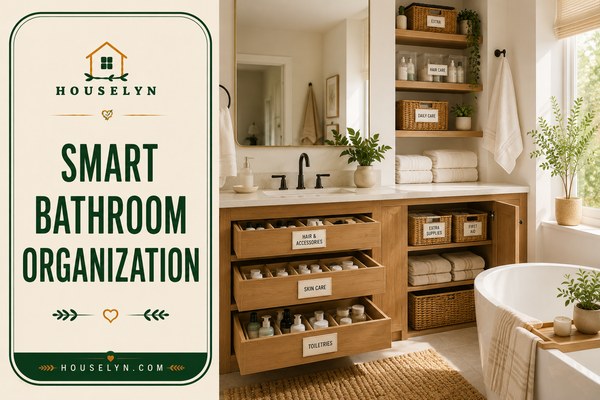
The bathroom is one of the smallest rooms in most homes, yet it often stores a surprisingly wide variety of everyday essentials. Toiletries, skincare products, medications, cleaning supplies, towels, and personal care items all compete for limited storage space. Without a clear system, cabinets become overcrowded, countertops fill with products, and finding what you need quickly becomes frustrating.
The first step in organizing any bathroom is understanding how the space is used. Morning routines, evening routines, personal care, cleaning, and guest use all place different demands on the room. By identifying these activities first, you can create storage zones that naturally support the way your household uses the bathroom every day.
Group similar items together before deciding where they should be stored. Daily essentials such as toothbrushes, toothpaste, facial cleansers, and skincare products should remain easy to reach, while backup supplies and less frequently used items can be stored in cabinets or higher shelves. Separating products by category makes routines faster while helping every family member know exactly where items belong.
Making the best use of vertical space is especially important in smaller bathrooms. Shelving above the toilet, cabinet door organizers, stackable storage, and drawer dividers can all increase storage capacity without making the room feel crowded. The goal is not to add more furniture but to use existing space more effectively.
Countertops deserve careful attention. A clear countertop immediately makes the bathroom feel cleaner, larger, and easier to maintain. Keep only the products you use every day within easy reach and store everything else in clearly organised cabinets or drawers. This simple habit reduces visual clutter while making daily cleaning quicker and more efficient.
Bathrooms also require regular maintenance because products are constantly being replaced and replenished. Taking a few minutes each month to remove empty bottles, dispose of expired medications where appropriate, and reorganize frequently used items prevents small problems from becoming larger ones.
Finally, remember that bathroom organization should prioritise hygiene as well as convenience. Keeping cleaning products separate from personal care items, storing medicines safely, and protecting products from excessive moisture all contribute to a healthier, better-organized space.
Like every room in your home, an organised bathroom isn't defined by expensive organisers. It is defined by simple systems that make everyday routines easier, support the people who use the space, and remain easy to maintain over time.
Continue Your Organization Journey: For more detailed bathroom storage ideas, space-saving solutions, and organization inspiration, visit our dedicated Bathroom Organization Ideas guide.
Organizing Closets & Wardrobes: Creating a System That Makes Getting Dressed Easier
💡 Houselyn Tip
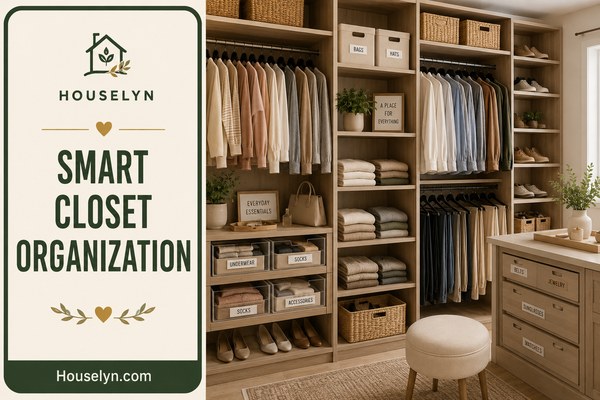
Arrange hanging clothes from light to dark or by clothing category. A consistent visual order makes it easier to find what you need, notice gaps in your wardrobe, and keep your closet organised with minimal effort.
Your closet is more than a place to store clothes—it's one of the most frequently used storage spaces in your home. A well-organized wardrobe saves time every morning, protects your clothing, reduces decision fatigue, and makes it easier to see and enjoy what you already own. Rather than trying to fit more into the available space, the goal is to create a storage system that supports your daily routine.
The first step is to organize clothing into clear categories. Separate everyday wear, work clothing, formal outfits, seasonal items, accessories, shoes, and specialty garments. Grouping similar items together makes your wardrobe easier to navigate while helping you identify duplicates, unused clothing, and storage opportunities.
Next, arrange clothing according to how often it is worn. Frequently used items should occupy the most accessible hanging space and drawers, while seasonal clothing, occasion wear, and rarely used pieces can be stored on higher shelves or in longer-term storage. This simple adjustment improves efficiency and keeps your everyday essentials within easy reach.
Vertical space is often underused in wardrobes. Additional shelves, hanging organizers, storage boxes, and stackable containers can significantly increase storage capacity without making the closet feel crowded. Rather than filling every available space, aim to leave enough room for clothing to breathe and remain easy to access.
Accessories deserve dedicated storage too. Belts, scarves, handbags, jewellery, hats, and small personal items should each have clearly defined homes. Using simple dividers, hooks, or small storage boxes prevents these items from becoming tangled or lost while making daily outfit selection much easier.
A successful wardrobe system also changes with the seasons. Rotating clothing at the beginning of each season keeps your current wardrobe uncluttered while protecting off-season garments from unnecessary wear. This habit also provides an excellent opportunity to review what you actually wear and identify items that no longer serve your lifestyle.
Most importantly, remember that an organized closet should support your lifestyle—not someone else's. Your wardrobe should reflect how you dress, work, and live. A simple system that you can maintain consistently will always outperform an elaborate setup that's difficult to keep organised.
When your closet is designed around your everyday routine, getting dressed becomes quicker, maintaining order requires less effort, and your wardrobe becomes a practical part of your home rather than another source of clutter.
Houselyn Recommended Closet Organization Essentials
After creating a clear wardrobe system, these carefully selected essentials can help you maximise your storage space and keep your closet organised every day.
- Slim Velvet Clothes Hangers
- Adjustable Drawer Dividers
- Hanging Closet Organizers
- Stackable Shoe Storage Boxes
These recommendations are designed to support the wardrobe system you've created, helping you maintain an organised closet more easily over time.
Continue Your Organization Journey: Want to maximize your wardrobe even further? Explore our Closet Organization Ideas guide for step-by-step strategies, space-saving solutions, and practical ideas for every type of closet.
Organizing Living Areas: Creating Comfortable, Functional Spaces for Everyday Life
🏡 Houselyn Family Organization Insight
Create a simple "reset routine" that the whole family follows each evening. Spending just five to ten minutes returning everyday items to their designated homes can prevent clutter from building up and keeps shared living spaces welcoming every day.
Living areas are the heart of most homes. Whether you're relaxing with family, entertaining guests, watching television, reading, or simply spending time together, these shared spaces support many different activities throughout the day. Because they serve so many purposes, they can also become some of the easiest places for clutter to accumulate.
Successful living room organization begins by identifying how the space is actually used. Rather than trying to copy a showroom layout, think about your household's daily routines. Do you enjoy family movie nights? Do children play in the room? Is it also used as a reading area, home workspace, or entertainment space? Understanding these activities helps you design storage systems that reflect real life rather than unrealistic expectations.
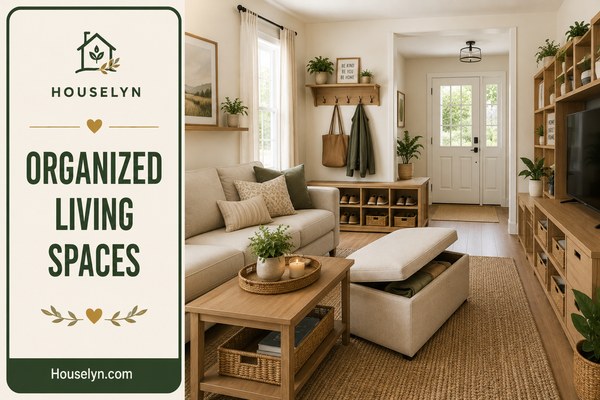
Once you've identified the room's main functions, divide it into practical activity zones. For example, one area may be dedicated to relaxation, another to entertainment, another to children's activities, and another to reading or hobbies. Giving each activity its own clearly defined space reduces clutter while making it easier for everyone to return items to where they belong.
Hidden storage can make a significant difference in living areas. Coffee tables with storage compartments, television units with cabinets, decorative baskets, storage ottomans, and shelving with closed cupboards all provide practical ways to keep everyday items close at hand without making the room feel crowded.
Surface management is another important principle. Coffee tables, side tables, and media units often become collection points for remote controls, magazines, charging cables, toys, and everyday belongings. Creating simple homes for these frequently used items helps keep shared spaces tidy while making them easier to maintain.
Entryways deserve special attention because they create the first impression of your home while serving as the transition between indoors and outdoors. Shoes, coats, bags, umbrellas, keys, and mail all need clearly defined storage solutions. Even a small entryway can become far more functional with hooks, benches, baskets, and a simple drop zone for everyday essentials.
Shared spaces work best when organization systems are easy for everyone to understand. If family members have to think about where something belongs, the system is probably too complicated. The most successful homes use simple, intuitive storage that encourages good habits without requiring constant reminders.
Finally, remember that living areas are designed to be lived in. It's perfectly normal for these spaces to become temporarily untidy during busy days. The goal isn't to eliminate activity—it's to create simple systems that allow the room to return to order quickly and with minimal effort. When organization supports everyday living instead of restricting it, shared spaces become more enjoyable for everyone.
📚 Continue Learning with Houselyn
You've learned the principles of organizing shared living spaces by creating activity zones, managing everyday clutter, and designing systems the whole family can follow.
Want to take your living spaces even further?
- ✓ Create clutter-free living room layouts.
- ✓ Discover stylish storage ideas that blend with your décor.
- ✓ Organize entryways for busy family life.
- ✓ Build practical systems that are easy for everyone to maintain.
Continue with our Living Room Organization Ideas Guide for detailed room layouts, storage inspiration, and step-by-step organization strategies.
Organizing Utility Spaces: Building Efficient Systems Behind the Scenes
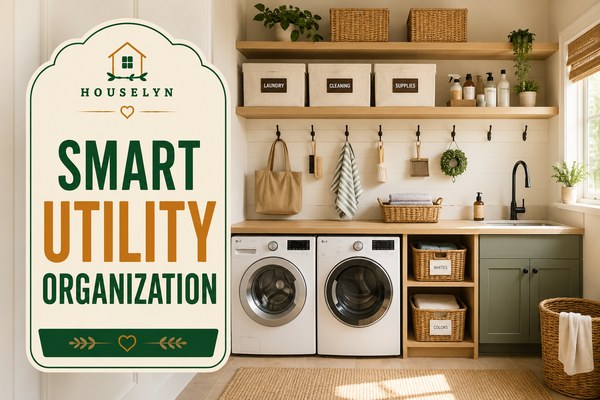
⚡ Houselyn Quick Win
Choose one wall in your laundry room, garage, or utility area and install vertical storage such as hooks, shelving, or a pegboard. Using wall space instead of floor space is one of the fastest ways to create more storage without making the room feel cramped.
Utility spaces may not be the most visible areas of your home, but they often have the biggest impact on how smoothly your household runs. Laundry rooms, mudrooms, utility cupboards, and garages support everyday routines by storing cleaning supplies, seasonal items, tools, pet accessories, sports equipment, and household essentials. When these spaces are well organized, they reduce stress, save time, and make it easier to manage the demands of daily life.
The first step is to identify the primary purpose of each utility space. A laundry room should support washing, drying, folding, and storing laundry supplies. A mudroom should provide a practical transition between outdoors and indoors. A garage may need dedicated zones for tools, gardening equipment, bicycles, or seasonal storage. By defining each space's purpose, you can build organization systems that reflect how it is actually used.
Creating activity zones is just as important here as it is in the rest of the home. Group similar items together so that cleaning products, laundry supplies, outdoor equipment, pet items, and DIY tools each have their own clearly defined area. This reduces clutter and makes everyday tasks much more efficient.
Vertical storage is especially valuable in utility spaces. Wall-mounted shelving, pegboards, storage hooks, overhead racks, and stackable storage bins help maximize available space while keeping floors clear and safe. Using the full height of the room often creates far more storage than simply adding extra cabinets.
Labeling also becomes increasingly important in shared utility areas. Clear labels make it easy for every member of the household to find what they need and return it to the correct place. This is particularly useful for seasonal decorations, cleaning supplies, and rarely used equipment that might otherwise become disorganized over time.
Safety should always remain a priority. Cleaning products, chemicals, sharp tools, and hazardous materials should be stored securely and out of reach of young children or pets where appropriate. Building safety into your organization system is just as important as creating efficient storage.
Finally, remember that utility spaces exist to support the rest of your home. When they function well, everyday routines such as laundry, cleaning, gardening, home maintenance, and seasonal storage become simpler and more manageable. Investing a little time in organizing these often-overlooked areas can make a noticeable difference throughout your entire home.
Houselyn Recommended Utility Organization Essentials
Once you've planned practical storage zones, these essentials can help you keep utility spaces safe, efficient, and easy to maintain.
- Wall-Mounted Storage Hooks
- Heavy-Duty Shelving Units
- Stackable Storage Bins
- Pegboard Storage Systems
Choose products that complement your organization system and make everyday household tasks easier to manage.
📚 Continue Learning with Houselyn
You've learned how to organize utility spaces by creating activity zones, maximizing vertical storage, and building systems that support everyday household routines.
Ready to organize these hardworking spaces in greater detail?
- ✓ Create an efficient laundry room workflow.
- ✓ Organize garages without wasting space.
- ✓ Design practical mudrooms and entry systems.
- ✓ Build storage solutions that are easy to maintain year-round.
Continue with our Laundry Room Organization Ideas Guide for step-by-step strategies, storage inspiration, and practical solutions.
Houselyn Phase Reflection
You have now learned how to apply the Houselyn organization framework across the major areas of your home, from bedrooms and kitchens to bathrooms, closets, living areas, and hardworking utility spaces. The next phase focuses on refining these systems so they become easier to maintain, adapt, and improve over time.
PART IV — OPTIMISE
Creating organization systems is only the beginning. The real challenge is maintaining those systems as your routines change, your family grows, and your home evolves over time.
In this part of the guide, you'll learn how to choose storage solutions that genuinely improve your organization systems, build simple maintenance habits that prevent clutter from returning, avoid common mistakes that undermine long-term success, and bring every room together into one complete home organization strategy.
Rather than constantly reorganizing your home, you'll discover how small adjustments, thoughtful storage choices, and consistent routines can keep your home functioning efficiently for years to come.
Storage Solutions That Actually Work
🏡 Houselyn Expert Insight
The best storage product is the one you almost stop noticing. When an organizer fits naturally into your daily routine, using it becomes effortless—and that's when lasting organization begins.
Storage products are often marketed as the answer to every organization problem, but even the best organizers can't replace a well-designed system. The most effective storage solutions are the ones that support your daily routines, make belongings easier to access, and simplify the process of putting things away. When chosen thoughtfully, they become valuable tools rather than temporary fixes.
Before buying any storage product, ask yourself whether it solves a specific problem. Does it improve accessibility? Does it make better use of available space? Does it help every member of the household maintain the system more easily? If the answer is no, it may simply add more complexity rather than improving organization.
The best storage solutions share several important characteristics. They are appropriately sized for the space, easy to clean, durable enough for everyday use, and flexible enough to adapt as your storage needs change. Modular systems, stackable containers, adjustable shelving, and labelled storage are excellent examples because they can evolve with your household over time.
Visibility also matters. In many areas of the home, clear containers and open storage make it easier to find items quickly and reduce duplicate purchases. In other spaces, concealed storage helps reduce visual clutter and creates a calmer environment. Choosing between visible and hidden storage should always depend on the function of the room rather than following a single design trend.
Quality is another consideration. Investing in a smaller number of well-made storage products often provides better long-term value than filling your home with inexpensive organizers that wear out quickly or no longer meet your needs. Focus on products that genuinely improve the way your home functions instead of simply increasing the amount of storage you own.
Perhaps the most important principle is to buy storage intentionally. Every product should have a clear role within your organization system before it enters your home. This simple mindset helps prevent unnecessary purchases while ensuring every storage solution contributes to a more efficient, easier-to-maintain living space.
When storage products are selected to support thoughtfully designed systems, they become powerful tools that simplify everyday life rather than adding to the clutter they were meant to solve.
🏡 Houselyn Complete Home Organization Essentials
You've now learned the complete Houselyn organization framework. If you're ready to build these systems throughout your home, these carefully selected essentials can help you put every principle into practice.
- Airtight Food Storage Containers
- Drawer Organizers
- Clear Storage Bins
- Stackable Storage Bins
- Label Maker
- Lazy Susan Turntables
- Slim Velvet Hangers
- Under-Sink Organizers
- Wall Storage Hooks
- Heavy-Duty Shelving Units
Every recommendation supports the organization principles you've learned throughout this guide, helping you build practical systems that are easier to maintain for years to come.
Maintaining an Organized Home: Simple Habits That Prevent Clutter from Returning
🏡 Houselyn Family Organization Insight
The easiest homes to maintain are those where every family member shares responsibility. Create simple age-appropriate routines for everyone in the household so organization becomes a shared habit rather than one person's ongoing task.
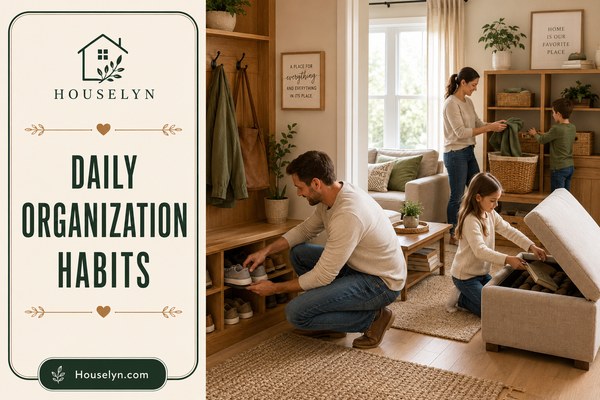


Creating an organized home is a significant achievement, but maintaining it is what delivers lasting results. Even the best organization systems require small, consistent habits to keep them functioning effectively. The good news is that maintaining an organized home is usually much easier than organizing it for the first time.
One of the most effective habits is returning items to their designated homes immediately after use. Whether it's putting shoes back in the entryway, returning spices to the pantry, hanging coats in the closet, or placing remote controls in their storage basket, these small actions prevent clutter from building throughout the day.
Daily reset routines are another powerful strategy. Spending just five to ten minutes each evening restoring your home's main living areas can dramatically reduce the amount of time needed for larger organization sessions later. Rather than waiting until clutter becomes overwhelming, small daily resets keep every room functioning smoothly.
Weekly maintenance is equally valuable. Setting aside a short period each week to tidy drawers, restock frequently used supplies, recycle unwanted paperwork, and return misplaced items helps your organization systems continue working as intended. These regular check-ins also allow you to identify small issues before they become larger problems.
It's important to remember that organization systems should evolve with your lifestyle. Children grow, hobbies change, work routines shift, and family needs develop over time. Review your storage systems periodically and make small adjustments whenever they no longer reflect how your household actually lives. Flexible systems remain effective because they adapt rather than becoming outdated.
Another helpful habit is adopting a "one-minute rule." If a task takes less than a minute to complete—such as hanging up a jacket, putting away a pair of shoes, or returning a book to the shelf—do it immediately instead of postponing it. These tiny actions prevent clutter from accumulating while reinforcing positive habits.
Seasonal reviews also play an important role in long-term organization. At the beginning of each season, evaluate clothing, decorations, outdoor equipment, and household supplies to determine what should remain easily accessible and what can be stored away. These regular transitions keep storage spaces efficient and prevent unnecessary overcrowding.
Most importantly, avoid expecting perfection. Every home experiences busy periods, unexpected events, and temporary messes. A successful organization system is not one that remains flawless every day—it's one that allows your home to return to order quickly and without unnecessary stress.
Ultimately, maintaining an organized home is about consistency rather than intensity. Small habits practiced regularly will always have a greater long-term impact than occasional large-scale organization projects. By making organization part of your everyday routine, you create a home that continues to support your lifestyle year after year.
Common Home Organization Mistakes and How to Avoid Them
💡 Houselyn Tip
Whenever an organization system stops working, resist the urge to buy another storage product straight away. Instead, ask yourself "What part of the system is failing?" Fixing the process is almost always more effective than adding more storage.
Even with the best intentions, many organization projects fall short because of a few common mistakes. Fortunately, these pitfalls are easy to avoid once you understand why they happen. Recognizing them before you begin—or identifying them in your current systems—can save both time and money while helping you build organization methods that last.
One of the most common mistakes is organizing before decluttering. It's tempting to buy containers and start arranging items immediately, but storing things you no longer need simply creates more organized clutter. Taking time to reduce unnecessary belongings first makes every later decision easier and often reduces the amount of storage you actually require.
Another frequent mistake is buying storage products before creating a plan. As you've learned throughout this guide, products should support an organization system rather than define it. Purchasing containers without understanding your storage needs often leads to wasted money, duplicate organizers, and solutions that don't fit your home or lifestyle.
Many people also create systems that are too complicated. If putting something away requires multiple steps, the system is unlikely to be maintained over time. The most effective organization systems are simple, intuitive, and easy for everyone in the household to follow.
Ignoring everyday routines is another common problem. A beautifully organized space may look impressive, but if it doesn't support how you actually live, clutter will quickly return. Always design storage around real habits rather than ideal ones. A system that fits your lifestyle will always outperform one that only looks attractive.
Trying to organize an entire home in one weekend is another mistake that often leads to frustration. Large projects can become overwhelming, making it difficult to maintain momentum. Breaking organization into manageable stages allows you to complete one space successfully before moving on to the next, building confidence along the way.
Many households overlook the importance of maintenance. Even the best systems need occasional adjustments as routines, seasons, and family needs change. Spending a few minutes each week maintaining your organization is far easier than starting from scratch several months later.
Finally, avoid comparing your home to perfectly styled images online. Every household has different priorities, storage needs, and daily routines. The purpose of organization is to create a home that works for you—not to recreate someone else's version of perfection. Focus on progress rather than perfection, and allow your systems to evolve naturally over time.
By avoiding these common mistakes, you'll build organization systems that are practical, sustainable, and much easier to maintain. The goal isn't to create flawless spaces—it's to create a home that supports your everyday life with less stress and greater efficiency.
PART V — MASTER
You've now explored every stage of creating an organized home. You've learned the principles behind successful organization, developed a practical plan, applied those ideas throughout the major areas of your home, and discovered how to maintain systems that continue working over time.
The final step is bringing everything together into one complete framework. Rather than thinking about each room as a separate project, you'll learn how to connect every organization system so your entire home functions as one cohesive environment. This is the foundation of the Houselyn Home Organization Blueprint—a practical, repeatable approach that can adapt as your lifestyle, family, and home continue to evolve.
Mastering home organization isn't about achieving perfection. It's about creating simple systems that work together, support your daily routines, and remain flexible enough to grow with you. In this final chapter, you'll see how every principle you've learned fits into one complete strategy for building a home that's easier to manage, more enjoyable to live in, and designed to stay organized for years to come.
The Houselyn Home Organization Blueprint
Every successful organization system you've explored throughout this guide can be traced back to one simple idea: organize your home as a connected system rather than a collection of individual rooms. When each area of your home follows the same practical principles, maintaining organization becomes far easier because every room supports the next.
The Houselyn Home Organization Blueprint brings together everything you've learned into one repeatable framework that can be applied to any home, regardless of its size, layout, or budget. Whether you're organizing a single room or your entire house, these five steps provide a practical roadmap for creating systems that continue working as your life evolves.
Step 1: Understand Your Home
Begin by observing how your household actually functions. Pay attention to your daily routines, where clutter naturally accumulates, which items are used most often, and which spaces create frustration. Every successful organization project starts by understanding how your home supports—or fails to support—the people who live in it.
Step 2: Plan with Purpose
Rather than organizing everything at once, divide your home into manageable projects and identify the goals for each space. Define activity zones, decide where items naturally belong, and create simple systems before purchasing any storage products. A thoughtful plan reduces unnecessary work and leads to better long-term results.
Step 3: Build Practical Systems
Create organization systems that are simple, intuitive, and easy for everyone in the household to follow. Store items close to where they are used, group similar belongings together, maximize accessible storage, and avoid unnecessary complexity. Your goal is to build habits—not just tidy rooms.
Step 4: Support the System
Once your organization framework is in place, choose storage products that strengthen it rather than define it. Every container, shelf, basket, label, or organizer should have a clear purpose within the system you've already created. Buy intentionally and focus on quality over quantity.
Step 5: Maintain and Improve
Organization is never truly finished. Review your systems regularly, adjust them as your lifestyle changes, and continue practicing small daily and weekly habits that keep clutter from returning. Simple improvements made consistently will always outperform occasional large-scale reorganizing sessions.
These five steps form the foundation of every Houselyn organization guide. Whether you're organizing a pantry, refreshing a bedroom, decluttering a living room, or creating better storage throughout your home, the same blueprint can be adapted to fit your needs. By following this framework, you'll spend less time managing clutter and more time enjoying a home that supports your everyday life.
Most importantly, remember that organization is not about creating a perfect home—it is about creating a home that works for you. Your systems should reflect your routines, support your family, and remain flexible enough to grow as your life changes. When organization becomes part of how your home functions rather than a task you constantly repeat, you've achieved the true goal of the Houselyn Home Organization Blueprint.
Conclusion: Your Journey to a More Organized Home Starts Today
Creating an organized home isn't about chasing perfection or buying the latest storage products. It's about building practical systems that make everyday life simpler, reduce unnecessary stress, and help your home support the people who live in it.
Throughout this guide, you've learned that successful organization begins with understanding how your home functions, planning with purpose, creating simple systems, choosing storage solutions that support those systems, and maintaining them through consistent daily habits. Together, these principles form the Houselyn Home Organization Blueprint—a practical framework you can apply to every room in your home, regardless of its size or layout.
Remember that lasting organization doesn't happen overnight. Every drawer you organize, every storage zone you create, and every small habit you build is another step toward a home that works better for your lifestyle. Progress is always more valuable than perfection, and even small improvements can make a meaningful difference to your daily routines.
As your family grows, your routines change, and your home evolves, your organization systems should evolve too. Review them regularly, make thoughtful adjustments when needed, and continue focusing on solutions that make everyday life easier rather than more complicated.
Most importantly, don't feel that you need to organize everything at once. Choose one room, one cupboard, or even one drawer, apply the principles you've learned, and build momentum one project at a time. Small, consistent actions create lasting results.
Thank you for trusting Houselyn to be part of your home organization journey. We hope this guide becomes a resource you return to whenever you're planning a new project, refreshing an existing space, or helping someone else create a more organized home.
Your journey doesn't end here—it's only just beginning.
Frequently Asked Questions About Home Organization
What is the best way to start organizing a home?
What is the best way to start organizing a home?
The best place to start is by understanding how your home functions every day. Identify the areas that create the most frustration, then organize one space at a time rather than trying to tackle the entire house at once. Building simple, practical systems gradually is far more effective than attempting a complete home makeover in a single weekend.
Should I declutter before buying storage products?
Should I declutter before buying storage products?
Yes. Decluttering should always come first. Removing items you no longer need helps you understand how much storage you actually require and prevents you from buying organizers for belongings that won't remain in your home.
How long does it take to organize an entire home?
How long does it take to organize an entire home?
The answer depends on the size of your home, the amount of clutter, and the time you can dedicate each week. Most successful projects are completed gradually over several weeks or months. Focusing on one room or one small project at a time produces more sustainable results than rushing through the entire home.
How do I keep my home organized after I've finished?
How do I keep my home organized after I've finished?
Maintenance is the key to long-term success. Returning items to their designated homes, completing short daily reset routines, and reviewing your organization systems regularly help prevent clutter from returning. Small, consistent habits are much easier to maintain than occasional large-scale organization projects.
What if I live in a small apartment?
What if I live in a small apartment?
The same organization principles apply regardless of the size of your home. Prioritize multi-functional furniture, maximize vertical storage, create clearly defined activity zones, and avoid keeping unnecessary belongings. Well-designed systems often make small homes feel significantly larger and more functional.
Do I need expensive storage products?
Do I need expensive storage products?
No. Effective organization is built on systems, not spending. Many homes can be significantly improved by decluttering, reorganizing existing storage, and using affordable solutions. Invest in quality storage products only when they support a clearly planned organization system.
How often should I reorganize my home?
How often should I reorganize my home?
A well-designed organization system should require only small adjustments rather than complete reorganizations. Daily habits, weekly maintenance, and seasonal reviews are usually enough to keep your home functioning efficiently. Major reorganizations should only be necessary when your lifestyle or household needs change significantly.
What is the Houselyn Home Organization Blueprint?
What is the Houselyn Home Organization Blueprint?
The Houselyn Home Organization Blueprint is Houselyn's five-step framework for creating practical organization systems that last. It teaches you to understand your home, plan with purpose, build practical systems, support those systems with the right storage solutions, and maintain them through simple, consistent habits. The blueprint can be applied to every room in your home, creating a connected organization system rather than treating each space as a separate project.
🏡 Explore the Houselyn Home Organization Library
Your organization journey doesn't stop with one guide. Explore our growing collection of expert resources to organize every room, simplify everyday routines, and create a home that stays functional, beautiful, and clutter-free.🛏 Bedroom Organization
Create a calmer, clutter-free bedroom with practical storage systems, wardrobe organization, and everyday routines.
🍽 Kitchen Organization
Improve your kitchen workflow with smart storage ideas, organized cabinets, and efficient cooking zones.
🥫 Pantry Organization
Build an organized pantry with clear categories, practical storage solutions, and easy-to-maintain systems.
🚿 Bathroom Organization
Maximize storage, simplify routines, and keep your bathroom organized with practical everyday solutions.
👕 Closet Organization
Create an efficient wardrobe with better clothing storage, seasonal organization, and space-saving ideas.
🧺 Laundry Room Organization
Organize your laundry room to make washing, folding, and storage easier every day.
Continue building a home that's easier to manage, more enjoyable to live in, and designed to support your everyday life.
The Houselyn Home Organization Blueprint is just the beginning.
Have A Great Story About This Topic?
Do you have a great story about this? Share it!