High Impact Low Cost Upgrades That Make Your Home Look Better
Houselyn Budget Decorating Guide
High impact low cost upgrades can make a room feel noticeably better without replacing
everything, especially when you focus on the details that affect how the space looks,
works and feels every day. Small changes to lighting, hardware, textiles, walls or
storage can sometimes create more improvement than buying another decorative accessory.
The most effective low cost home upgrades do not begin with a shopping list. They begin
with a specific weakness. A tired lampshade, awkward cabinet handle, poor curtain
placement, weak wall display or cluttered surface can make the room feel unfinished even
when most of the furniture is still working well.
Disclosure: Houselyn may earn a commission from qualifying purchases
made through selected affiliate links in this article, at no additional cost to you.
A room can improve significantly when one or two weak details are corrected instead of
replacing furniture that is still working well.
Upgrade the Weakness, Not the Whole Room
Small Home Upgrades Work Best When They Solve a Clear Problem
A low-cost upgrade should improve something you can actually see, use or feel. That may
mean better lighting, smoother storage, more suitable hardware, stronger wall scale or
fresher textiles. The aim is not to change everything at once.
Visual Impact
Prioritize details that are easy to notice from the doorway or across the room.
Everyday Function
Improve the features you touch, open, use or manage repeatedly.
Correct Proportion
A better-sized lampshade, frame, curtain or fitting can make existing pieces look
more intentional.
Better Finish
Small visible details such as worn hardware or damaged finishes can affect the
whole room.
Controlled Cost
Measure compatibility and total expense before a small project grows into a larger
one.
Clear Finish Line
Reassess after the upgrade instead of automatically moving to another purchase.
High impact low cost upgrades are especially useful when a room is fundamentally sound
but one or two visible details are dragging it down. If the sofa is comfortable, the
cabinet is sturdy and the layout works, replacing those pieces may not be the best use
of the budget.
Instead, look for the element that creates the strongest friction. Perhaps the room is
too harsh at night because it relies on one ceiling light. Maybe useful cabinetry feels
dated because the handles are worn. A blank wall may need stronger scale rather than
more furniture. Curtains may need better proportion rather than replacement windows.
The best low cost home upgrades are selective. They improve the weak detail while
protecting the parts of the room that already work.
Chapter 1 — Priority
Start High Impact Low Cost Upgrades With the Most Visible Problem
High impact low cost upgrades work best when you begin with the part of the room that
creates the strongest visual or practical weakness. Instead of improving several small
details at once, identify the one issue that makes the room feel less finished, less
comfortable or harder to use.
Low cost home upgrades become more effective when you diagnose before you buy. A room
may feel dated because the lighting is harsh, not because the furniture is old. A
cabinet may look tired because the hardware is worn, not because the whole piece needs
replacing.
Start with the weakness that has the greatest effect on how the room looks or works,
then decide whether a small upgrade can correct it.
The doorway gives you a useful first impression of the room. Notice which element draws
attention for the wrong reason. It may be an undersized lamp, worn curtain, awkward wall
arrangement, visible clutter or an outdated cabinet detail.
High impact low cost upgrades should usually address something you can see or experience
repeatedly rather than a minor detail hidden from normal view.
Take a Photograph Before You Decide
A photograph can make problems easier to spot because it flattens the room into one
composition. Look for areas that feel visually heavy, empty, poorly lit or disconnected.
Low cost home upgrades are easier to prioritize when you judge the whole room rather
than focusing only on the object directly in front of you.
Separate Cosmetic Problems From Functional Problems
A cosmetic problem affects appearance but not use. A functional problem makes the room
awkward, inconvenient or frustrating. Both may deserve attention, but function should
usually take priority when it interferes with everyday use.
For example, a drawer that is difficult to open may deserve attention before a purely
decorative accessory. Likewise, poor task lighting may matter more than another piece
of wall decor.
Prioritize Upgrades That Affect More Than One Thing
Some changes improve several parts of the room at once. Better lighting can improve
colour, texture and comfort. A useful hook can improve access and reduce clutter. Better
curtains can affect privacy, softness and visual height.
High impact low cost upgrades become especially valuable when one small change solves
more than one problem.
Do Not Upgrade Something Just Because It Is Old
Age alone is not a reason to replace or alter an item. A solid cabinet, useful lamp or
older table may still work perfectly. Focus on the part that genuinely needs attention
rather than assuming the whole item is outdated.
Estimate the Total Cost Before Starting
A small project can become expensive once fixings, delivery, tools or additional
materials are included. Check the whole cost before deciding that an upgrade is
genuinely low cost.
Low cost home upgrades should remain controlled from beginning to end, not simply appear
inexpensive at the first purchase.
Once the highest-priority weakness is clear, lighting is one of the first places to
check because it can change how several existing surfaces and materials look at the same
time.
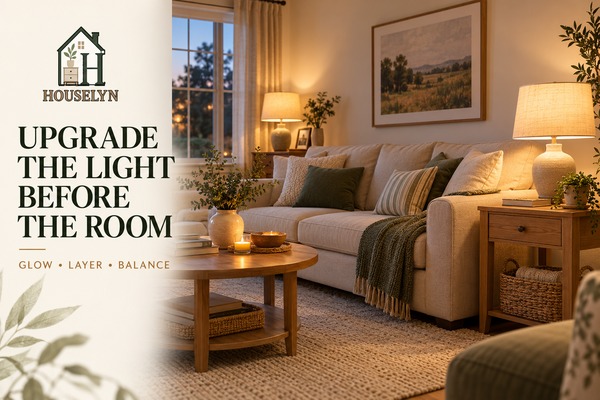
Upgrade Lighting Before Replacing More Expensive Decor
High impact low cost upgrades often begin with lighting because one small change can
affect the appearance of walls, furniture, textiles and finishes at the same time.
Before replacing several decorative items, check whether poor light is making the room
feel flatter, harsher or darker than it needs to.
Low cost home upgrades do not always require new fittings. Repositioning an existing
lamp, changing a tired shade or using a suitable bulb can sometimes improve the room
enough to postpone a larger purchase.
Better lighting can improve several surfaces at once, making it one of the strongest
places to test a small upgrade first.
Change a Tired Lampshade Before Replacing the Lamp
If the lamp base is stable, functional and suitable for the room, a new shade may be all
it needs. Check the attachment type, proportions and safe compatibility before buying.
High impact low cost upgrades work best when you preserve the part that still functions
and change only the visible weakness.
Check the Bulb Before Blaming the Room
A bulb that is too harsh, too dim or poorly suited to the room can affect how colours
and materials appear. Use compatible bulbs that meet the fitting manufacturer's
requirements for cap, wattage and dimming.
Move Existing Lamps Before Buying Another One
A lamp may be useful but simply placed in the wrong location. Test whether moving it to
a darker corner, side table or reading position improves the balance before adding more
lighting.
Avoid Turning a Lighting Upgrade Into a Larger Project
If a lampshade or bulb solves the problem, stop there. There is no need to replace every
lamp in the room simply because one improvement worked.
Low cost home upgrades stay affordable when the project has a clear finish line.
Use Lighting to Improve What You Already Own
Softer or better-positioned light can make wood grain, wall colour, cushions and artwork
look more balanced. That broader effect is why lighting can produce more impact than a
similarly priced decorative object.
Once the lighting is working better, smaller fixed details become easier to judge.
Hardware is the next useful category because worn handles and hooks can date otherwise
solid furniture.
Chapter 3 — Hardware
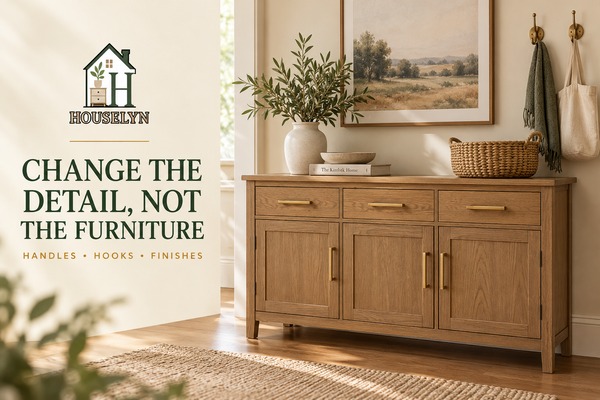
Replace Small Hardware When the Existing Details Date the Room
High impact low cost upgrades can be surprisingly small. Cabinet handles, drawer
pulls and simple hooks are touched frequently and sit in highly visible positions, so
worn or poorly matched hardware can make sound furniture feel more dated than it
really is.
Low cost home upgrades work best when hardware is changed for a clear reason. If the
existing handle is loose, uncomfortable, damaged or visually distracting, replacing it
may improve both appearance and everyday use without changing the cabinet or furniture
itself.
Replacing a small worn detail can make useful furniture feel more finished without
turning the change into a larger replacement project.
Replacing handles is easiest when the new hardware uses the existing fixing points.
Measure the distance between screw holes carefully before ordering so a simple update
does not turn into drilling, filling and refinishing work.
High impact low cost upgrades stay controlled when the replacement fits what is already
there.
Check Scale Against the Furniture
A handle that is too small can disappear on a broad drawer, while an oversized pull can
dominate a compact cabinet. Choose hardware that feels proportionate to the door or
drawer front.
Use a Consistent Finish Without Matching Everything
Hardware does not need to match every metal in the room exactly, but repeating a finish
or keeping metals visually related can create more cohesion. Avoid introducing several
competing finishes in a small area without a reason.
Do Not Replace Hardware Just Because a Trend Changes
If the existing handles work well and suit the furniture, a new finish may not create
enough improvement to justify the cost. Small upgrades should solve a visible or
functional weakness, not create a cycle of unnecessary replacement.
Keep Installation Part of the Budget
Extra screws, drilling, filling old holes or repairing damaged surfaces can change the
real cost of a hardware project. Check what the installation requires before deciding
that the change is genuinely inexpensive.
After hardware, the next useful place to look is the wall. A targeted paint correction,
better-scaled artwork or improved hanging position can change a large visual area
without repainting or redecorating the entire room.
Use Targeted Wall Upgrades Instead of Repainting Everything
High impact low cost upgrades can change a large part of the room without requiring a
full repaint. A marked section, weak focal wall, undersized art arrangement or poor
hanging position may be the real problem, so start with the smallest wall change that
can correct it.
Low cost home upgrades work better when the wall problem is identified accurately.
Repainting an entire room will not fix artwork that is too small, and adding more decor
will not solve damaged paint that simply needs proper preparation and repair.
Target the actual wall weakness first: condition, colour, scale or placement may each
require a different solution.
Marks, chips and poorly repaired holes can make a wall feel tired even when the colour
itself still works. Where appropriate, repair and prepare the affected area properly
before assuming the whole room needs repainting.
High impact low cost upgrades should correct the visible weakness without automatically
expanding the project.
Use a Focal Paint Change Only When It Has a Job
A single wall can sometimes benefit from a different colour, but the change should
support the room rather than exist only because accent walls are fashionable. Consider
whether it helps define a zone, strengthen a focal point or connect an existing palette.
Check Art Scale Before Adding More Pieces
A weak wall display is often a scale problem rather than a quantity problem. One larger
frame or a tighter grouping may create more impact than several additional small pieces.
Improve Hanging Position Before Buying New Art
Artwork can feel wrong because it is too high, too isolated or poorly related to the
furniture below. Adjusting the position may create a stronger result without changing
the artwork itself.
Low cost home upgrades are often strongest when placement solves the problem for free.
Keep Wall Projects Proportionate to the Problem
If one wall needs attention, resist automatically extending the project across every
surface. Compare the result after the targeted change and decide whether the original
weakness has already been solved.
Once the walls feel more balanced, soft furnishings are another high-impact category.
Curtains, cushion covers and throws can refresh large visible areas without replacing
the furniture beneath them.
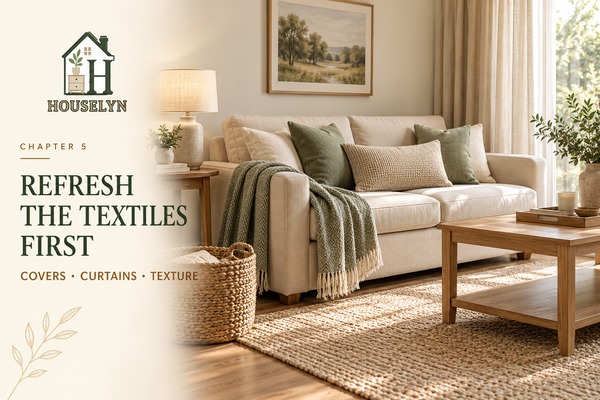
High impact low cost upgrades often work through soft furnishings because curtains,
cushion covers and throws occupy enough visual area to influence the room without the
cost of replacing sofas, chairs or beds.
Low cost home upgrades become especially useful when the underlying furniture remains
comfortable and structurally sound. If the main problem is tired colour, weak texture or
disconnected fabric, change the visible layer first.
Updating visible textiles can refresh a large part of the room while protecting
furniture that still works well.
If existing cushion inserts remain comfortable and hold their shape, new covers can
change colour and texture without replacing the whole cushion. Measure the inserts before
ordering so the new covers fit properly.
High impact low cost upgrades work best when the usable component is preserved and only
the weak layer is changed.
Use Curtains to Improve a Larger Visual Area
Curtains affect both the window and the vertical proportion around it. If existing
panels are too short, visually heavy or poorly connected to the room, replacing them may
create more impact than several smaller accessories.
Add Texture With a Controlled Throw
A throw can introduce softness, colour or texture without covering most of the furniture.
Choose one that supports the existing palette and remains practical for everyday use.
Replace Worn Textiles, Not Simply Older Ones
An older curtain or cushion cover does not automatically need replacing. If the fabric
still works with the room and remains in good condition, keep it. Direct the budget
toward pieces that are genuinely worn, badly fitted or visually disruptive.
Keep the Palette Connected
A textile upgrade should relate to something already in the room. Repeat an existing
tone from artwork, a rug, wood or upholstery instead of adding a completely unrelated
colour simply because the item is inexpensive.
Use Texture Before Adding More Pattern
Texture can add depth without making the room busier. Woven, ribbed or softly brushed
finishes often create enough interest without introducing another strong print.
With the fourth Recommended Essentials block now complete, product recommendations are
closed for this page. The next chapter moves from appearance to function: small upgrades
that reduce everyday friction and make the room easier to use.
Chapter 6 — Function
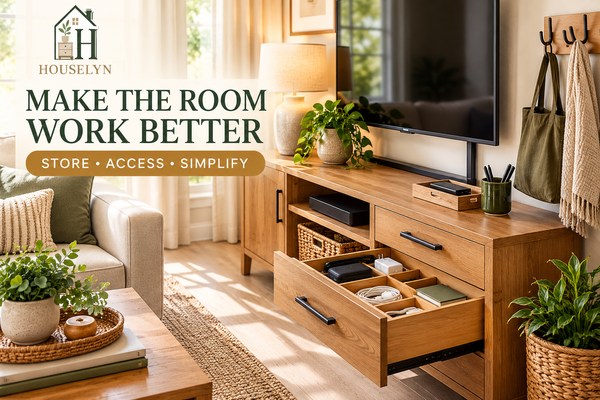
Choose Low-Cost Upgrades That Make the Room Easier to Use
High impact low cost upgrades do not have to be decorative. Some of the best small
changes remove everyday friction by making storage easier to reach, reducing cable
clutter, improving access or replacing one awkward detail that repeatedly gets in the
way.
Low cost home upgrades are especially worthwhile when they solve a problem you deal with
every day. A drawer that is difficult to organize, a surface that constantly collects
loose items or a cable route that looks messy can make an otherwise attractive room feel
less finished.
Small functional upgrades can make a room easier to use while also reducing the
everyday clutter that weakens its appearance.
If the same surface becomes cluttered every day, identify why. The room may need one
tray, drawer divider, hook or small storage zone rather than another decorative object.
High impact low cost upgrades create more value when they reduce a problem that would
otherwise return repeatedly.
Improve Cable Control Without Hiding Ventilation
Loose charging cables and power leads can make a room feel visually unfinished. Route
them neatly where possible, keep electrical connections accessible and avoid covering
devices or adapters in ways that interfere with ventilation.
Use Drawer Organization Only Where It Solves a Real Problem
Drawer dividers or small trays can improve access when loose items constantly move
around. Measure the drawer first and organize what actually belongs there before buying
an insert.
Add Hooks Where They Replace a Bad Habit
A well-positioned hook can stop bags, towels or other suitable items from landing on
chairs, handles or the floor. Use suitable fixings for the wall and expected load.
Replace Small Broken Items Before They Create Larger Problems
A damaged hook, loose drawer stop, worn felt pad or other small component can affect
everyday use more than its size suggests. When the repair is straightforward and safe,
dealing with it early may protect the furniture or surface around it.
Keep Functional Upgrades Visually Quiet
Organization products do not need to dominate the room. Choose simple forms and
finishes that support the space instead of turning storage into another layer of visual
clutter.
Functional improvements are useful only when they stay proportionate to the problem.
The final chapter looks at false economy—when a cheap upgrade becomes a poor investment
because the item really needs repair, replacement or no change at all.
Improve Function Without Overcomplicating the Room
High impact low cost upgrades only save money when the change is appropriate for the
condition of the item. A cheap fix can become a false economy if it hides damage,
requires repeated replacement or adds new costs without solving the underlying
problem.
Low cost home upgrades should improve something that is fundamentally sound. If a piece
of furniture, fitting or surface is damaged beyond a reasonable repair, spending money
on cosmetic details may delay the decision rather than improve the result.
A low-cost upgrade is worthwhile only when it improves something that is still sound,
useful and worth keeping.
Repeatedly buying the lowest-cost version of the same item can become more expensive
than choosing a better-quality replacement once. If a component fails quickly, review
the material, fit and expected use before buying it again.
Do Not Use Cosmetic Upgrades to Hide Structural Problems
New handles, paint or fabric cannot correct unstable furniture, damaged electrical
fittings, serious moisture problems or other underlying defects. Cosmetic work should
never be used to disguise a problem that needs proper repair or professional attention.
Check Compatibility Before Spending
A replacement may look inexpensive until you discover that it requires extra tools,
adapters, fixings or repair work. Measure first, check specifications and include the
full installation cost in the decision.
High impact low cost upgrades stay valuable when the new part fits the existing room or
item without creating a chain of additional purchases.
Watch for Hidden Costs
Delivery charges, specialist fixings, paint preparation, replacement screws, electrical
compatibility and tool purchases can all alter the real cost of a small project. Add
them before deciding whether the change still qualifies as inexpensive.
Avoid Over-Upgrading Low-Priority Areas
A utility cupboard, rarely used corner or hidden surface may not deserve the same budget
as a highly visible, frequently used area. Spend where the improvement will be seen or
felt most often.
Know When to Stop
One successful improvement can create the urge to continue. That is where the final
step in the Houselyn framework matters: Stop.
Compare the room with the original problem. If the space now looks better, works better
or feels more balanced, the upgrade has done its job.
The full Houselyn approach is simple: spot the real weakness, measure before buying,
make the smallest effective upgrade, compare the result and stop when the room is
working better.
High Impact Low Cost Upgrades: 12 Common Questions Answered
High impact low cost upgrades are most effective when they solve one clear visual or
functional problem without creating a larger project. These common questions can help
you decide what to change, what to keep and when to stop.
1. What are high impact low cost upgrades?
They are small, controlled improvements that noticeably affect how a room looks or
works without requiring major replacement or renovation. Examples include improving
lighting, replacing worn hardware, refreshing textiles, correcting wall scale or
fixing small functional problems.
2. Which cheap home upgrades usually make the biggest difference?
Lighting, curtains, visible hardware, wall treatment and repeated functional
problems often create strong results because they affect large visual areas or
everyday use. The best choice depends on the weakest part of your room.
3. What should I upgrade first in a room?
Start with the problem you notice most often. Look at the room from the doorway and
identify the detail that feels most visually distracting, inconvenient or
unfinished before buying anything.
4. Is lighting worth upgrading on a small budget?
Yes, especially when the room feels too dark, harsh or flat. A better lampshade,
compatible bulb or improved lamp placement can influence the appearance of walls,
furniture and textiles at the same time.
5. Are new cabinet handles worth it?
They can be when the cabinet itself is sound but the existing hardware is worn,
loose or visually distracting. Measure hole spacing and check screw length before
purchasing so the change stays simple.
6. Can small wall upgrades really change a room?
Yes. A wall occupies a large part of the visual field, so correcting damaged paint,
improving art scale or changing picture placement can have more impact than adding
several smaller decorative objects.
7. Should I replace curtains before furniture?
If the furniture is comfortable and structurally sound, curtains may be the better
first move. Because they cover a large vertical area, properly sized panels can
change the room's softness, proportion and overall finish.
8. What low-cost upgrades improve functionality?
Useful examples include cable control, drawer organization, practical hooks, small
repair parts and better access to frequently used items. The strongest functional
upgrade removes a problem that keeps returning.
9. How do I avoid wasting money on small upgrades?
Measure first, check compatibility, calculate the full cost and make sure the
proposed change solves a real problem. Avoid buying a cheap item simply because it
is inexpensive.
10. When should I repair instead of upgrade?
Repair first when the underlying problem affects function, stability or safety.
Cosmetic improvements should not be used to hide damage that needs proper
attention.
11. When is replacement better than upgrading?
Replacement may be better when the existing item is structurally unsound, repeatedly
fails, no longer serves the room or would cost nearly as much to improve as a
suitable replacement.
12. How much should I spend on a small home upgrade?
There is no single correct amount. Set a spending limit based on the value of the
improvement, how often you use the area and whether the upgrade prevents a larger
replacement. The total cost should remain proportionate to the problem being solved.
The 5-Step Low-Cost Upgrade Action Plan
High impact low cost upgrades are easier to control when you work through one room and
one problem at a time. Use this five-step process before turning a small improvement
into a larger decorating project.
1
Identify the Weakest Visible or Functional Detail
Stand at the doorway, look at the room as a whole and identify the problem that
catches your attention most often. It may be poor lighting, worn hardware,
awkward curtains, weak wall scale or repeated clutter.
2
Measure and Check Compatibility
Measure dimensions, fixing points, bulb types, curtain lengths or other relevant
details before buying. Confirm that the proposed upgrade fits what you already
own and will not require unnecessary additional work.
3
Set a Strict Spending Limit
Include delivery, tools, fixings and preparation in the budget. A low-cost project
should remain inexpensive after the full cost is counted, not only at the first
purchase.
4
Upgrade Only the Problem Element
Preserve the furniture, fitting or surface that is still working well. Change the
lampshade instead of the whole lamp, the handle instead of the cabinet, or the
curtain panel instead of redesigning the entire room.
5
Compare the Result Before Doing Anything Else
Step back and judge the room after the upgrade. If the original problem has been
solved, stop. Do not automatically move on to another purchase simply because the
first improvement worked.
High Impact Low Cost Upgrades Work Best When They Solve a Real Problem
High impact low cost upgrades do not depend on changing the entire room. They work
because they identify one visible or functional weakness and improve that detail
without disturbing everything that is already working well.
Better lighting may be enough to improve the way existing furniture and colours look.
New hardware can refresh sound cabinetry. Better-scaled wall art can solve a large
visual gap. Curtains and cushion covers can change the room without replacing major
furniture, while small functional upgrades can remove the everyday friction that
repeatedly creates clutter.
The important part is restraint. Low cost home upgrades stop being good value when a
small improvement grows into a chain of unnecessary purchases. That is why the final
decision should always be based on the original problem rather than the excitement of
continuing the project.
The Houselyn Low-Cost Upgrade Framework
Spot → Measure → Upgrade → Compare → Stop
Spot the weakness that matters most. Measure before buying so the new part fits what is
already there. Upgrade only the problem element. Compare the result with the original
room. Then stop when the change has done enough.
This approach protects the budget while helping each purchase earn its place. Instead of
replacing a room piece by piece, you improve the details that have the strongest effect
on appearance, comfort and everyday use.
If the answers are clear, the upgrade is more likely to add real value. If several
answers are uncertain, reconsider the purchase before committing more money.
A home does not need constant replacement to feel better. Often the stronger decision
is to keep what is useful, improve what is weak and leave the rest alone.
Continue Learning
Keep building a home that looks better without overspending by exploring the broader
Houselyn guides below.
The Houselyn Editorial Team creates practical home styling, interior and organization
guides designed to help readers make thoughtful decisions about the way their homes
look, function and feel.
Our approach focuses on realistic rooms, sensible budgets and improvements that
support everyday living rather than encouraging unnecessary replacement.
Discover practical budget decorating ideas for improving your home with better priorities, affordable upgrades, thrifted finds, wall decor and smarter styling.