- Home
- Storage Ideas
- Toy Storage Ideas
27 Toy Storage Ideas to Organize Playrooms, Bedrooms, and Family Spaces
Discover practical toy storage ideas that help organize playrooms, kids’ bedrooms, living rooms, and family spaces while making cleanup easier for everyone.
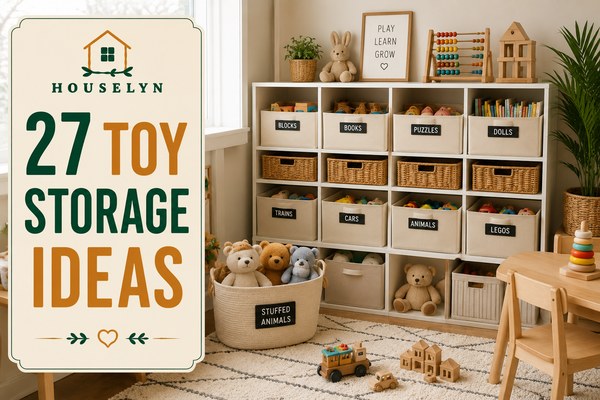 Beautiful toy storage system featuring organized bins, baskets, shelves, labels, and clutter-free family playroom organization.
Toy storage ideas can completely change how a family home feels, especially when toys seem to spread from one room to another throughout the day.
Unlike many other household items, toys are used actively, moved constantly, and often shared across bedrooms, playrooms, living rooms, and family spaces. This means toy organization needs to be easy for adults to maintain and simple enough for children to follow.
The goal is not to hide every toy or create a perfect showroom-style home. The goal is to build storage systems that make play easier, cleanup faster, and family spaces calmer.
With the right toy storage system, children can see what they own, choose toys more easily, and learn where items belong after playtime. Parents also benefit because toys become less likely to pile up on floors, sofas, tables, and walkways.
Whether you are organizing a dedicated playroom, a small bedroom, a living room toy corner, or a shared family space, these toy storage ideas will help you create a practical system that works for real daily life.
WHY TOY STORAGE MATTERS
Toy storage matters because toys are part of everyday family life.
A good toy storage system can help:
- Reduce floor clutter
- Make cleanup faster
- Help children find toys independently
- Protect toys from damage
- Create calmer shared spaces
- Make playrooms easier to reset
- Reduce overwhelm for both parents and children
The best toy storage ideas are not just about adding more bins. They are about creating simple categories, child-friendly access, and realistic cleanup routines that match how your family actually uses the space.
Affiliate Disclosure: This page may contain affiliate links. If you purchase through these links, Houselyn may earn a commission at no additional cost to you. As an Amazon Associate, Houselyn may earn from qualifying purchases.
1. Use Cube Storage for Everyday Toys
Cube storage systems remain one of the most versatile toy storage ideas for family homes.
The individual compartments make it easy to separate different types of toys while keeping everything visible and accessible.
Cube organizers work well for:
- Building blocks
- Toy vehicles
- Dolls
- Action figures
- Books
- Arts and crafts supplies
Adding baskets inside the cubes creates an even cleaner appearance while helping children learn where items belong.
2. Create Toy Categories
One of the fastest ways to reduce toy clutter is to sort toys into categories.
Instead of storing everything together, create simple groups such as:
- Building toys
- Pretend play toys
- Educational toys
- Puzzles
- Stuffed animals
- Arts and crafts
Categories help children find what they want more easily and make cleanup far less overwhelming.
A child who knows where toys belong is more likely to help put them away.
3. Use Labeled Baskets
Labels remove guesswork from toy organization.
Even young children can begin recognizing storage categories when baskets are clearly identified.
Labels can be:
- Word labels
- Picture labels
- Color-coded labels
- Combination labels
Labeled baskets work particularly well in playrooms, bedrooms, and shared family spaces.
4. Store Favorite Toys at Child Height
Children are more likely to play independently when they can reach their favorite toys without assistance.
Place frequently used toys:
- On lower shelves
- In accessible baskets
- Inside open storage bins
- Within easy reach
Less frequently used items can be stored on higher shelves.
This approach creates a more child-friendly and functional storage system.
5. Create a Daily Toy Rotation Bin
Many families discover that children play better when fewer toys are available at one time.
A daily toy rotation bin can contain:
- Favorite toys
- Current interests
- Seasonal activities
- Age-appropriate learning toys
Rotating toys regularly keeps playtime interesting while reducing overall clutter.
This is one of the most effective toy storage ideas for preventing toy overwhelm.
🏡 Houselyn Observation
Many playrooms become cluttered not because families own too many toys, but because toys have never been grouped into clear categories. Categories are often more important than additional storage products.
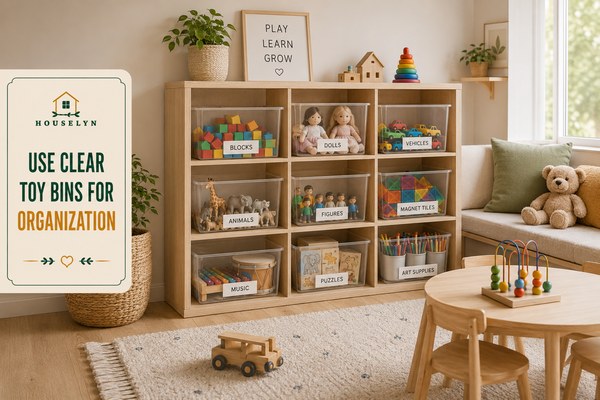
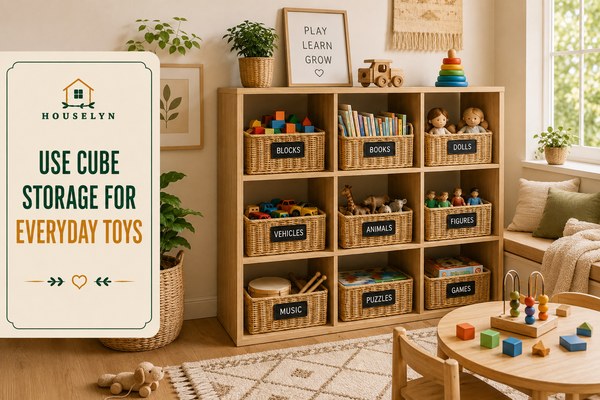 Beautiful playroom featuring cube toy storage, labeled baskets, organized toys, and clutter-free family organization.
More Houselyn Organization Guides
Continue organizing your home with these helpful Houselyn resources:
6. Use Rolling Toy Carts
Rolling carts provide flexible storage that can move wherever play is happening.
They work especially well for:
- Arts and crafts supplies
- Building toys
- Coloring materials
- Educational activities
Benefits include:
- Easy mobility
- Flexible storage
- Quick cleanup
- Better organization
A rolling cart allows children to bring activities to different areas of the home and return everything when finished.
7. Create a Dedicated LEGO Storage System
LEGO collections often become one of the biggest toy organization challenges.
Without a storage system, pieces quickly spread across floors, tables, and furniture.
Consider using:
- Divided containers
- Stackable drawers
- Labeled bins
- Sorting trays
A dedicated LEGO storage area helps protect sets, reduce lost pieces, and make building more enjoyable.
8. Store Books Separately from Toys
Books and toys serve different purposes and are often easier to manage when stored separately.
A dedicated book storage area may include:
- Front-facing bookshelves
- Book baskets
- Reading nooks
- Wall-mounted book ledges
Separating books from toys helps children find reading materials more easily while reducing clutter in toy storage areas.
9. Use Clear Toy Bins
Clear storage bins make it easier for both parents and children to see what is stored inside.
Benefits include:
- Faster cleanup
- Better visibility
- Easier toy retrieval
- Reduced duplicate purchases
Clear bins are especially useful for small toys that can easily become mixed together.
10. Create a Cleanup Basket for Quick Resets
Every family benefits from having a designated cleanup basket.
A cleanup basket provides a temporary location for toys that are out of place when a room needs to be reset quickly.
This can be useful when:
- Guests are arriving
- Family activities are starting
- The living room needs a quick cleanup
- Toys have spread into multiple rooms
Later, toys can be returned to their proper storage categories.
This simple system helps families maintain organization without requiring a full cleanup every time.
⚡ Quick Win
Choose one toy category today and give it a permanent storage location. Even organizing a single category can dramatically improve the overall appearance and function of a play space.
Recommended Amazon Finds: Toy Storage Essentials
These toy storage products help reduce clutter while making organization easier for both parents and children.
11. Use Wall Shelves for Display Toys
Not every toy needs to be hidden inside a bin or basket.
Wall shelves can provide attractive storage for:
- Collectible toys
- Wooden toys
- Display pieces
- Favorite toy sets
- Decorative children's items
Displaying a small selection of toys can add personality to a room while reducing pressure on floor-based storage systems.
Limiting display toys also helps prevent shelves from becoming cluttered.
12. Create a Stuffed Animal Storage Zone
Stuffed animals often become one of the most challenging toy categories to organize.
Without a designated storage area, they quickly take over beds, chairs, shelves, and floors.
Storage options include:
- Large baskets
- Hanging organizers
- Toy hammocks
- Storage bins
- Dedicated cubbies
Keeping stuffed animals together creates a cleaner appearance and makes them easier for children to access.
13. Use Toy Storage Benches
Toy storage benches provide a combination of seating and hidden storage.
They work particularly well in:
- Playrooms
- Bedrooms
- Living rooms
- Family rooms
Benefits include:
- Reduced visible clutter
- Extra seating
- Quick cleanup
- Efficient use of space
This is one of the most versatile toy storage ideas for family homes.
14. Organize Arts and Crafts Supplies Separately
Arts and crafts materials often require different storage solutions than traditional toys.
Keeping supplies separate helps prevent:
- Lost materials
- Mixed categories
- Messy storage bins
- Difficult cleanup sessions
Consider creating dedicated storage for:
- Markers
- Crayons
- Paint supplies
- Construction paper
- Stickers
- Craft tools
A dedicated arts-and-crafts area encourages creativity while maintaining organization.
15. Create a Toy Checkout System for Shared Spaces
In homes where toys are stored in multiple rooms, a simple checkout system can help maintain organization.
The concept is straightforward:
- Children select toys from a storage area.
- Toys are used in another room.
- Toys are returned before new toys are taken out.
This system helps reduce toy migration throughout the home and makes cleanup easier.
It is particularly useful in homes where playrooms, bedrooms, and living rooms all share toy storage responsibilities.
🏡 Houselyn Insight
Children are often more successful at cleaning up when storage categories are simple. Five clear toy categories usually work better than fifteen complicated ones.
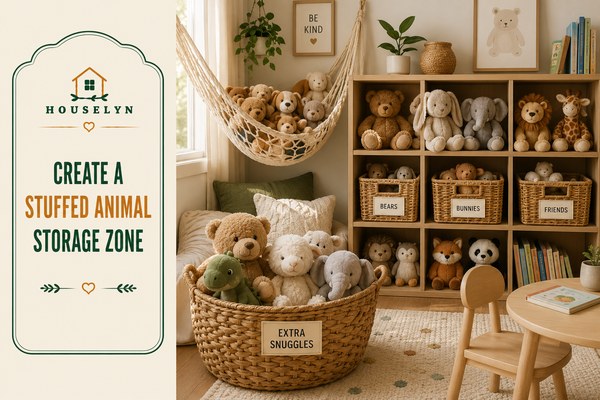 Beautiful toy storage system featuring organized stuffed animals, baskets, shelves, and clutter-free playroom organization.
More Family Organization Ideas
Explore these additional Houselyn organization guides:
16. Use Rolling Under-Bed Toy Storage
The space beneath a child's bed can provide valuable toy storage without taking up additional floor space.
Rolling under-bed containers work well for:
- Building toys
- Puzzles
- Board games
- Seasonal toys
- Larger play sets
Because the containers slide in and out easily, children can access toys independently while keeping bedrooms organized.
This solution is especially useful in smaller bedrooms where storage space is limited.
17. Create a Puzzle Storage Station
Puzzles often become difficult to manage because boxes can stack poorly and pieces can easily go missing.
A dedicated puzzle storage station helps keep everything together.
Consider using:
- Vertical puzzle racks
- Labeled bins
- Magazine holders
- Shallow storage drawers
Keeping puzzles in one location makes them easier to find and helps preserve complete sets.
18. Store Outdoor Toys Separately
Outdoor toys require different storage solutions than indoor toys.
Mixing the two categories often creates unnecessary clutter.
Examples of outdoor toys include:
- Sports equipment
- Sidewalk chalk
- Bubbles
- Water toys
- Garden play items
Keeping these items in a garage, mudroom, shed, or dedicated outdoor storage area helps maintain indoor organization.
19. Use Picture Labels for Younger Children
Children who cannot yet read can still participate in cleanup routines.
Picture labels help younger children quickly identify where toys belong.
Picture labels work well for:
- Building blocks
- Dolls
- Vehicles
- Stuffed animals
- Arts and crafts supplies
This simple visual system encourages independence and improves cleanup success.
20. Create a Family Cleanup Routine
Storage systems are much more effective when paired with simple daily habits.
A family cleanup routine might include:
- Five-minute evening reset
- Toy pickup before meals
- End-of-day room check
- Weekend organization sessions
Regular routines help prevent toy clutter from becoming overwhelming.
Consistency is often more important than having the perfect storage products.
🚫 Common Mistake
Many families create storage systems that are designed for adults rather than children. If children cannot easily reach storage containers or understand categories, maintaining organization becomes much more difficult.
Recommended Amazon Finds: Family Toy Organization Solutions
These products help create child-friendly toy storage systems that are easy to maintain.
21. Create a Homework and Toy Zone
Many families use the same room for both learning and play.
Creating a combined homework and toy zone helps keep activities organized while reducing distractions.
A successful zone may include:
- Homework supplies
- Educational toys
- Reading materials
- Storage bins
- Small shelving units
Keeping learning materials and toys organized within the same area helps children transition more easily between activities.
22. Use Vertical Storage in Playrooms
When floor space begins to disappear, vertical storage can dramatically increase capacity.
Examples include:
- Wall shelves
- Hanging organizers
- Pegboards
- Mounted storage bins
Vertical storage keeps toys accessible while preserving valuable floor space for active play.
This is particularly helpful in smaller playrooms where open floor space is important.
23. Create a Toy Library System
A toy library system encourages children to focus on a smaller number of toys at one time.
The concept is simple:
- Most toys remain stored.
- A limited selection is available for play.
- Toys are rotated regularly.
Benefits include:
- Reduced clutter
- Increased engagement
- Easier cleanup
- Less toy overwhelm
Many parents discover that children play longer and more creatively when fewer toys are available at once.
24. Organize Board Games Separately
Board games often become damaged when mixed with other toys.
A dedicated board game storage area can help protect boxes and make games easier to find.
Storage options include:
- Bookshelves
- Vertical game racks
- Storage cabinets
- Labeled shelving
Keeping games together also makes family game nights easier to organize.
25. Store Seasonal Toys in Rotation
Some toys are used heavily during specific times of the year.
Examples include:
- Holiday toys
- Summer outdoor toys
- Water toys
- Seasonal activity kits
Rotating these items helps reduce clutter while keeping storage areas focused on current needs.
This approach also makes older toys feel new and exciting when they return.
26. Create a Donation Bin for Outgrown Toys
Children's interests change constantly.
Keeping a donation bin nearby makes it easier to remove:
- Broken toys
- Duplicate toys
- Outgrown items
- Unused toys
A regular donation habit prevents toy collections from growing beyond manageable levels.
This is one of the simplest ways to maintain long-term organization.
27. Build a Long-Term Toy Organization System
The best toy storage ideas are not temporary solutions.
A successful long-term system should include:
- Clear categories
- Child-friendly storage
- Easy cleanup routines
- Toy rotation
- Regular decluttering
The goal is not perfection.
The goal is creating a storage system that supports play while remaining practical for everyday family life.
✓ Pro Organizer Tip
Professional organizers often recommend limiting the number of toy categories visible at one time. Fewer visible choices can make cleanup easier and reduce overwhelm for children.
Recommended Amazon Finds: Advanced Toy Storage Solutions
These storage products help create organized, family-friendly play spaces.
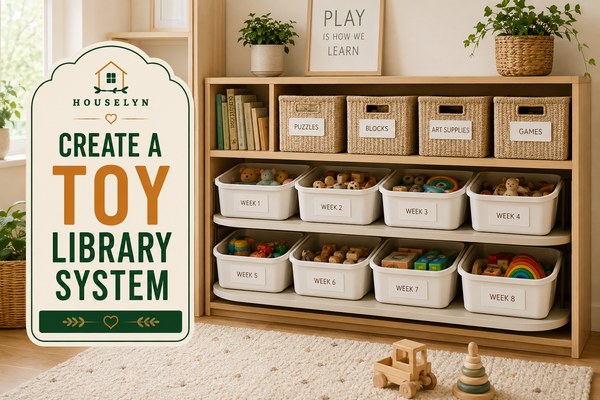 Beautiful organized playroom featuring a toy library system, rotating toys, labeled storage bins, and clutter-free family organization.
Toy Storage Ideas for Small Spaces
Small homes and apartments can feel overwhelmed by toy clutter very quickly.
When space is limited, every storage solution needs to work harder. The goal is not simply finding places to hide toys. The goal is creating storage systems that keep toys accessible while preserving valuable living space.
These toy storage ideas are particularly useful for smaller homes, apartments, condos, and shared family rooms.
Use Vertical Storage First
When floor space is limited, walls become one of your most valuable storage resources.
Vertical storage options include:
- Wall shelves
- Hanging organizers
- Mounted baskets
- Pegboards
- Tall cube storage units
Using wall space helps keep floors clear for active play while increasing overall storage capacity.
Choose Multi-Functional Furniture
Furniture that doubles as storage can significantly reduce clutter.
Examples include:
- Storage benches
- Storage ottomans
- Window seats with storage
- Beds with built-in drawers
These solutions provide hidden storage while serving another purpose within the room.
Limit Visible Toys
Too many visible toys can make even an organized room feel cluttered.
Consider displaying only:
- Favorite toys
- Current interests
- Frequently used items
The remaining toys can be stored elsewhere and rotated into use when needed.
This approach creates a calmer and more manageable environment.
Use Rolling Storage Containers
Rolling storage bins are ideal for small spaces because they can be moved easily.
They work well:
- Under beds
- Inside closets
- Beneath shelving units
- In shared family spaces
Mobility makes cleanup faster and allows storage to adapt to changing needs.
Maximize Closet Space
Closets can provide valuable toy storage when organized correctly.
Consider adding:
- Extra shelving
- Storage baskets
- Hanging organizers
- Labeled bins
Using closet space strategically helps keep toys organized while maintaining a cleaner appearance in living areas.
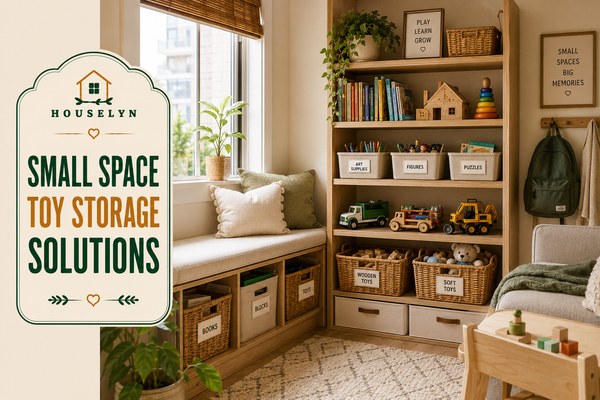 Beautiful small-space toy storage featuring organized bins, vertical shelving, and family-friendly organization solutions.
Budget-Friendly Toy Storage Ideas
Organizing toys does not require expensive custom shelving or designer storage systems.
Many of the most effective toy storage solutions are affordable and easy to implement.
Start with Decluttering
Before purchasing storage products, reduce the number of toys that need to be stored.
Look for:
- Broken toys
- Missing-piece toys
- Outgrown toys
- Duplicate toys
Removing unnecessary items often creates more space than buying additional organizers.
Repurpose Existing Containers
Many household containers can be transformed into toy storage.
Examples include:
- Woven baskets
- Plastic bins
- Wooden crates
- Storage cubes
- Decorative boxes
Repurposing existing containers can significantly reduce organization costs.
Use Affordable Cube Storage
Cube storage remains one of the most budget-friendly toy organization systems available.
Benefits include:
- Flexible storage
- Easy categorization
- Long-term usability
- Child-friendly access
Many cube systems can adapt as children grow and storage needs change.
Create Simple Categories
Complicated organization systems often fail because they are difficult to maintain.
Instead, focus on broad categories such as:
- Building toys
- Pretend play toys
- Books
- Arts and crafts
- Stuffed animals
Simple categories are easier for children to understand and follow.
Rotate Toys Instead of Buying More Storage
Many families purchase additional organizers when the real issue is too many toys being available at one time.
Toy rotation can:
- Reduce clutter
- Improve focus
- Increase engagement
- Extend the usefulness of existing toys
This strategy often eliminates the need for additional storage products.
Toy Storage Mistakes That Create Clutter
Even the best toy storage products cannot solve organization problems if the storage system does not match how children actually play.
Many families spend money on bins, shelves, and organizers, only to find that clutter returns within a few weeks.
The problem is often not a lack of storage. The problem is a storage system that is difficult to maintain.
Avoiding these common mistakes can dramatically improve long-term toy organization.
Storing Too Many Toys in One Area
One of the biggest toy storage mistakes is trying to keep every toy accessible at all times.
When hundreds of toys are stored in a single room, children often struggle to focus and cleanup becomes overwhelming.
Instead, consider:
- Toy rotation
- Seasonal storage
- Category-based organization
- Secondary storage areas
Fewer visible toys often create a calmer and more organized play environment.
Creating Too Many Categories
Parents sometimes create highly detailed organization systems that make sense to adults but are confusing for children.
For example:
- Small building blocks
- Large building blocks
- Educational building toys
- Magnetic building toys
While these categories may seem logical, they can make cleanup more difficult.
Broad categories are usually more effective.
Examples include:
- Building toys
- Pretend play toys
- Books
- Arts and crafts
- Stuffed animals
Simple systems are easier to maintain.Using Storage That Children Cannot Reach
If storage containers are too high, too heavy, or difficult to open, children may stop using them.
Child-friendly storage should be:
- Easy to reach
- Easy to open
- Easy to understand
- Safe to use independently
Storage systems should support children's abilities rather than relying entirely on adult assistance.
Buying Storage Before Decluttering
Many families purchase new storage products before evaluating what actually needs to be stored.
This often leads to:
- Wasted money
- Unused organizers
- Continued clutter
Before purchasing storage:
- Sort toys
- Remove broken items
- Donate unused toys
- Identify categories
Once the toy collection has been simplified, storage decisions become much easier.
Ignoring Toy Rotation
Toy rotation is one of the most underused organization strategies.
When every toy remains available all year, storage systems become overcrowded.
Rotating toys helps:
- Reduce visible clutter
- Increase engagement
- Improve focus
- Make cleanup easier
Many children become excited about toys that have simply been out of sight for a few weeks.
Not Having a Cleanup Routine
Storage systems work best when paired with simple daily habits.
Without a cleanup routine:
- Toys spread throughout the home
- Categories break down
- Storage areas become overcrowded
Even a short five-minute reset each evening can make a significant difference.
Consistency is often more important than the storage products themselves.
🔑 Houselyn Storage Secret
Children are far more likely to maintain an organization system when cleanup takes less than five minutes. The simpler the system, the more successful it tends to be.
Continue Organizing Your Home
Explore more Houselyn organization guides designed to simplify family life:
How to Maintain Toy Organization Long-Term
Creating an organized playroom is an achievement.
Keeping it organized is where many families struggle.
Fortunately, long-term toy organization is often easier than the initial cleanup when a few simple habits are followed consistently.
Schedule Monthly Toy Reviews
A monthly review helps prevent clutter from building up.
During the review:
- Remove broken toys
- Check for missing pieces
- Reorganize categories
- Update storage needs
Small maintenance sessions are easier than major decluttering projects.
Rotate Toys Regularly
Toy rotation remains one of the most effective long-term organization strategies.
Benefits include:
- Reduced clutter
- Better toy engagement
- Easier cleanup
- More available storage space
Many families rotate toys every few weeks or every season.
Keep Donation Bins Accessible
Children quickly outgrow toys and interests change over time.
Keeping a donation bin available encourages regular decluttering.
Items that are:
- Outgrown
- Rarely used
- Duplicated
- No longer enjoyed
can be removed before they create storage problems.
Adjust Storage as Children Grow
Storage systems should evolve alongside children's needs.
For example:
- Toddlers need easy-access bins
- School-age children may benefit from labels
- Older children may require hobby-specific storage
Adapting storage systems over time helps maintain organization.
Focus on Habits Rather Than Products
Many families believe the next organizer will solve clutter problems.
In reality, long-term organization depends more on habits than products.
Successful toy organization relies on:
- Consistent cleanup routines
- Clear categories
- Toy rotation
- Regular decluttering
- Child-friendly storage
The most successful systems are usually the simplest.
Encourage Children to Participate
Children are more likely to maintain organization when they help create it.
Involving children in:
- Categorizing toys
- Labeling storage
- Choosing baskets
- Setting cleanup routines
creates ownership and encourages responsibility.
This often leads to better long-term results than systems designed entirely by adults.
Frequently Asked Questions
What are the best toy storage ideas for small spaces?
What are the best toy storage ideas for small spaces?
The best toy storage ideas for small spaces focus on maximizing vertical storage and using hidden storage areas efficiently.
Popular options include:
- Cube storage units
- Under-bed storage containers
- Storage benches
- Wall shelves
- Rolling toy carts
- Labeled storage bins
These solutions help keep toys organized without taking over valuable living space.
How do I organize too many toys?
How do I organize too many toys?
Start by gathering all toys into one area and sorting them into categories.
Next:
- Remove broken toys
- Donate outgrown toys
- Remove duplicates
- Create simple storage categories
After decluttering, organize the remaining toys using bins, baskets, shelves, or cube storage.
Many families also benefit from using a toy rotation system.
How often should toys be decluttered?
How often should toys be decluttered?
A toy review every three to six months works well for most families.
During each review:
- Remove damaged toys
- Donate unused items
- Check for missing pieces
- Reevaluate storage categories
Regular reviews help prevent toy collections from becoming overwhelming.
Should toys be stored in bedrooms or playrooms?
Should toys be stored in bedrooms or playrooms?
Either option can work successfully.
The best solution depends on:
- Available space
- Family routines
- Children's ages
- Home layout
Many families use a combination of bedroom storage and shared playroom storage.
The key is maintaining clear categories and consistent storage locations.
How can I encourage children to clean up toys?
How can I encourage children to clean up toys?
Children are more likely to participate in cleanup when storage systems are simple and easy to understand.
Helpful strategies include:
- Picture labels
- Child-height storage
- Simple categories
- Daily cleanup routines
- Toy rotation
The easier the system is to use, the more likely children are to follow it.
What is a toy rotation system?
What is a toy rotation system?
A toy rotation system involves storing part of the toy collection while leaving only a limited selection available for daily play.
Benefits include:
- Reduced clutter
- Better focus
- Increased engagement
- Easier cleanup
Many parents find that rotating toys every few weeks keeps children interested while simplifying organization.
Conclusion
Toy storage ideas can transform a cluttered playroom, bedroom, or family space into a more organized and enjoyable environment for both children and parents.
The most successful toy storage systems are not necessarily the most expensive or elaborate. They are the systems that match the way children play and make cleanup simple enough to maintain every day.
Throughout this guide, we explored strategies such as:
- Cube storage
- Labeled baskets
- Toy rotation
- Rolling carts
- Toy library systems
- Child-friendly storage zones
- Family cleanup routines
These approaches help reduce clutter while encouraging independence and responsibility.
Remember that toy organization is not a one-time project. Children's interests, collections, and storage needs change over time. The most effective systems evolve alongside those changes.
Focus on creating clear categories, maintaining simple routines, and keeping storage accessible for the people who use it most.
When toy organization becomes easy to maintain, family spaces become calmer, cleanup becomes faster, and play becomes more enjoyable.
Related Houselyn Guides
Continue organizing your home with these Houselyn resources:
Have A Great Story About This Topic?
Do you have a great story about this? Share it!
You might like these
25 Laundry Room Organization Ideas for a Clean and Functional Space
Discover 25 laundry room organization ideas to maximize storage, reduce clutter, organize laundry supplies, and create a more efficient laundry space.
25 Bedroom Color Ideas to Create a Calm and Stylish Retreat | Houselyn
Discover 25 bedroom color ideas to create a calm, cozy, and stylish retreat using warm neutrals, soft greens, earthy tones, and relaxing color palettes.